

 Srbija
 Hrvatska
 Slovenija


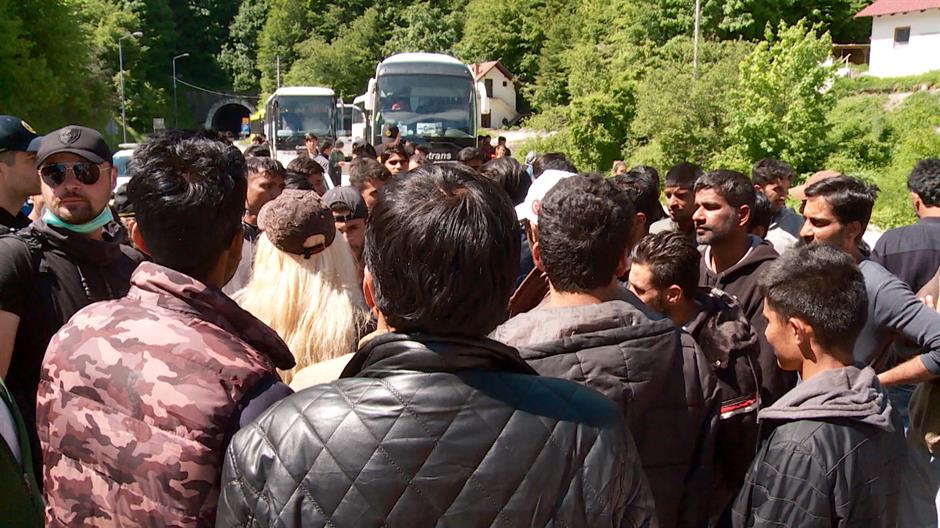
A new wave of migrants hit the so-called Balkan route heading to Western Europe and using roads through Bosnia and Croatia, while Sarajevo accused Serbia and Montenegro of lack of border control.
Bosnia’s authorities complained that Serbia and Montenegro didn’t do enough to control the borders and prompted Bosnia’s Council of Ministers (CoM) Chairman Denis Zvizdic to say that his country would send diplomatic notes to Serbia and Montenegro.
Zvizdic said on Thursday he would warn the two countries that the Bosnian authorities knew the migrant settlements and centres were being dismantled and migrants were being sent to Bosnia institutionally and by criminal groups.
“Bosnia will ask Serbia and Montenegro to stop these activities,” Zvizdic said.
However, Serbia’s Foreign Minister Ivica Dacic said on Friday that no note landed in Belgrade, nor anyone contacted the Ministry.
“Serbia has been facing the same problem for several years and we did not send notes to anyone. If there are problems, they should be talked about how to solve them,” Dacic said.
In the meantime, Bosnia has increased the control on its eastern border to prevent illegal migrations from neighbouring countries, the country’s Border Police said on Friday.
The Border Police took measures against more than 4,000 individuals coming from countries of the high migration risk since the beginning of the year, preventing them from illegally entering Bosnia and returning them to the territories of Serbia and Montenegro.
Serbia’s Office for Refugees has said on Friday that the number of refugees was slightly declining and that there were around 3,200 of them currently in the country.
The Office said that migrants were coming from Macedonia and Bulgaria.
"The worrying practice is that when people go through Bosnia and enter Croatia, according to our information, the Croats drive them back to our border and push them back to Serbia," Rados Djurovic from the Office said.
He added that was a proof that Serbia was a buffer zone for migration and that the country would have difficulties to change it.
“The stay of the migrants in Serbia has been prolonged due to that illegal return and they now spend a year here,” Djurovic said.
Kakvo je tvoje mišljenje o ovome?
Učestvuj u diskusiji ili pročitaj komentare


Kakvo je tvoje mišljenje o ovome?
Učestvuj u diskusiji ili pročitaj komentare