

 Srbija
 Hrvatska
 Slovenija


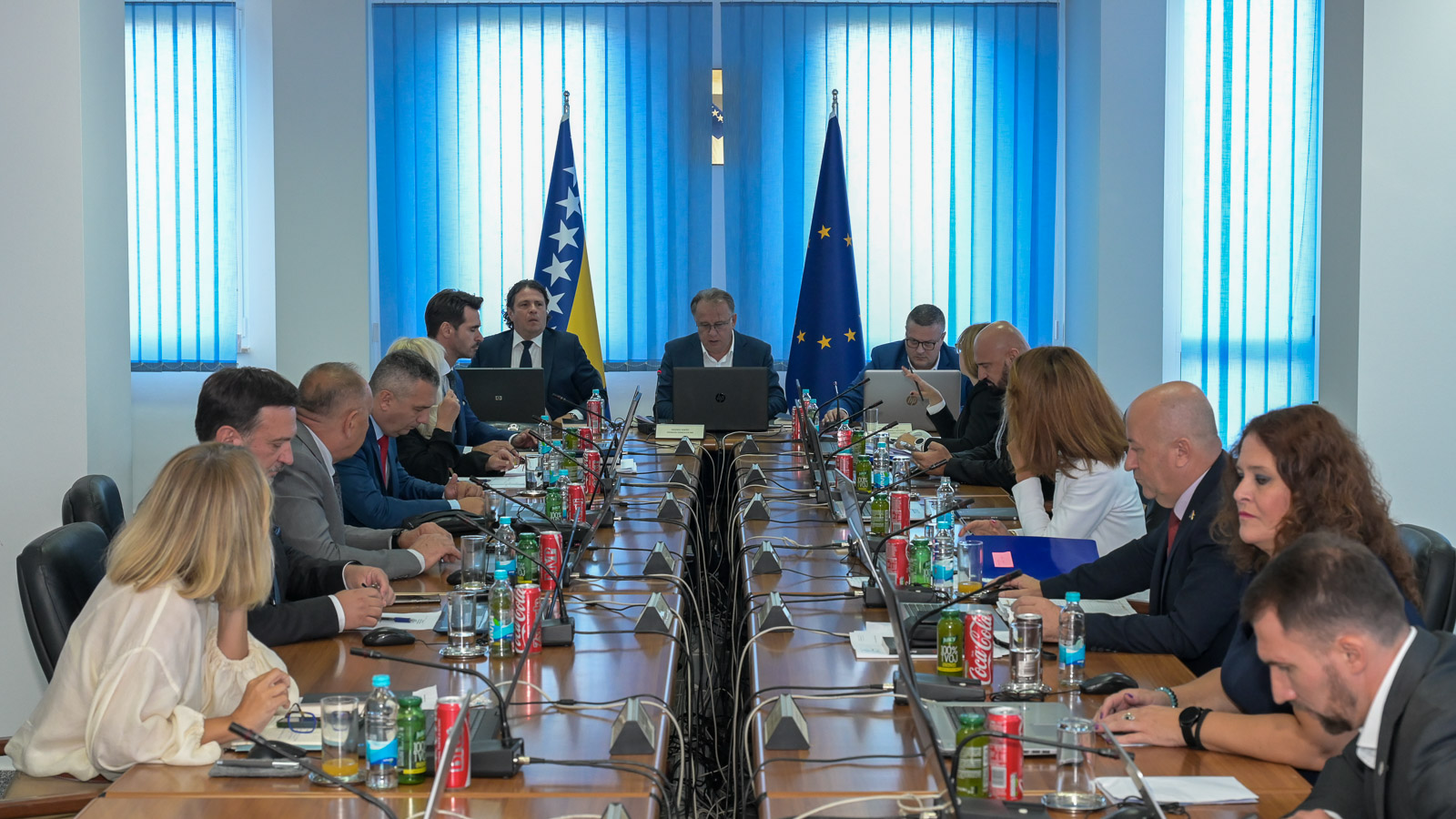
The Audit Office of the Institutions of the Federation of Bosnia and Herzegovina has released its 2024 budget execution report, issuing a qualified opinion. The findings reveal a growing fiscal imbalance, with the Federation ending 2024 with a budget deficit of 180 million Bosnian marks (approximately €92 million), an increase of 130 million marks (approx. €66 million) compared to the previous year.
Throughout 2024, the Federation issued 11 rounds of bonds worth 533 million marks (approx. €272 million), with interest rates ranging from 3.25% to 5.25%. Auditors stressed that this borrowing highlights increasingly unfavourable financing conditions, as the total debt from bonds reached 1.283 billion marks (approx. €654 million) by the end of the year.
The report points to significant shortcomings in budget planning and execution. Revenues and inflows were 648.1 million marks (approx. €330 million) below projections, while expenditures and outflows fell short by 517 million marks (approx. €263 million). Despite these discrepancies, no measures were taken to rebalance the budget as required by law, leading to an additional deficit of 131.1 million marks (approx. €67 million).
Concerns were also raised over non-compliance in financing the Solidarity Fund. While contributions brought in 223.2 million marks (some €114 million), only 59.5 million (approx. €30 million) was allocated from the budget. Similarly, funding for railway infrastructure was far below commitments: 21.9 million marks (around €11 million) was approved, while contractual obligations reached 63.6 million (approx. €32 million).
Auditors highlighted transparency issues in the use of current and capital transfers totalling nearly 379 million marks (around €193 million). Many programs were approved without clear criteria or proper oversight of how funds were spent.
Additional criticisms included employment regulations enabling hiring without public competition, unresolved issues surrounding the allocation of office space from the former Payment Bureau, and rising rental costs, which climbed to 6.59 million marks (approx. €3.4 million) in 2024.
Health financing was also singled out. The Solidarity Fund’s drug list has not been updated since 2019, potentially denying patients access to more effective treatments. The government failed to act on a 2022 directive to revise this list, despite repeated reminders.
The report concludes that weak budget discipline, non-transparent allocation of funds, and reliance on debt have created mounting fiscal challenges for the FBiH, requiring urgent corrective measures.
Kakvo je tvoje mišljenje o ovome?
Učestvuj u diskusiji ili pročitaj komentare


Kakvo je tvoje mišljenje o ovome?
Učestvuj u diskusiji ili pročitaj komentare