

 Srbija
 Hrvatska
 Slovenija


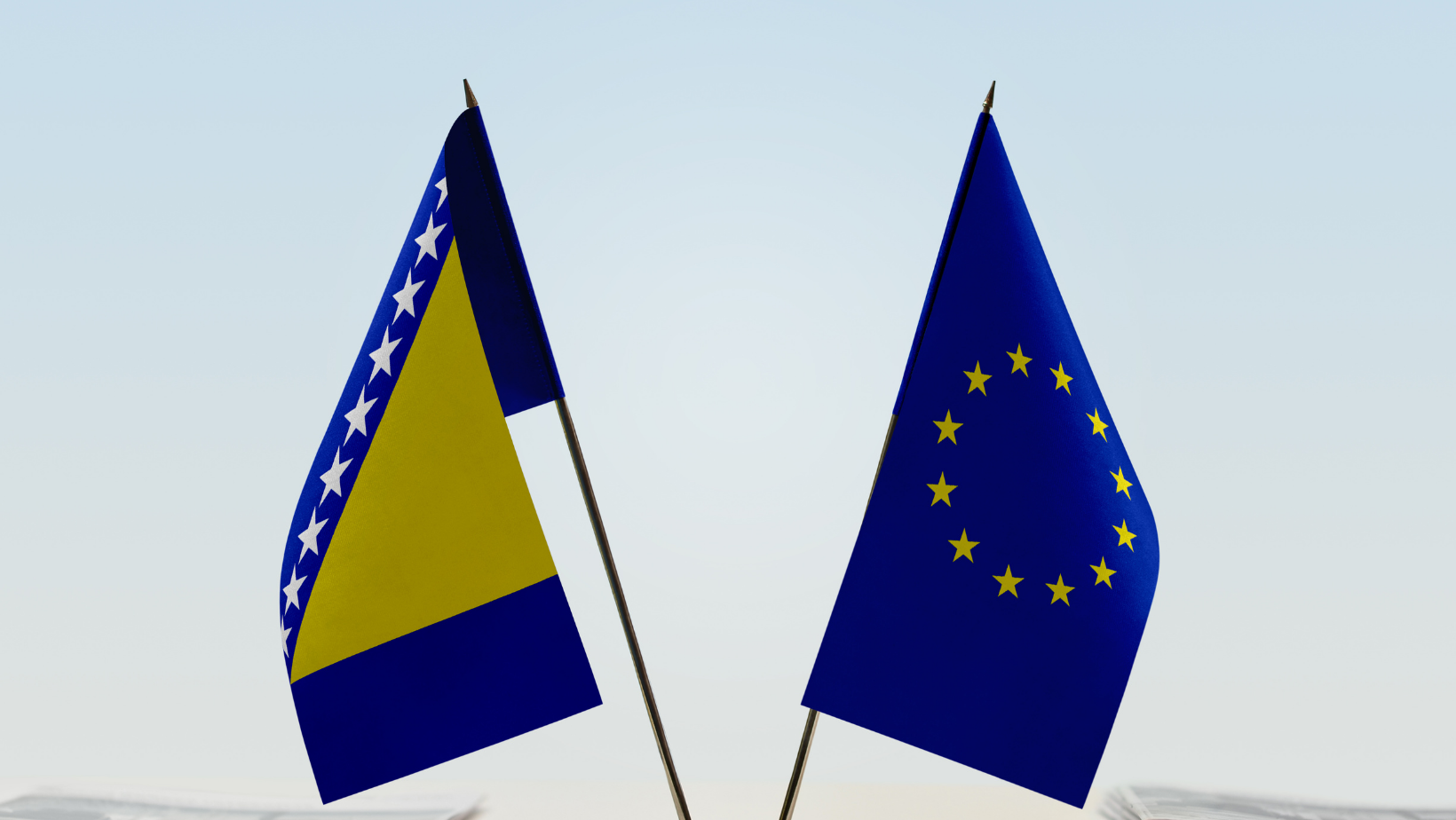
Bosnia and Herzegovina is closing 2025 under the shadow of its largest post-war crisis and a near-collapse of the government, leaving all reform processes blocked. Political uncertainty is compounded by the fact that 2026 is an election year, raising expectations of renewed tensions.
New conflicts derail European path
The year began with hopes that Bosnia's European path would advance, following the European Council's preliminary approval in March 2024 to open accession negotiations. However, the Bosnian authorities failed to take steps to initiate the process.
This was especially symbolic in a year marking the 30th anniversary of the Dayton Agreement and the Srebrenica genocide, key reminders of the brutal 1990s war.
The expectations proved unrealistic as political turbulence plunged the country into a new phase of confrontations, at times bordering on armed conflict. The immediate trigger was the conviction of former Republika Srpska (RS) President Milorad Dodik in February by the Court of Bosnia and Herzegovina for disregarding decisions by the international community's High Representative. Dodik was sentenced to one year in prison and banned for six years from holding public office.
In 2023, Dodik had signed decrees enacting unconstitutional RS laws, which High Representative Christian Schmidt had annulled. The court ruling, finalised in June 2025, provoked strong reactions in the Bosnian Serb entity. The entity parliament passed laws to block the operation of state judicial and police bodies in Republika Srpska.
After this, the Prosecutor's Office of Bosnia and Herzegovina opened an investigation against Dodik and two of his close associates over the adoption of the controversial laws, on the suspicion that they committed a criminal offence of attacking the constitutional order. Arrest warrants were issued, and pre-trial detention was ordered.
This development nearly led to a direct confrontation between state police forces and the RS Ministry of the Interior, which protected Dodik. The crisis was defused when Dodik agreed to testify, after which prosecutors suspended the investigation following the withdrawal of the controversial laws.
Controversial laws withdrawn under U.S. pressure
Dodik had to retract the disputed laws under pressure from the U.S. administration, which lifted his sanctions in return. This also reflected Washington's changed approach to Bosnia, shifting from direct intervention to encouraging dialogue and offering trade-based cooperation, such as projects linking Bosnia's and Croatia's gas networks.
The Dodik episode left a deep imprint on domestic politics -- the three parties forming the Bosniak-civic ruling coalition declared Dodik and his SNSD party undesirable partners.
Their attempt to replace the SNSD in the government with opposition parties from RS failed because the Croat HDZ BiH party did not agree, due to the balance of power in the state parliament where Dodik still has control in the ethnically structured House of Peoples. Without this chamber, it is impossible to make decisions or pass laws.
The SNSD holds three of the five seats in the Serb group within the House of Peoples, giving them the ability to block quorums for sessions, influence the agenda, and thereby affect the passage of laws.
Bosnia lags in European integration process
As a result, efforts to pass two EU-mandated reform laws stalled. Bosnia, alongside Kosovo, ends 2025 at the back of the region's EU integration process, while political tensions rise with the approach of the October 2026 general elections. Some key government actors admit they are entering the election period with poor results.
Foreign Minister Elmedin Konaković (People and Justice, NiP) described the Council of Ministers' performance as near-zero, citing what he described as the disruptive role of the SNSD, which frequently blocks decisions "while following instructions from Moscow".
Council of Ministers Chairwoman Borjana Krišto (HDZ BiH) acknowledged the challenges but noted some achievements, emphasising dialogue and mutual respect as guiding principles.
Opposition parties are preparing for elections, with SDA party leader Bakir Izetbegović promising voters wage and pension increases, mass construction, and broad economic growth if his party returns to power.
Relatively good economic indicators, widespread corruption
Despite political dysfunction, Bosnia's economy shows moderate resilience. The World Bank and IMF estimate 2025 GDP growth at 2.4-2.8%, inflation below 4%, and unemployment just above 12%.
Corruption remains a critical problem: Transparency International ranks Bosnia as the second most corrupt country in Europe, recording its worst score in a decade.
Political disputes, global economic uncertainty, and slow structural reforms threaten stability and foreign investment. U.S. policy now favours non-intervention, while Russia continues to exert influence through Republika Srpska, which Western observers view as malign.
Kakvo je tvoje mišljenje o ovome?
Učestvuj u diskusiji ili pročitaj komentare


Kakvo je tvoje mišljenje o ovome?
Učestvuj u diskusiji ili pročitaj komentare