

 Srbija
 Hrvatska
 Slovenija


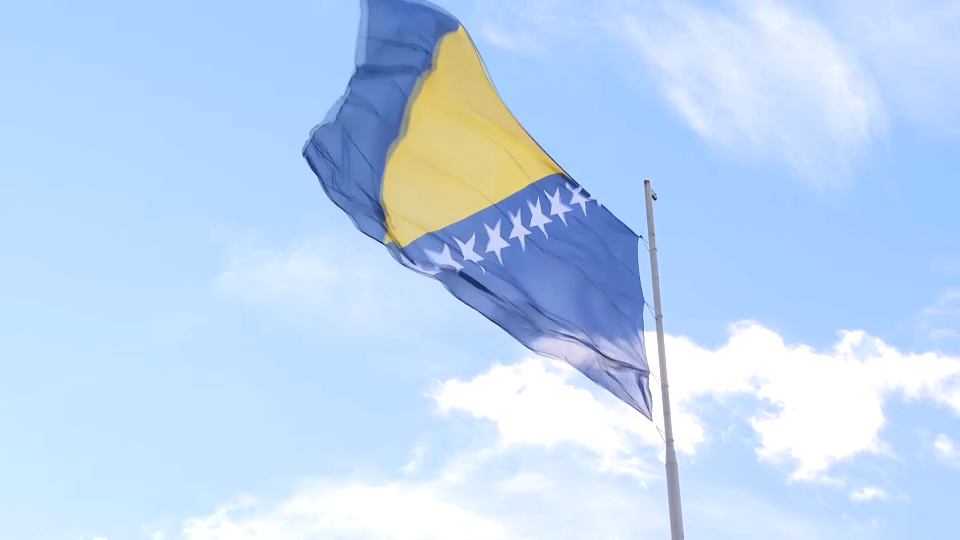
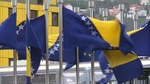
Tuesday, November 25, Bosnia and Herzegovina observes Statehood Day, commemorating a pivotal moment in the nation's history when its sovereignty was renewed after centuries.
The date marks the first session of the Anti-Fascist Council of National Liberation of Bosnia and Herzegovina (ZAVNOBiH) held in Mrkonjic Grad in 1943. This session was instrumental in affirming Bosnian-Herzegovinian statehood, ensuring the equality of its constituent peoples, Serbs, Muslims, and Croats, and establishing the Republic of Bosnia and Herzegovina as an equal entity within the Yugoslav federation, respecting its historical borders dating back to the medieval Bosnian state.
The foundation of modern statehood
The ZAVNOBiH was formally constituted on this day, November 25, 1943. The session saw the election of 172 councillors from all districts of BiH. Concurrently, the ZAVNOBiH Presidency was established, consisting of 31 members, with Dr. Vojislav Kecmanovic, a physician from Bijeljina, serving as President.
A key document from the assembly, the resolution, unequivocally stressed that the peoples of BiH, through ZAVNOBiH as their sole political representative, desired their country, which is "neither Serbian, nor Croatian, nor Muslim, but both Serbian and Muslim and Croatian"—to be a free and fraternal Bosnia and Herzegovina. This was to be a state guaranteeing full equality and parity for all Serbs, Muslims, and Croats.
At its second session, held in Sanski Most from June 30 to July 2, 1944, ZAVNOBiH further solidified its role, constituting itself as the supreme legislative and executive people's representative body, the highest organ of state authority in Bosnia and Herzegovina, establishing it as an equal federal unit in Democratic Federative Yugoslavia. This, and subsequent decisions, allowed BiH to realize the aspirations of its peoples to unite in their own state community, free from the domination of other states, thus securing their independent development. This act restored BiH's statehood for the first time since the fall of the medieval Bosnian state in 1463, precisely 480 years later.
Contemporary observance
Prior to the war in Bosnia and Herzegovina in 1992, this date was celebrated as a public holiday across the entire territory of BiH. Following the 1995 Dayton Peace Agreement, which ended the war and confirmed the current territorial structure of the country, November 25th as the Statehood Day of Bosnia and Herzegovina continued to be officially marked only in the Federation of BiH.
Consequently, Statehood Day is today observed only in the Federation of BiH, where it has been designated a non-working day by the FBiH Ministry of Labor and Social Policy. The day will be marked with a series of events and manifestations across the Federation, with numerous delegations laying flowers at memorial sites from the two preceding wars.
In honour of Statehood Day, members of the BiH Presidency, Zeljko Komsic and Denis Bećirovic, are hosting a Formal Reception at Sarajevo's City Hall (Vijecnica). The event serves as a central point of the day's official commemorations.
Kakvo je tvoje mišljenje o ovome?
Učestvuj u diskusiji ili pročitaj komentare


Kakvo je tvoje mišljenje o ovome?
Učestvuj u diskusiji ili pročitaj komentare