

 Srbija
 Hrvatska
 Slovenija


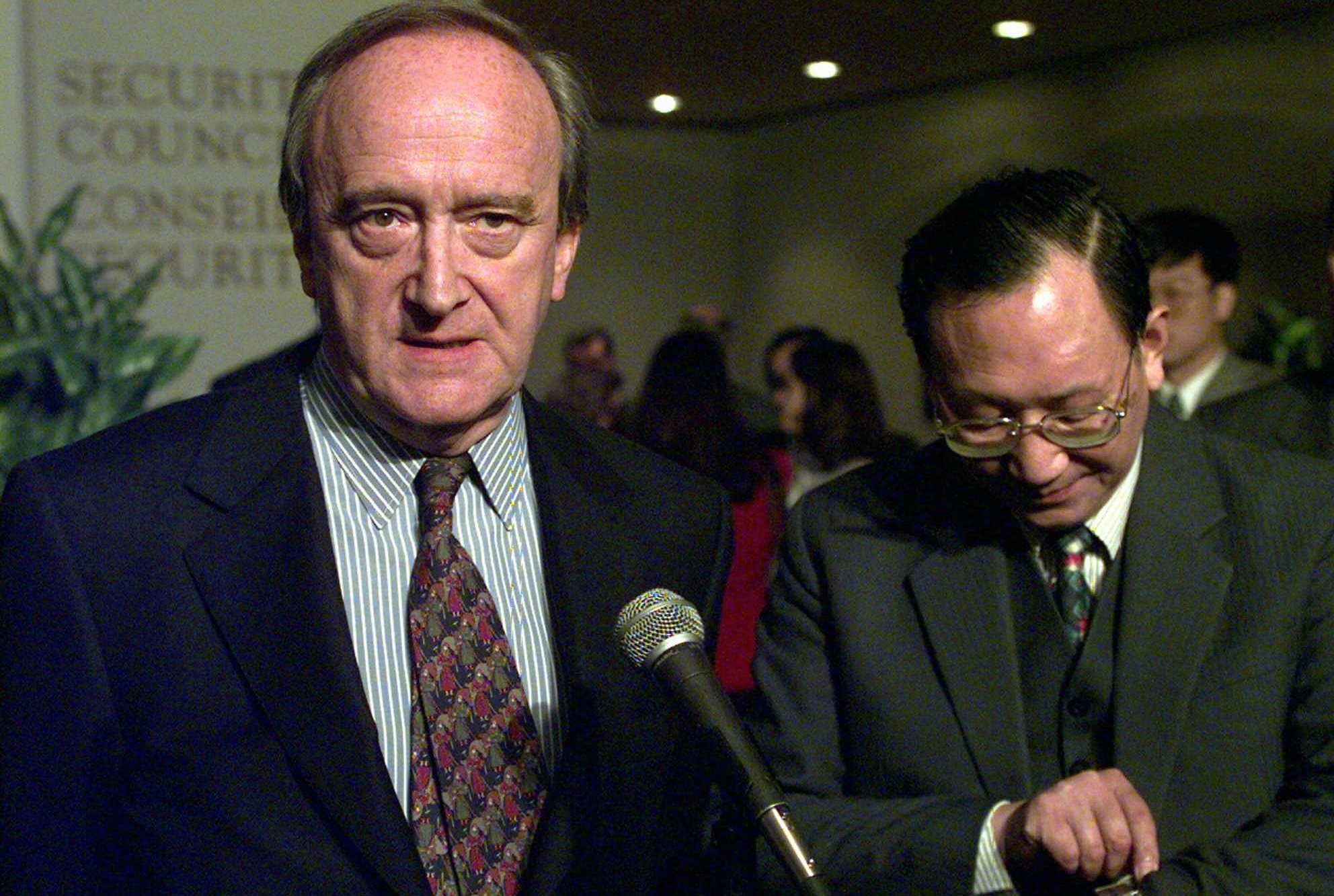
Former Spanish Foreign Minister and former High Representative of the international community in Bosnia and Herzegovina Carlos Westendorp died on Monday at the age of 89, Spanish newspaper "El Pais" reported, ending one of the most influential careers in contemporary Spanish diplomacy.
Associated with the most pro-European wing of Spanish socialism, Westendorp played a key role in Spain's international affirmation during the 1980s and 1990s, as well as in strengthening the country's role in the institutions of the European Community.
Westendorp served as Minister of Foreign Affairs between 1995 and 1996 in the government of Felipe Gonzalez, a period marked by the intensification of the European agenda and Spain's active participation in international politics.
His technical, negotiating and strongly pro-European profile made him one of the most influential figures in the European integration processes, where he had previously held significant responsibilities.
Westendorp's legacy in Bosnia and Herzegovina
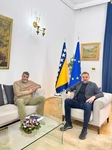
One of the most important moments of his career came after leaving the government, when he took over the position of High Representative of the international community in Bosnia and Herzegovina between 1997 and 1999, in accordance with the Dayton Agreement, a peace deal that ended the 1992-95 Bosnian war. In this position, Westendorp played a crucial role in the institutional reconstruction of the country after the Balkan wars, promoting key decisions to stabilize the political and administrative system of Bosnia and Herzegovina.
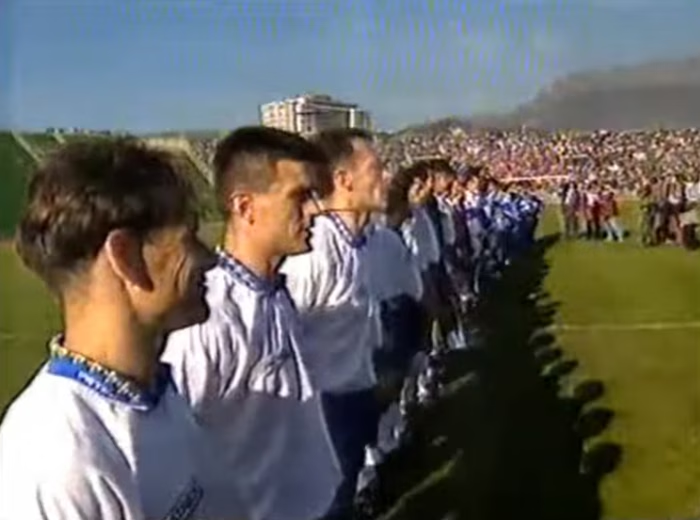
Part of his legacy in BiH is the current state flag. Westendorp imposed the Law on the Flag of BiH in February 1998, and since then the flag with the outlines of BiH in yellow on a blue background and a row of stars has been the official flag of the country.
During his term in our country, Carlos Westendorp imposed a total of 80 decisions, making him the third most active High Representative after Paddy Ashdown and Wolfgang Petritsch in terms of use of the Bonn powers.
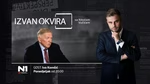
Westendorp tells N1: I am proud of the Bosnian flag that I chose
Westendorp made the most of the Bonn Powers. He decided on the design of the flag, the anthem, passport, a single currency, and single license plates.
"I did it because the people in BiH and the authorities wanted me to do it. No one dared to make a decision on their own. Compromises between different parties were considered treason, so a third party was needed, coming from a friendly, neutral country. For example, a flag was needed with which they could present themselves at the then Olympics," said Westendorp , who spoke to N1 television from Madrid in a 2015 interview.
On another occasion, five years later he spoke to N1 and commented on the situation in Bosnia and Herzegovina, which was still in a turbulent period, expressing regret that political divisions and institutional blockades, as he emphasized, are still the rule, not the exception.
He also referred to the actions of Bosnian Serb politician Milorad Dodik, saying that from a once pragmatic politician who supported the international community's efforts to build a pluralistic democratic state, he has become an ultranationalist leader, even to the point of advocating the secession of Republika Srpska, one of two country's entities, from the state and joining of that entity to Serbia.
"I believe that such a stance is not beneficial for a peaceful, stable and successful country - on the contrary, it prevents it from joining the EU, which is the only solution to the problems of the region and the people of BiH, who have the right to a better future. Therefore, it is in the interest of the EU and the US to support respect for the Constitution of BiH and its institutions," Westendorp assessed.
His governance during this period solidified his international reputation as a diplomat and mediator in complex political circumstances.
Throughout his career, Westendorp has been one of the main advocates of European integration, actively participating in the development of European Community policies through various institutional roles.
His legacy remains closely linked to the process of strengthening Spain as a significant actor in the European Union and to the orientation of foreign policy towards multilateralism.
Kakvo je tvoje mišljenje o ovome?
Učestvuj u diskusiji ili pročitaj komentare


Kakvo je tvoje mišljenje o ovome?
Učestvuj u diskusiji ili pročitaj komentare