Srbija
 Hrvatska
 Slovenija

Palmer: Meeks and Coons may step up US engagement in the Balkans


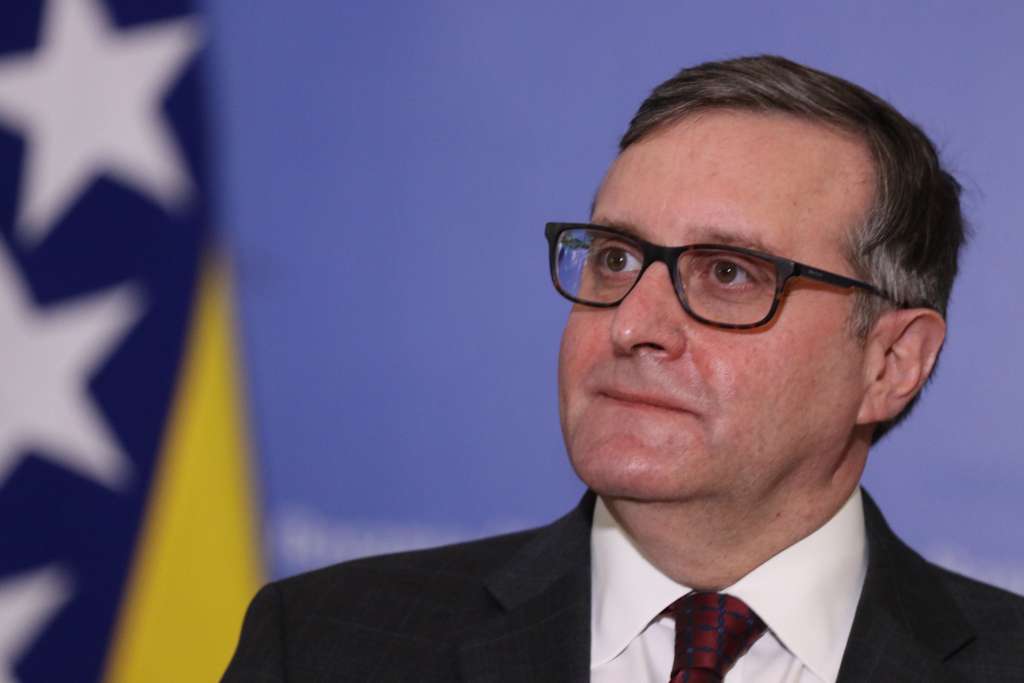
The results of the US elections, in which Democrats won control of both chambers of Congress, will not lead to a radical shift in US foreign policy towards Bosnia and Herzegovina and the Western Balkans, but could result in significantly greater congressional engagement in the region, former US Special Representative for the Western Balkans Matthew Palmer told FENA.
Palmer believes that one of the most significant consequences of the elections for the Western Balkans will be changes in the leadership of the US House Foreign Affairs Committee and the Senate Foreign Relations Committee, particularly given the previous engagement of certain Democratic representatives and senators in the region.
"Democrats have clearly won control of both chambers of Congress, the House of Representatives and the Senate. I think that among the most interesting changes for the Balkans will be who chairs the House Foreign Affairs Committee and the Senate Foreign Relations Committee," Palmer said.
According to him, Gregory Meeks is expected to take over as chair of the House Foreign Affairs Committee, which could have implications for future US engagement in the Western Balkans.
Speaking about changes in the Senate, he stressed that the Western Balkans is losing one of its strongest advocates in the US Congress with the departure of Senator Jeanne Shaheen, whose term is coming to an end.
"Unfortunately, the Balkans has lost one of its true advocates on Capitol Hill with Jeanne Shaheen's retirement. Among the names mentioned as possible successors is Chris Coons, who could take over as chair of the Senate Foreign Relations Committee," he said.
He added that Coons had also devoted considerable attention to the Western Balkans throughout his political career and had strongly supported US engagement in the region.
However, Palmer does not expect the shift in the balance of power in Congress to automatically lead to changes in the foreign policy decisions of President Donald Trump's administration.
Asked about the possible implications of the election results for Bosnia and Herzegovina, particularly in terms of political instability, secessionist policies in Republika Srpska, and support for the country's sovereignty and territorial integrity, Palmer said he expected stronger messages of support from Congress.
"I think we will probably hear more messages from Congress directly supporting strong relations between the United States and Bosnia and Herzegovina," he noted.
He stressed, however, that he did not expect the midterm election results to immediately translate into concrete changes in US policy towards BiH.
"I do not see the midterm election results leading to an immediate change in the political approach towards Sarajevo, Bosnia and Herzegovina, or Republika Srpska. We will see how things develop, particularly what congressional oversight of the administration will look like in the months and years ahead," Palmer said.
Commenting on political changes in Serbia following the victory of the Student List in the snap parliamentary elections, Palmer said a change of government in Belgrade could prove a more significant factor for future US policy towards the region than the change in the congressional majority itself.
"To me, the much more interesting question is not whether a change in control of Congress will result in a different US approach, but whether a change of government in Belgrade will open up opportunities for a new and different US approach," he said.
According to him, the Student List now has a key role in shaping Serbia's future political direction, but the question remains what kind of policies it will pursue once it assumes responsibility for governing the country.
He stressed that the student movement had been an inspiring force in initiating political change in Serbia, but that a much more challenging phase now lay ahead.
Palmer noted that relatively few people associated with the Student List had direct experience in holding public office, meaning they would have to learn many things in the course of governing.
Commenting on how Western Balkan governments might respond to the new composition of the US Congress, Palmer said diplomatic activity by countries in the region in Washington would likely intensify.
He stressed that major changes in the US Congress were expected early next year, including the arrival of new members and changes in leadership positions on committees dealing with foreign policy.
In his view, an increase in visits by political representatives of Western Balkan countries to Washington could also be expected, to establish contacts with the new congressional leadership.
Palmer explained that the legislative process, although it does not necessarily have a direct impact on the administration's foreign policy, can nevertheless produce significant indirect effects on political decisions.
"There is a lot of work ahead for many people in the governments of countries across the region and their embassies in Washington," Palmer concluded in his statement for FENA.
Kakvo je tvoje mišljenje o ovome?
Učestvuj u diskusiji ili pročitaj komentare


Kakvo je tvoje mišljenje o ovome?
Učestvuj u diskusiji ili pročitaj komentare