

 Srbija
 Hrvatska
 Slovenija


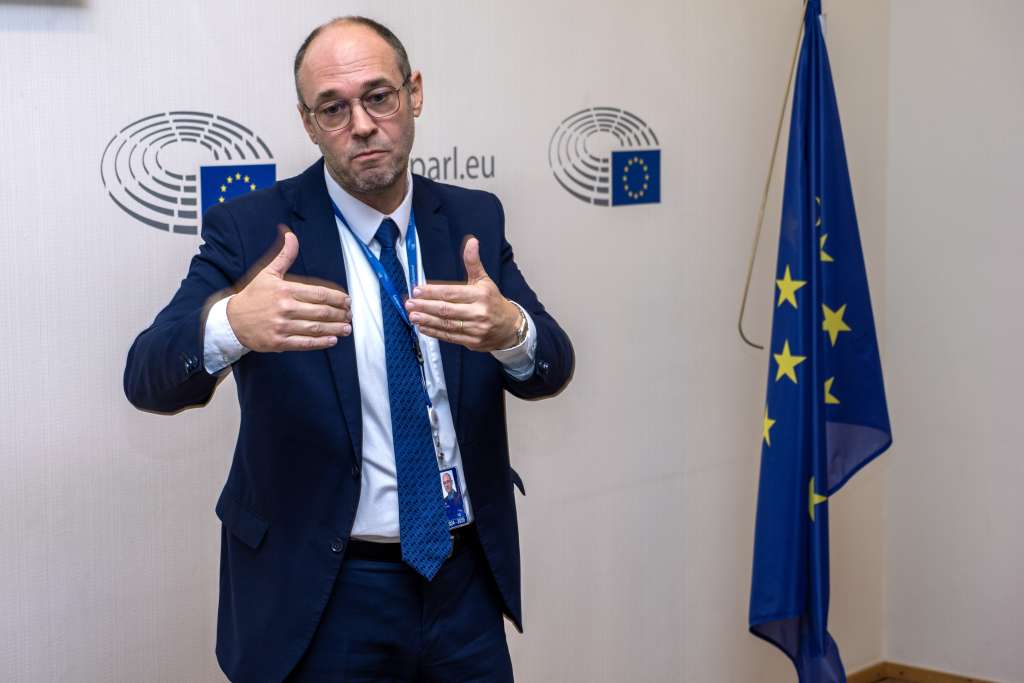
Member of the European Parliament and Chair of the Delegation for Relations with Bosnia and Herzegovina, Davor Ivo Stier, stated that he has no doubt whatsoever that the future of Bosnia and Herzegovina lies in the European Union but he would like the process to move faster.
In a conversation with a group of journalists from Bosnia and Herzegovina, who last week were on a study visit to the European Union institutions in Brussels, he said that it is no secret that the renewed focus on EU enlargement in this new geopolitical moment came after Russia's aggression against Ukraine.
''We must seize this moment. The Western Balkan countries now have an opportunity,'' Stier said, adding that some countries have taken very good advantage of it.
He praised Albania, which he said has made enormous progress and recently opened its final cluster of negotiating chapters.
He expressed his wish that all Western Balkan countries make use of this opportunity, ''and in particular, as the head of the Delegation for Bosnia and Herzegovina, I would most like Bosnia and Herzegovina to do so''.
''All our research shows that among Bosniaks, Serbs, Croats, and other citizens of BiH, in both entities, an overwhelming majority sees the country’s future in the EU. That consensus exists in society despite all the challenges. Therefore, political institutions must recognize it, articulate it, and accelerate the path toward the EU,'' Stier emphasized.
He also spoke about the role of Bosnia and Herzegovina’s chief negotiator with the European Union, saying that the chief negotiator is the point of contact through which the EU—and specifically the European Commission on behalf of the entire EU—will negotiate with BiH.
He stressed that it is important for the chief negotiator to be a competent expert ''who understands the subject matter, who can represent the country well, and who can clearly articulate its positions''.
According to him, it is clear that these positions must be adopted by the Council of Ministers, since it has the executive function, and it is also clear that the negotiator must have the support of the BiH Parliament.
Regarding the adoption of the Law on the High Judicial and Prosecutorial Council (HJPC) and the Law on Courts—which, in addition to appointing the chief negotiator, are conditions for opening BiH’s accession negotiations—Stier said that one of these laws could already have been adopted by Parliament.
During the meeting with journalists from BiH, he also discussed the focus of the Delegation for Relations with Bosnia and Herzegovina in the coming period.
''For us, it is extremely important that the parliamentary dimension of cooperation between the EU and BiH continue at a regular pace. After our meeting in Sarajevo in September, it is now time for our colleagues from BiH to come to the European Parliament. We would expect the negotiations to have been opened by then. So, we expect to be able to confirm that the conditions have been met—that the two remaining judiciary-related laws, as well as the appointment of the chief negotiator, have been completed as requirements—and that an intergovernmental conference is then held to open accession negotiations with the EU. That is certainly what we expect,'' Stier said.
Stier noted that other countries with similarly complex and decentralized structures nonetheless manage to meet all necessary conditions.
He emphasized that they are very satisfied with the parliamentary dimension, where parliamentarians from BiH and from EU member states meet regularly, at least twice a year, creating a platform for participants from different countries and political backgrounds to exchange views and also identify common ground.
''In this way, through dialogue, we encourage the development of a culture of compromise, because even within the EU, 27 different national positions must be aligned to make decisions. So, a culture of compromise is very much needed, and it begins to develop in these early stages when accession negotiations are opened,'' he said.
He also commented on the Growth Plan for the Western Balkans, saying that they expect progress and that BiH will be able to access the funds allocated by the European Parliament specifically for the Growth Plan and for reforms that must be implemented in BiH, as submitted by the Council of Ministers to the European Commission in Brussels
Asked about how favorable the current situation in Bosnia and Herzegovina is for its European path, Stier recalled that during the last session of the EU–BiH Stabilization and Association Parliamentary Committee (SAPC) in Sarajevo, the Reform Agenda was on the agenda and they discussed whether it would be adopted.
''In the end, despite all difficulties, the BiH Council of Ministers managed to find a way to approve the Reform Agenda and send it to Brussels. Today, the challenge is how to meet the remaining conditions for opening negotiations, but I believe we now have that experience. We have experience, for example, from signing the agreement with Frontex. That also took many years. In the end, a way forward is always found. But what I would stress is that, given that more than 70 percent of BiH citizens want EU membership, we should not wait so long or waste so much time. Solutions are found eventually, but too much time is lost. Therefore, it is necessary to accelerate these processes. I have no doubt whatsoever that BiH’s future is in the EU, but I would like the process to move faster,'' concluded Member of the European Parliament and Chair of the Delegation for Relations with Bosnia and Herzegovina Davor Ivo Stier in his conversation with journalists from BiH.
Kakvo je tvoje mišljenje o ovome?
Učestvuj u diskusiji ili pročitaj komentare


Kakvo je tvoje mišljenje o ovome?
Učestvuj u diskusiji ili pročitaj komentare
NAJČITANIJE










Najnovije









ZDRAVLJE




LIFESTYLE