Srbija
 Hrvatska
 Slovenija

Support for people with Down syndrome in Bosina remains insufficient despite visible progress


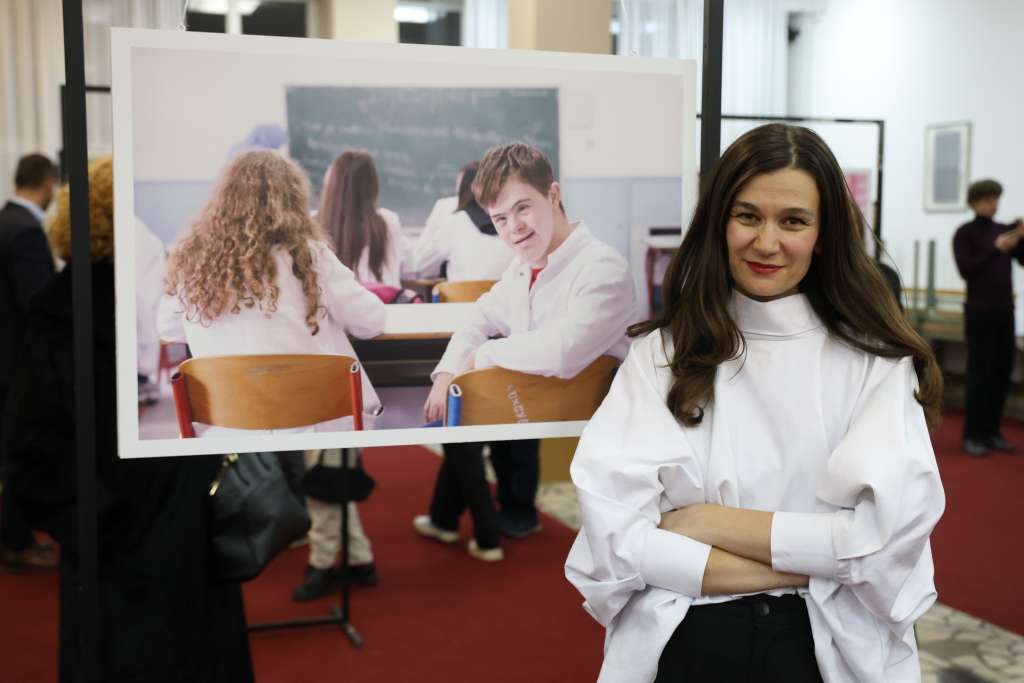
Twenty years after the establishment of the Association 'Life with Down Syndrome' of the Federation of Bosnia and Herzegovina, people with Down syndrome are now significantly more involved in education, employment and social life, but still do not enjoy equal institutional support and access to rights throughout Bosnia and Herzegovina, participants said in Sarajevo last night at an event marking the association's 20th anniversary.
FBiH Minister of Culture and Sports Sanja Vlaisavljevic said that people with Down syndrome still do not receive sufficient institutional support in BiH.
“Many institutions can do much more. I can even say with certainty that there is not a single institution that cannot, in some way, open its doors to people with Down syndrome,” she stressed.
She emphasized that responsibility does not rest solely with educational institutions.
“There are various institutions with different models and ways of bringing people together, not simply to talk about people with Down syndrome, but to make them productive members of society and give them the same attention that every human being deserves,” Vlaisavljevic said.
Speaking about the biggest challenges these individuals face, she pointed to the lack of activities and opportunities that could make their lives better, more fulfilling, and more enjoyable.
She particularly emphasized the importance of giving parents a sense of security, especially about their children's future.
President of the Association 'Life with Down Syndrome' of the Federation of BiH Sevdija Kujovic said that their greatest source of pride today was the achievements of young people with Down syndrome, who had made significant progress thanks to the long-standing efforts of families, friends, associations and institutions.
She noted that many of them now work in the open labour market and participate in the work of the association's governing bodies, where important decisions are made.
Commenting on institutional progress, she said that regulations and policies in this area had improved, particularly in Sarajevo Canton, whose legislation recognizes the obligations arising from the UN Convention on the Rights of Persons with Disabilities.
Kujovic also said that an increasing number of schools recognize the importance of inclusive education, but that the realization of the rights of people with Down syndrome still depends on where they live.
She particularly warned about the multiple discrimination faced by people with intellectual disabilities, with women in this group being additionally exposed to discrimination.
Aida Redzepagic, author of the exhibition '20 Years – Just Everyday Life', also addressed the media, saying that gaining insight into the everyday lives of people with Down syndrome had been a challenging but at the same time exceptionally beautiful and valuable experience for her.
She said the experience had enabled her to use photography to convey a message about the similarities between people rather than their differences.
“What I wanted to convey through the photographs is precisely how much we are all alike. Children with Down syndrome are not asking for any special rights; they want everything that my child has, namely the right to attend school and receive an education,” Redzepagic stressed.
Kakvo je tvoje mišljenje o ovome?
Učestvuj u diskusiji ili pročitaj komentare


Kakvo je tvoje mišljenje o ovome?
Učestvuj u diskusiji ili pročitaj komentare