Srbija
 Hrvatska
 Slovenija

Vittorio Hösle for N1: Today's crisis of liberalism echoes the rise of totalitarianism


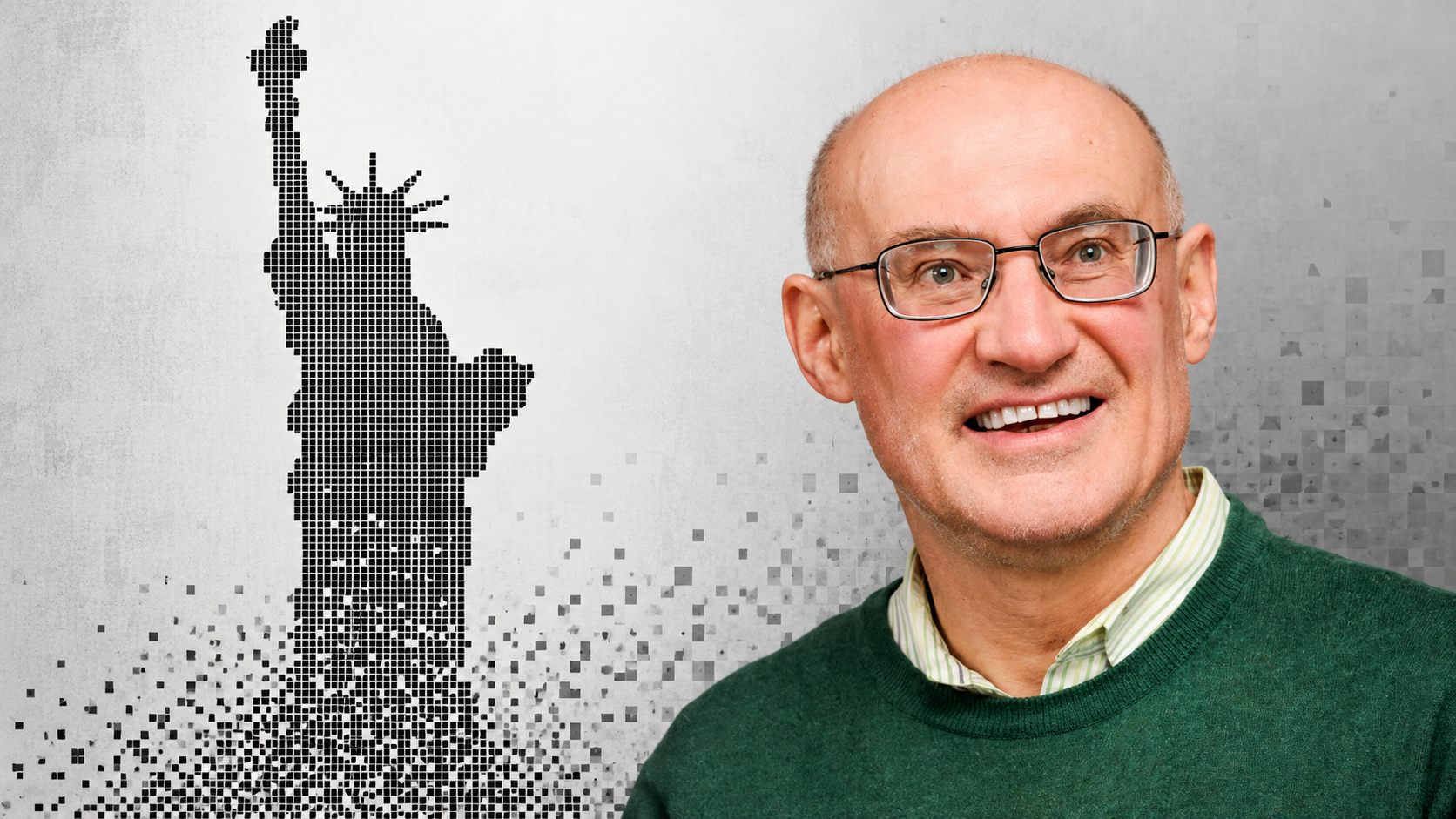
Prominent German philosopher Vittorio Hösle, professor emeritus at the University of Notre Dame in the United States and a member of the Pontifical Academy of Social Sciences at the Vatican, warns in an extensive interview with N1 that today's crisis of liberalism bears troubling similarities to the political turmoil that preceded the rise of totalitarian regimes in Europe. Yet, unlike those who regard the current crisis as evidence of liberalism's historical failure and advocate moving beyond it, Hösle believes that abandoning the liberal order could pave the way for political alternatives far more dangerous than its existing shortcomings.
The interview was prompted by Hösle's new book, Why We Must Reform Liberalism Rather Than Abandon It (Warum wir den Liberalismus reformieren müssen, statt ihn aufzugeben), in which he challenges critics of the liberal order, particularly American political scientist Patrick Deneen, whose ideas have gained influential supporters among political figures such as Viktor Orbán and J. D. Vance. Speaking to N1's Nikola Vucic, Hösle discusses Donald Trump and authoritarian threats to democracy, the concentration of economic power, the danger of a confrontation between Russia and NATO, and the moral foundations without which liberal society cannot survive. He also reflects on whether a shared moral foundation can be established in Bosnia and Herzegovina, a country divided by religion and historical memory.
N1: Why do you think liberalism should be reformed rather than abandoned? What is still worth defending?
My book was prompted by a very successful work by my former colleague at Notre Dame, Patrick Deneen, entitled Why Liberalism Failed. Frankly, I was quite disturbed by the book, partly because Deneen became something of an intellectual hero to political figures such as Viktor Orbán and J. D. Vance. Their enthusiasm suggested to me that overcoming liberalism might not lead to a higher form of political organization, but rather to a regression toward more primitive political structures. In the second chapter of my new book, published in German this year and scheduled to appear in English and Italian early next year, I compare the two great crises of liberalism: that of the 1920s and 1930s, and the crisis we are witnessing today. There are striking parallels, although our present situation is not yet as dire as it was a century ago, when totalitarian systems threatened to prevail. The historical alternatives to liberalism in the twentieth century were essentially two forms of totalitarianism: fascism and National Socialism on the right, and communism on the left. Neither proved beneficial to humanity; on the contrary. They produced devastating wars, systematic violations of human rights and, particularly in the communist case, economic disasters.
For these reasons, I become very concerned when someone proposes overcoming liberalism without offering a convincing alternative. That is precisely my objection to Deneen's book. He does not provide a blueprint for a more sophisticated political system. Instead, he laments liberalism's abandonment of traditional values. Some of his criticisms are justified, and my own book is also critical of certain developments within liberalism. Nevertheless, I believe that the only reasonable path forward is to preserve and reform its rational core. That core manifests itself in three principal areas: economic policy, constitutional government and international law. The fundamental idea of liberalism is that human beings possess universal rights simply by virtue of being human. This is a relatively recent historical achievement. What slowly emerged in the seventeenth and eighteenth centuries was the recognition that certain rights belong to human beings as such. This idea found expression in the American Declaration of Independence and the French Declaration of the Rights of Man and of the Citizen. These were enormous advances that we should never put at risk.
In economics, liberalism requires a system open to everyone willing to work and contribute to satisfying the needs of others. Economic freedom matters not primarily because it is an absolute value, but because the relatively free interaction of individuals generally produces a more effective equilibrium between supply and demand. In constitutional government, the central principle is the separation of powers. The judiciary must remain independent of both the executive and the legislature. Without judicial independence, the rule of law cannot survive. Democracy is certainly compatible with liberalism, but I strongly reject the populist understanding of democracy according to which a party that wins a majority may do whatever it wishes. Majority rule must be constrained by the rights of minorities, and those rights require independent institutions capable of checking the majority's power. If I had to choose between the more aristocratic liberalism of nineteenth-century constitutional monarchies and a totalitarian democracy, I would prefer the former. Fortunately, we do not face that choice. Liberal democracy offers a synthesis of political participation and constitutional limitations, and that is the system I defend. Finally, in international relations, liberalism must encourage cooperation among states and seek to overcome war as an institution. War has accompanied humanity throughout its history, but today it possesses the capacity to destroy humanity itself. However, rejecting aggressive war is insufficient unless we establish mechanisms for confronting aggressors. That is why I am not a pacifist. Liberalism must be capable of defending itself, both domestically and internationally. Within states, this may require prohibiting political parties that seek to abolish fundamental constitutional principles. Internationally, it may require sanctions against aggressors, including military measures when necessary.
N1: You argue that democracy must be limited by constitutional rights. But if the majority cannot have the final word, who should decide what is right for society?
The modern constitutional state represents a remarkable equilibrium between majority rule and the protection of minorities. Constitutional rights belong to everyone, and they cannot simply be abolished because a parliamentary majority wishes to do so. When legislation violates those rights, a constitutional court must have the authority to intervene and declare it invalid. I strongly support constitutional courts precisely because they can prevent a majority from undermining the fundamental principles upon which the political system rests. My position is deeply influenced by the history of Europe during the 1920s and 1930s. In several countries, the destruction of fundamental rights, and eventually of democracy itself, began through formally democratic procedures. We should remember that Hitler led the strongest political party when President Hindenburg appointed him chancellor. His appointment was not, in itself, contrary to the democratic procedures of the time. Yet its consequences were catastrophic for Germany and the entire world. This is why democracy cannot be reduced to the will of the majority. Without constitutional safeguards, democracy can become the instrument of its own destruction.
N1: That brings us to the question of how liberalism can defend itself. What would you change first, especially when authoritarian movements are gaining strength from within democracies?
That depends partly on the country we are discussing, but one of the most urgent tasks is certainly to strengthen liberalism's ability to defend itself. Liberalism is under threat, including from authoritarian figures operating within liberal democracies. President Trump represents a fundamental threat to the American liberal constitutional order. The opportunity to address this constitutionally was lost during his second impeachment trial in January 2021. Had the Senate convicted him and disqualified him from future office, he could have been prevented from running for president again. Unfortunately, Republican senators were unwilling to support that outcome, despite the evidence that he had attempted to overturn a legitimate election and retain power against the will of the electorate.
Germany has different constitutional mechanisms. Its Federal Constitutional Court can declare political parties unconstitutional and prohibit their activities when they seek to destroy the constitutional order. In the 1950s, the Socialist Reich Party, which continued the political tradition of National Socialism, was banned, and its parliamentary mandates were revoked. The Communist Party of Germany was also prohibited. These examples illustrate the importance of a constitutional democracy possessing the means to defend itself against forces seeking its destruction. I am also increasingly concerned about the security threats facing Europe. We are already experiencing a considerable degree of hybrid warfare, and Russia appears to be calculating that Western European countries are too weak to respond decisively to further aggression. The Baltic states are particularly vulnerable in this respect.
Where Marx was right
“Marx was right to identify an inherent tendency within capitalism toward the concentration of economic power.”
N1: You have spoken about liberalism's political foundations. But what about its economic foundations? Can we really protect freedom without changing capitalism?
That is a difficult question. Capitalism has developed in profoundly unhealthy ways, although I believe we still need capitalism and, more fundamentally, market economies, which are much older and of which capitalism is a subspecies. It emerged in its modern form during the early modern period, initially as commercial capitalism and subsequently as industrial capitalism. Its defining feature is the accumulation and investment of capital to satisfy future needs. Nevertheless, capitalism contains serious structural problems, the first being its tendency to generate oligopolies and monopolies. The justification for a market economy rests largely on competition. Competition between producers should lead to better products and lower prices for consumers. But when monopolies emerge, that mechanism ceases to function effectively because monopolistic enterprises can determine prices themselves. Marx was right to identify an inherent tendency within capitalism toward the concentration of economic power. The United States began addressing this problem through antitrust legislation in the early twentieth century. Nevertheless, economic concentration has advanced much too far in recent decades, and we urgently need mechanisms capable of reducing oligopolistic power and preventing monopolies.
My second concern relates to ordoliberalism, the economic philosophy that strongly influenced the Federal Republic of Germany after the Second World War. One of its most important thinkers, Walter Eucken, argued that markets can function properly only when the institutional framework governing them is not itself subjected to market forces. This distinction is crucial. In many countries, powerful corporations and oligopolies have effectively captured governments, preventing them from introducing legislation that would restrict their economic dominance. We therefore need a public administration that is resistant to corruption and capable of making decisions independently of the economic interests it is supposed to regulate. The rules governing the market cannot simply be determined by the market's most powerful participants.
The third issue concerns what economists call merit goods. Markets are mechanisms for satisfying demand, but they do not evaluate the moral or social worth of that demand. From the market's perspective, demand for pornography and demand for education are simply two different consumer preferences. I believe we must recognize that certain goods contribute more significantly to human flourishing than others. The state is therefore justified in promoting goods that are particularly important for society. Health and education are the two most obvious examples. Individuals can function as responsible agents within a liberal society only if they possess adequate health and education, enabling them to make informed and rational choices. These are the three principal ways in which I believe capitalism must be restrained and reformed: preventing excessive economic concentration, protecting the independence of the regulatory framework, and supporting goods essential to human flourishing.
N1: You describe the concentration of economic power as a serious problem. Yanis Varoufakis argues that major technology companies now wield more power than many governments. Can existing laws still restrain them?
This is difficult for two principal reasons. First, these corporations operate internationally, while political authority remains largely organized at the national level. Effective regulation therefore requires cooperation among states. Second, these enormous corporations possess considerable bargaining power because they provide employment and contribute substantially to national economies. They can threaten governments by saying that if regulations they dislike are introduced, they will move their operations to another country. Such threats are extremely powerful. Governments fear losing jobs, tax revenues and the resources necessary to maintain social welfare programs. There is no simple solution. Ultimately, meaningful regulation requires international cooperation, because individual states often lack sufficient power to confront multinational corporations independently. This is one of the advantages of the European Union. By establishing a common economic and regulatory framework at the supranational level, it possesses greater capacity to restrain corporate power than individual member states acting alone.
N1: But if a corporation can threaten to leave a country and thereby force its government to change policy, how democratic is that decision-making process?
In a certain sense, it is democratic. We must recognize that corporations also possess the right to relocate their activities. Sometimes relocation can even be justified, particularly when a government adopts unreasonable or unjust policies. The freedom to move is itself a classical liberal principle, and I would not advocate abolishing it. However, governments can demonstrate that operating in a country with higher taxes and stricter regulations also offers significant advantages. Consider education. The United States has relatively low corporate taxation, which has helped attract businesses, but it also suffers from serious educational deficiencies. These deficiencies can have disastrous political consequences, as recent elections have demonstrated. A country that invests substantially in education may offer corporations a more competent, reliable and productive workforce. Intelligent economic actors should recognize that higher taxation and stronger regulation do not necessarily make a country less attractive. They may contribute to the creation of a more stable and better-educated society, which ultimately benefits economic activity as well.
N1: Then perhaps the question is not only what the law permits, but what companies owe society. Do corporations have moral obligations beyond profit and legal compliance?
Without question. Corporations have a responsibility to ensure that their profits reflect the legitimate satisfaction of legitimate human needs. One particularly important issue is environmental sustainability and the reduction of the ecological costs of economic activity. I understand the argument of an individual company that says it cannot voluntarily abandon environmentally destructive production methods while its competitors continue using them. Such a decision might place it at a competitive disadvantage and eventually drive it out of business. That is precisely why we need a regulatory framework that applies to everyone and ensures that profitability corresponds more closely to genuine social progress. Corporations should support the creation of such a framework, including environmental regulations and ecological taxation.
I strongly support environmental taxes, which I also defend in my book. Their purpose is not simply to impose additional burdens on companies. Rather, they help represent the interests of future generations. If future generations were already participating in the market, their demand for scarce resources would influence prices. Since they do not yet exist, they cannot express that demand. Environmental taxation allows us, at least partially, to anticipate their future needs. Future generations are disadvantaged in two fundamental ways. They have no purchasing power and therefore cannot participate in markets. They also have no votes and consequently cannot influence democratic decision-making. For this reason, I believe it would be entirely reasonable to establish an institution associated with parliament whose specific responsibility would be to represent the interests of future generations.
The threat of war
N1: You have emphasized the importance of international cooperation, both in economics and in politics. Yet international relations seem increasingly governed by threats and force. How real is the danger of a Third World War?
I share that fear. It would be naive to deny that a Third World War is a very real possibility. I consider a Russian attack against NATO territory a serious possibility in the foreseeable future. The Baltic states, as already mentioned, are particularly vulnerable, and the fundamental question is how the United States would respond. Large sections of the American population, including many Republicans, remain committed to defending Europe and NATO. President Trump, however, has demonstrated considerable ambivalence toward the alliance. This uncertainty increases the danger of Russian aggression. Moscow may calculate that Trump would be unwilling to intervene.
One scenario would involve a Russian invasion of the Baltic states or perhaps parts of eastern Poland. Initially, this could develop into a European war. A second scenario would involve Russia attempting to disrupt transatlantic communications and military movements, particularly through the northern Atlantic. Russia possesses significant naval capabilities in the Arctic region, and the geographical proximity of its northern forces to Greenland creates additional strategic concerns. Trump's ambitions concerning Greenland are scandalous. Denmark has been an exceptionally loyal American ally, including during the war in Afghanistan. The suggestion that the United States might deprive Denmark of part of its territory demonstrates a profound disregard for international law. Nevertheless, Trump was correct about one thing: Greenland's defenses have been insufficient.
There are two particularly important strategic vulnerabilities within NATO. The first is the Suwałki Gap, the narrow corridor connecting Poland and Lithuania, approximately seventy kilometers wide. Russian or Belarusian forces could potentially close this corridor very quickly, cutting the Baltic states off from the rest of NATO's territory. The Baltic countries could then face attacks from Kaliningrad, mainland Russia, Belarus and the Baltic Sea. The second vulnerability is the Greenland–Iceland–United Kingdom Gap, a strategically important maritime passage in the northern Atlantic. Russian forces operating from the Arctic could attempt to disrupt navigation and military reinforcement across the Atlantic. The most dangerous scenario, however, would involve China deciding that a major European conflict provided an opportunity to attack Taiwan or other countries in Asia. At that point, we could face a genuinely global war. The central uncertainty remains American policy. The current president holds views that are extraordinarily difficult to reconcile with the international commitments the United States has maintained for decades.
N1: You have described how a confrontation with Russia could escalate. If a NATO country were attacked, how could Europe defend itself without triggering a nuclear war?
That is an extremely serious question. I believe Europe acted both wisely and morally in 2022, when Putin delivered his historical justification for the full-scale invasion of Ukraine. (We should distinguish that invasion from the earlier Russian aggression against Ukraine, which began in 2014.) In his speech preceding the full-scale invasion, Putin made thinly veiled references to the possible use of nuclear weapons. He warned that countries attempting to interfere would face consequences unlike anything they had experienced in their history. This was clearly intended as a nuclear threat. Some people reacted by arguing that Europe should refrain from assisting Ukraine because intervention might provoke nuclear war.
I reject that conclusion for two reasons. First, there are circumstances in which we must accept risks to avoid becoming complicit in evil. Refusing to act simply because an aggressor threatens retaliation is not always a morally defensible position. Second, yielding to nuclear blackmail may ultimately make nuclear catastrophe more likely rather than less likely. If Putin discovers that threatening nuclear war allows him to achieve his political objectives, other leaders may adopt the same strategy. Trump, for example, might conclude that he too must employ nuclear threats to demonstrate his power. A world in which political conflicts are increasingly settled through nuclear intimidation would move dangerously close to self-destruction.
Personally, I do not believe that Putin is particularly likely to carry out his nuclear threats. Threatening to use nuclear weapons and actually using them are very different things. Indeed, Russia has become somewhat more cautious in its official nuclear rhetoric compared with the beginning of the full-scale invasion. There are certainly extremist commentators on Russian television who openly advocate nuclear attacks against cities such as Warsaw. Such voices exist, but my impression is that the highest levels of the Russian government have so far exercised greater caution.
N1: You said that refusing to resist aggression can make us complicit in evil. But where is the moral limit? How much risk may we impose on millions of innocent people in the name of doing what is right?
That is a very difficult question, and there is no simple answer. Everything depends on the concrete circumstances. However, I believe it would have been profoundly wrong if Europe had refused to assist Ukraine in 2022 simply because Putin had made vague nuclear threats. In my judgment, the probability that those threats would actually be carried out was relatively low. Dictatorships often succeed because people practice what we call in German vorauseilender Gehorsam, or anticipatory obedience. People observe the expressions and gestures of a dictator, imagine what he wants, and begin fulfilling those wishes before he has even demanded anything. I cannot admire such behavior. It encourages the expansion of dictatorship.
Of course, we must recognize that nuclear war would be catastrophic. But Putin himself also fears nuclear war. France possesses nuclear weapons, as does Britain, which I believe would remain committed to NATO even if the United States withdrew. The European Union has approximately 450 million inhabitants. If an entity of that size simply surrendered to Russian threats without developing a credible strategy of resistance, it would cease to be taken seriously as an international actor. Unfortunately, European governments are becoming increasingly fragile. I am particularly concerned about the forthcoming French presidential election. It is conceivable that the second round could involve Marine Le Pen and Jean-Luc Mélenchon, neither of whom is a reliable supporter of the European Union and NATO in their present forms. The Franco-German relationship has historically been the driving force of European integration. If that relationship collapses, Europe will face enormous difficulties.
Germany also faces political instability. Although I do not consider the collapse of the current government particularly likely, it remains possible. Were elections held under such circumstances, the Alternative für Deutschland would emerge as the strongest party, making the formation of a stable government extremely difficult. Putin is undoubtedly aware of these internal European weaknesses and seeks to exploit them. We are living in a very dangerous period.
N1: That seems to bring us from geopolitics to a more personal question. Can someone be genuinely moral without courage? Must morality sometimes mean acting despite fear?
Certainly. Morality frequently requires us to overcome fear. Cowardice has often contributed to horrific historical events. Consider those Germans who looked away while their Jewish fellow citizens were being deported. We can understand why individuals were reluctant to endanger themselves, but understanding their fear does not mean we should admire their behavior. We need to cultivate a culture that admires moral courage, including the courage of individuals who risk their own lives to defend others. Maintaining such a culture is extremely important.
N1: And when people do not act, how should we judge them? Is the greater danger posed by those who commit evil, or by the ordinary people who silently enable it?
That is an excellent question. The greatest moral responsibility certainly belongs to those who actively initiate and organize evil. However, there are far more people who support them out of cowardice, convenience or the hope of personal advantage. Without these followers, the principal perpetrators of evil could never succeed. We must therefore distinguish between different degrees of moral responsibility while recognizing that ordinary people play an indispensable role in sustaining oppressive systems. I have very little sympathy for those who willingly support dictators, even if they do not belong to the same circle of hell as the dictators themselves.
Let me illustrate this with an example from Austrian culture. There was a remarkable Austrian actor and satirist named Helmut Qualtinger, who performed a famous monologue entitled Der Herr Karl. In this monologue, an ordinary Austrian man recounts his life and discusses the Nazi period. At first, he portrays Hitler as a terrible figure who deceived the population. Gradually, however, he reveals his own participation in the persecution of Jewish citizens. Eventually, he recalls meeting Hitler and remarks, Wir haben uns verstanden — we understood each other. The brilliance of this monologue lies in its portrayal of the ordinary person who retrospectively condemns dictatorship while concealing his own complicity. Without millions of people like Herr Karl, Hitler would never have possessed the social foundation necessary to exercise his power. And frankly, I despise that kind of person as well.
How ordinary people enabled evil
“Without millions of people like Herr Karl, Hitler would never have possessed the social foundation necessary to exercise his power.”
N1: Your example of Herr Karl is disturbing precisely because he may see himself as a decent man. How do we recognize our own capacity for evil when we are so skilled at justifying ourselves?
It is not easy, because human beings possess numerous psychological mechanisms that protect their self-respect. One of the most important safeguards is to surround ourselves with honest friends who are willing to tell us when we have done something wrong. Our social environment can help us recognize our moral failures, but religious belief may also play an important role. If we accept a religious moral standard, we recognize that the ultimate measure of right and wrong is not simply what other people think or what the majority happens to approve. There is a moral standard that transcends prevailing social conventions. Of course, religion can also take unintelligent and harmful forms. I would never deny that. But an intellectually serious form of religiosity can help individuals preserve moral standards that go beyond the average behavior of their fellow human beings.
N1: You suggest that religion can help us judge ourselves by standards higher than social approval. Does that mean liberalism cannot survive without a deeper moral foundation?
When I was a young philosophy student in Freiburg, I attended lectures on the philosophy of law delivered by the great German jurist Ernst-Wolfgang Böckenförde, who later became a judge of the Federal Constitutional Court. Böckenförde formulated a famous paradox that remains central to German political philosophy. The paradox states that the liberal state lives by presuppositions that it cannot itself guarantee. In other words, liberalism can function only if citizens recognize certain fundamental moral principles, particularly the dignity of other human beings. Such recognition requires a deeper metaphysical and ethical foundation. Historically, these moral presuppositions were often sustained by relatively homogeneous religious communities.
However, the horrors of the European religious wars in the sixteenth and seventeenth centuries, as well as the violence experienced in your own country toward the end of the twentieth century, demonstrate that religious homogeneity cannot be regarded as a necessary condition for a functioning political order. I am strongly committed to religious freedom. Nevertheless, even a state that embraces religious pluralism must preserve among its citizens an awareness that certain moral norms exist independently of individual preferences, social conventions, or political decisions. This is closely connected to the idea of natural law: the conviction that there are moral standards against which human behavior and institutions can be judged.
Böckenförde recognized that the modern liberal state accepts a profound risk for the sake of freedom. It cannot impose a common religion without betraying its own principles, yet it still depends upon moral commitments that it cannot enforce through legislation. We must therefore seek a degree of agreement concerning fundamental values without demanding religious uniformity. I believe this is indispensable if a liberal society is to preserve its moral strength and remain willing to defend what is right.
N1: That brings me back to Bosnia and Herzegovina. In a society divided by religion and historical memory, can we find a common moral foundation without demanding that everyone share the same faith?
I believe that, in principle, this is certainly possible. Western liberalism itself provides an instructive historical example. It produced a remarkable political system, despite all its contradictions. We must not forget that slavery continued to exist in the United States until the Civil War. Nor should we overlook the connection between liberal political projects and European imperialism, which was frequently justified through the claim that colonization would bring superior moral principles to other peoples. Despite these contradictions, liberalism represented an extraordinary historical achievement.
To a considerable extent, it emerged from a moral outlook shaped by Christianity. Yet after the devastating religious civil wars, European thinkers increasingly attempted to establish political and moral principles on foundations accessible to human reason rather than dependent upon a particular religious confession. What concerns me today is that confidence in the possibility of such a rational foundation has eroded dramatically. As a philosopher, I believe it is my responsibility to defend the possibility of rationally grounded moral principles. Without confidence in such principles, the foundations of liberalism themselves become endangered.
Speaking also as a Catholic, I find it remarkable that the Catholic tradition can combine a commitment to fundamental moral truths with genuine openness toward other religions. One of the most important developments of the Second Vatican Council was precisely this movement toward greater recognition of religious freedom and respect for other faiths. I am very pleased that the Catholic Church has developed in this direction. It represents an attempt to reconcile two commitments that must not be separated: fidelity to fundamental moral values and profound respect for people whose religious convictions differ from our own.
Kakvo je tvoje mišljenje o ovome?
Učestvuj u diskusiji ili pročitaj komentare


Kakvo je tvoje mišljenje o ovome?
Učestvuj u diskusiji ili pročitaj komentare