

 Srbija
 Hrvatska
 Slovenija

N1 interview
After witnessing 7 October aftermath, Levy says Israel’s Gaza campaign ‘went beyond any moral boundary’


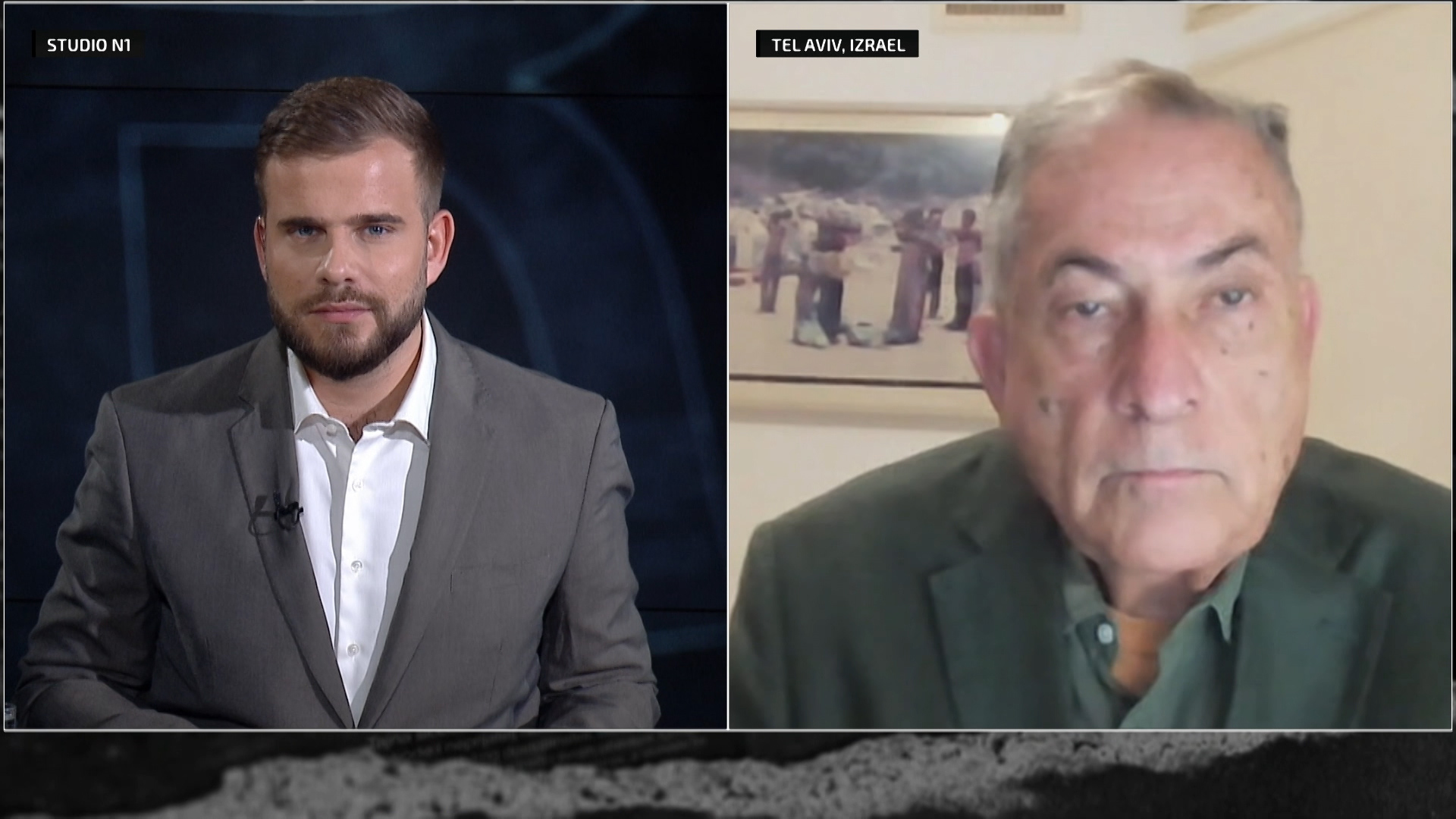
In an exclusive interview with N1, Israeli journalist Gideon Levy said that antisemitism must be confronted openly and responsibly, but stressed that invoking it must not become a tool for obscuring questions about Israel’s conduct in Gaza or the broader political roots of the conflict.
While unequivocally condemning the October 7 attacks, Levy said that acknowledging trauma cannot justify policies that inflict large-scale suffering on Palestinians.
Levy visited the southern Israeli communities attacked by Hamas just two days later.
"There was the 7th of October. It was horrible. 1200 Israelis were slaughtered. I've been in those locations on the 9th of October, two days after. And what I saw there, I really never saw in my life. Maybe in Sarajevo in 93, even this I'm not sure. In 93 when I visited Sarajevo in the siege. But in any case, it was horrible. And this should be condemned. And this should be public. And this should the whole world hear about and draw the conclusions", he said.
Levy described Israel’s military campaign in Gaza as a response that quickly escalated far beyond any moral or proportional boundary, with a devastating impact on civilians.
"And then came the war, which was very fast, went out of any proportion. And there is no justification for what Israel had done there, making Gaza an unlivable place. A home of 2.3 million people, most of them refugees, second and third generation", he explained.
He questioned how mass civilian casualties could be reconciled with claims of self-defense.
"What's the connection between the 1200 innocent people who were slaughtered in the south of Israel in a very brutal way to the slaughtering of 20,000 children, to the slaughtering of 1,000 babies? I mean, what's the connection? What's the connection between this and self-defense”, he asked.
Levy argued that Jewish trauma cannot be used to justify what Palestinians endure today.
"I recognize any Jewish trauma, as long as it is not being manipulated, as long as it is not being used for illegal and illegitimate purposes. Like in many cases, it is the case here. No doubt", he added.
“I am part of Israel” but unwilling to defend injustice
Levy emphasized that he speaks from within Israeli society yet rejects unconditional loyalty to state policy.
"I'm part of Israel. I was born here. I die here. And I'm part of everything that the Israelis go through. I go through it with them as part of the Israeli people. No doubt about it. But I'm not ready to justify everything or anything because of what we are going through”, he said.
He noted that some hostile rhetoric from the region reflects deep-seated grievances linked to decades of occupation and inequality.
"Yes, there are many voices in the Arab world and among Palestinians… that are very unpleasant to hear for Israelis… Someone has to ask also, why do they feel that way", he said.
Regarding the backlash against UN Secretary-General António Guterres, Levy insisted that context cannot be erased.
"When the General Secretary of the UN said… there is a context for the crimes of the 7th of October… Israel went out of its way and condemned him… But he said the truth. Yes, there is a context. This does not justify everything. But we have to understand that everything has a reason", he continued.
On “from the river to the sea” and Palestinian aspirations
Levy also addressed the controversy surrounding the slogan “From the river to the sea, Palestine will be free” and noted that it has been used in different and sometimes troubling ways. He explained that while the phrase is deeply meaningful for many Palestinians as a call for equality and freedom, it is also true that some individuals, including antisemites, misuse it to promote hateful or exclusionary agendas.
"I don't know the proportion, but there are those, including antisemites. I don't deny antisemitism, for God’s sake. There are many antisemites who use this to express their antisemitism", he said, stressing that such misuse must be recognised and condemned.
However, Levy emphasised that for many more people the slogan represents a legitimate demand for universal rights rather than a call for Israel’s eradication.
"At the same time, there are many, many, many people of conscience who think that between the river and the sea everyone must be free. And this I can adopt with great enthusiasm. That is exactly my dream or my vision."
He described his hope for a democratic political framework for all who live between the river and the sea.
"Equality between the river and the sea… it should be one state, a democratic state… But anyone who has another idea which can be implemented, I'd be more than happy to hear about it”, he explained.
He rejected claims that such visions imply violence toward Israelis.
"The call for freedom between the river and the sea does not mean necessarily extermination of Israel… This is not extermination. This is called, in any language, democracy”, he stressed.
Justice before peace
Levy said that justice must come before any durable political settlement, stressing that Palestinians remain far from receiving even their most basic rights.
"I think that the goal should be not peace but justice… first of all, we have to create some relative justice. And the situation is so far from justice right now”, he said.
He expressed doubt that Israel would initiate such change on its own.
"It will not come from the Israelis. They will never initiate it and maybe also never agree to it", he added.
According to Levy, only significant international pressure can open a path toward equality and the protection of Palestinian rights.
"It must come from the international community and above all, from the United States… If we wait until the Israelis change, it will never happen", he concluded.
╰┈➤ Program N1 televizije možete pratiti UŽIVO na ovom linku kao i putem aplikacija za Android /iPhone/iPad
Kakvo je tvoje mišljenje o ovome?
Učestvuj u diskusiji ili pročitaj komentare


Kakvo je tvoje mišljenje o ovome?
Učestvuj u diskusiji ili pročitaj komentare