


 Srbija
 Hrvatska
 Slovenija

Alibasic warns of “fear industry” behind islamophobia, says Bosnian Muslims see BiH as part of the West


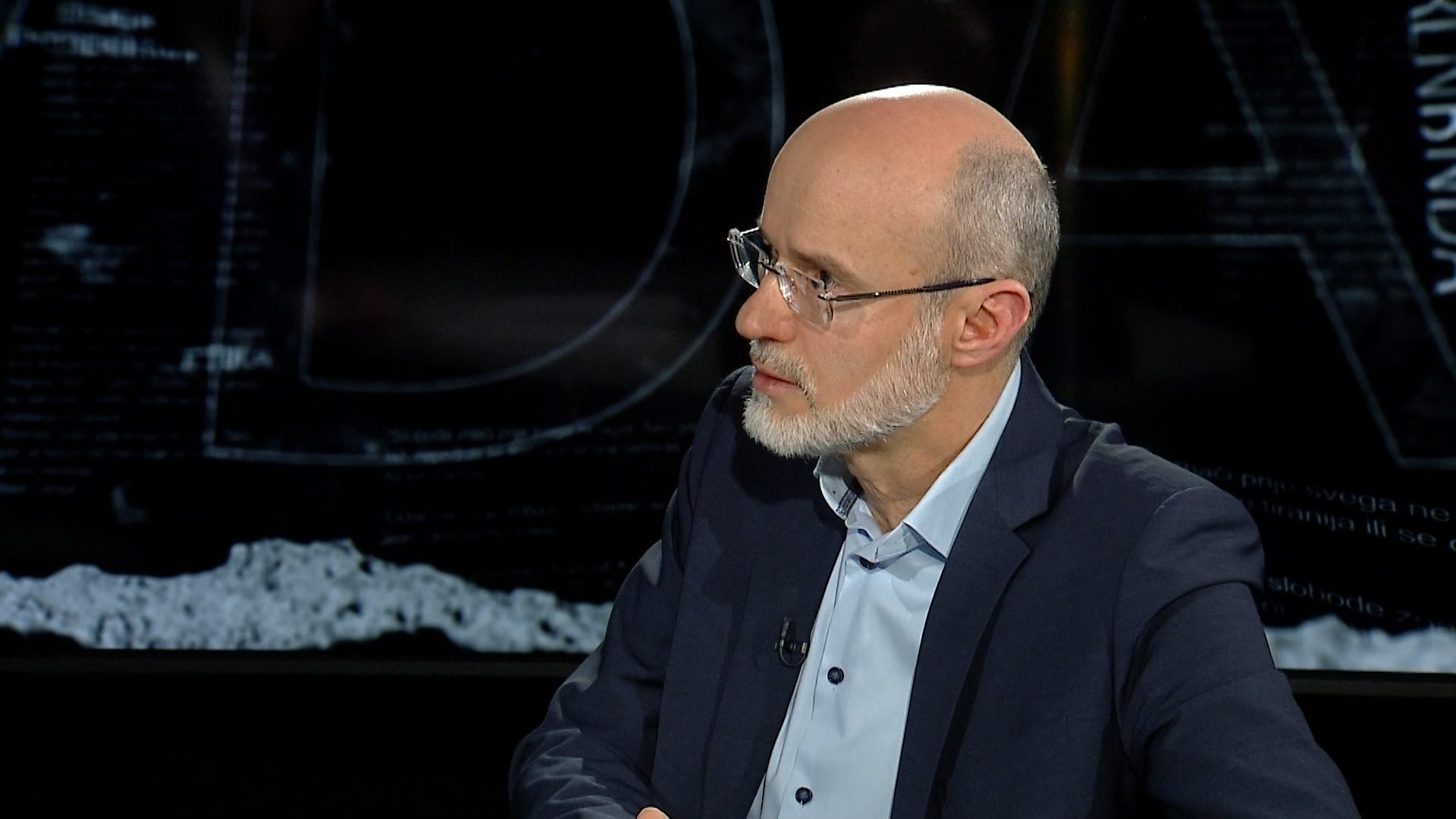
Ahmet Alibasic, professor at the Faculty of Islamic Studies in Sarajevo, said in N1’s Izvan okvira that Bosnian Muslims clearly identify Bosnia and Herzegovina as part of the West, while warning that islamophobia is being systematically fueled through what he described as a “fear industry”.
Citing research conducted by the International Republican Institute (IRI) several years ago, Alibasic noted that Bosnian Muslims show the least ambiguity when it comes to the country’s geopolitical orientation.
“You may be surprised to learn that Bosnian Muslims predominantly believe that Bosnia and Herzegovina belongs more to the West than to the East, and they have the fewest dilemmas in that regard,” he said.
Reflecting on the refugee experience during the 1990s war, Alibasic pointed out that although some Bosnian Muslims initially sought refuge in predominantly Muslim countries, they did not remain there permanently.
“They did not only return to Bosnia; when they were leaving those countries, they moved to predominantly Christian societies – Western Europe, the United States, Australia and New Zealand. Bosnian Muslims have clearly expressed that they belong to the West,” he explained.
Speaking about the rise of anti-Muslim sentiment, Alibasic stressed that while certain fears may exist in society – whether justified or not – they alone cannot account for the level of hostility present.
“That fear would not generate such a degree of anti-Muslim sentiment and hatred if there were no manipulation of that fear, if there were no industry of fear deliberately producing it,” he said.
Alibasic also underlined the importance of reshaping dominant public narratives in the Balkans, arguing that current nationalist interpretations of history do not reflect the region’s complex and shared past.
“If our real history in the Balkans had truly been as exclusive as it is portrayed in nationalist historiographies, our societies today would be far more homogeneous than they actually are,” he said, calling for more inclusive narratives as a necessary response to division and polarization.
Kakvo je tvoje mišljenje o ovome?
Učestvuj u diskusiji ili pročitaj komentare


Kakvo je tvoje mišljenje o ovome?
Učestvuj u diskusiji ili pročitaj komentare