

 Srbija
 Hrvatska
 Slovenija


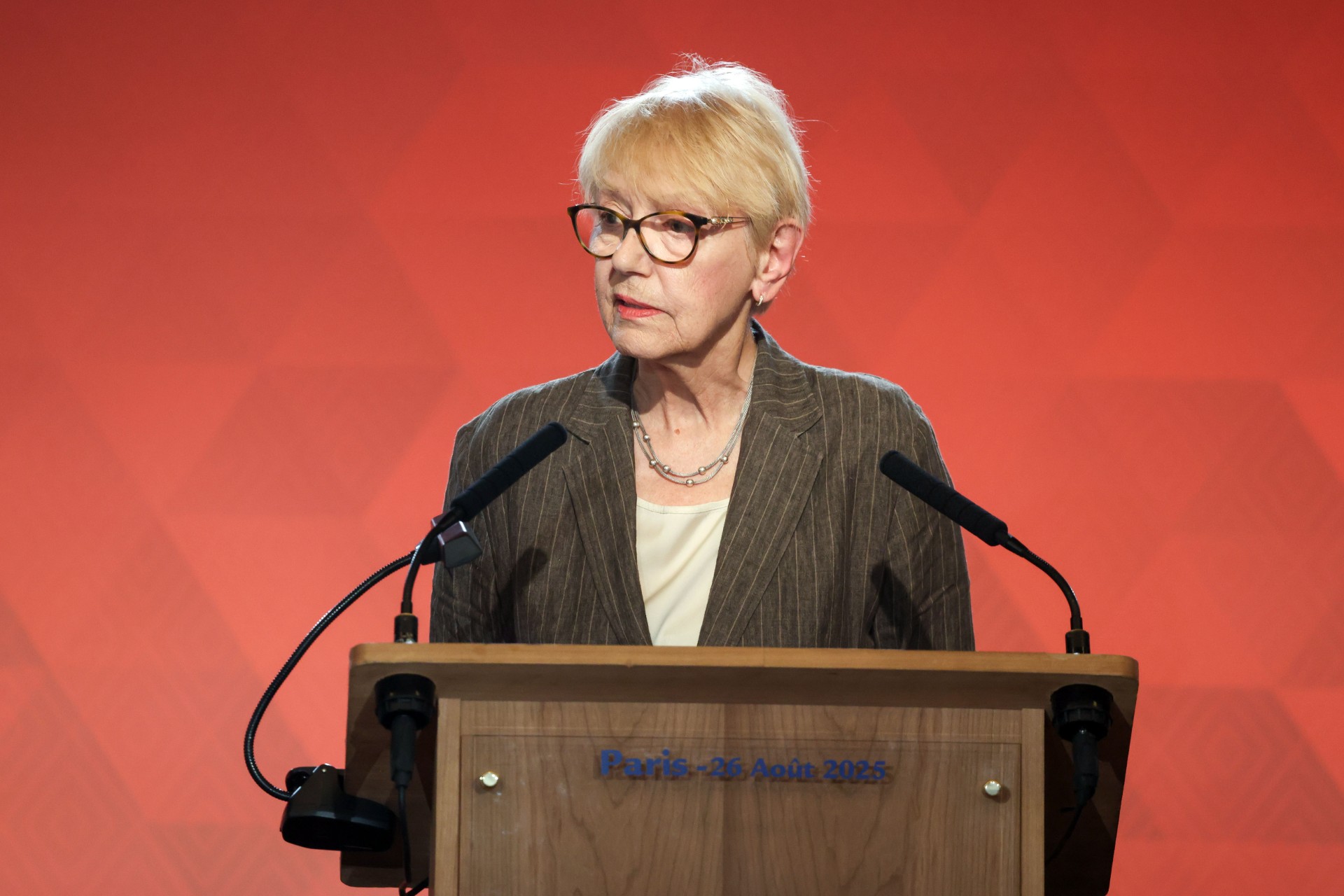
Sonja Biserko, president and founder of the Helsinki Committee for Human Rights in Serbia, warned in Paris that Iran’s regime is celebrating past atrocities as “historic success.”
Speaking at a conference marking the anniversary of the 1988 massacre, she urged the international community not to stay silent in the face of renewed executions and open glorification of mass killings.
“When I speak of Iran, I do not speak only of politics or repression—I think of the mothers who still search for the graves of their children from 1988, and of the young Iranians who, despite everything, dare to dream of freedom,” Biserko said, stressing that “their struggle is not abstract; it is deeply human.”
She underlined the responsibility of the international community: “Their courage must not be met with the silence of the world.”
Biserko warned that the crimes of the past remain relevant today.
“The regime that once buried thousands in mass graves now celebrates those crimes as a ‘historic success"”, she said.
She referred to the July 7 statement by Fars News, the outlet of Iran’s Revolutionary Guard, which described the 1988 mass executions as a “successful historic experience.”
“This was not only a revision of history, but an open call for crimes to be repeated. A warning that such horrors may happen again”, Biserko cautioned.
She also drew attention to the recent executions of opposition members.
“In recent weeks, two men—Behrouz Ehsani and Mehdi Hassani—were executed for alleged ties to the opposition PMOI. Their trials were a sham, and their confessions were coerced,” she said, adding that 14 other prisoners now face the same fate.
Biserko condemned efforts to erase the traces of these crimes.
“Tehran’s deputy mayor admitted that part of Behesht Zahra cemetery, where thousands of executed prisoners were buried, was destroyed and turned into a parking lot. This is not only desecration—it is an attempt to erase memory itself.”
She pointed to impunity as the key driver of continued crimes:
“The killers of 1988 were never held accountable. Many rose to the highest state positions. That impunity emboldens the regime today.”
According to her, the international community has tools to act:
“The UN fact-finding mechanism on Iran must immediately expand its mandate—first, to address the Revolutionary Guard’s incitement to crimes against humanity, and second, to confront the current wave of executions and repression,” she urged.
In a powerful conclusion, Biserko recalled the silence of the international community in 1988:
“The world was silent then. Thousands were killed. Warnings existed, but they were ignored. Today the regime itself broadcasts warning signs. Silence now would mean complicity. Remembering the victims is not enough—we must break the cycle of impunity.”
She ended with an emotional appeal: “The international community must stand with the Iranian people—before today’s repression turns into tomorrow’s massacre.”
The conference was organized by the Municipality of the 17th arrondissement of Paris in partnership with the Committee for the Support of Human Rights in Iran (CSDHI) and the French Mayors’ Committee for a Democratic Iran (CMFID). The event aimed to commemorate the victims of the 1988 massacre, highlight ongoing human rights violations, and call for international support for the Iranian people in their struggle for freedom and justice.
Kakvo je tvoje mišljenje o ovome?
Učestvuj u diskusiji ili pročitaj komentare


Kakvo je tvoje mišljenje o ovome?
Učestvuj u diskusiji ili pročitaj komentare