Srbija
 Hrvatska
 Slovenija

Bosnia and Herzegovina marks 83rd anniversary of statehood restoration amid ongoing holiday divide


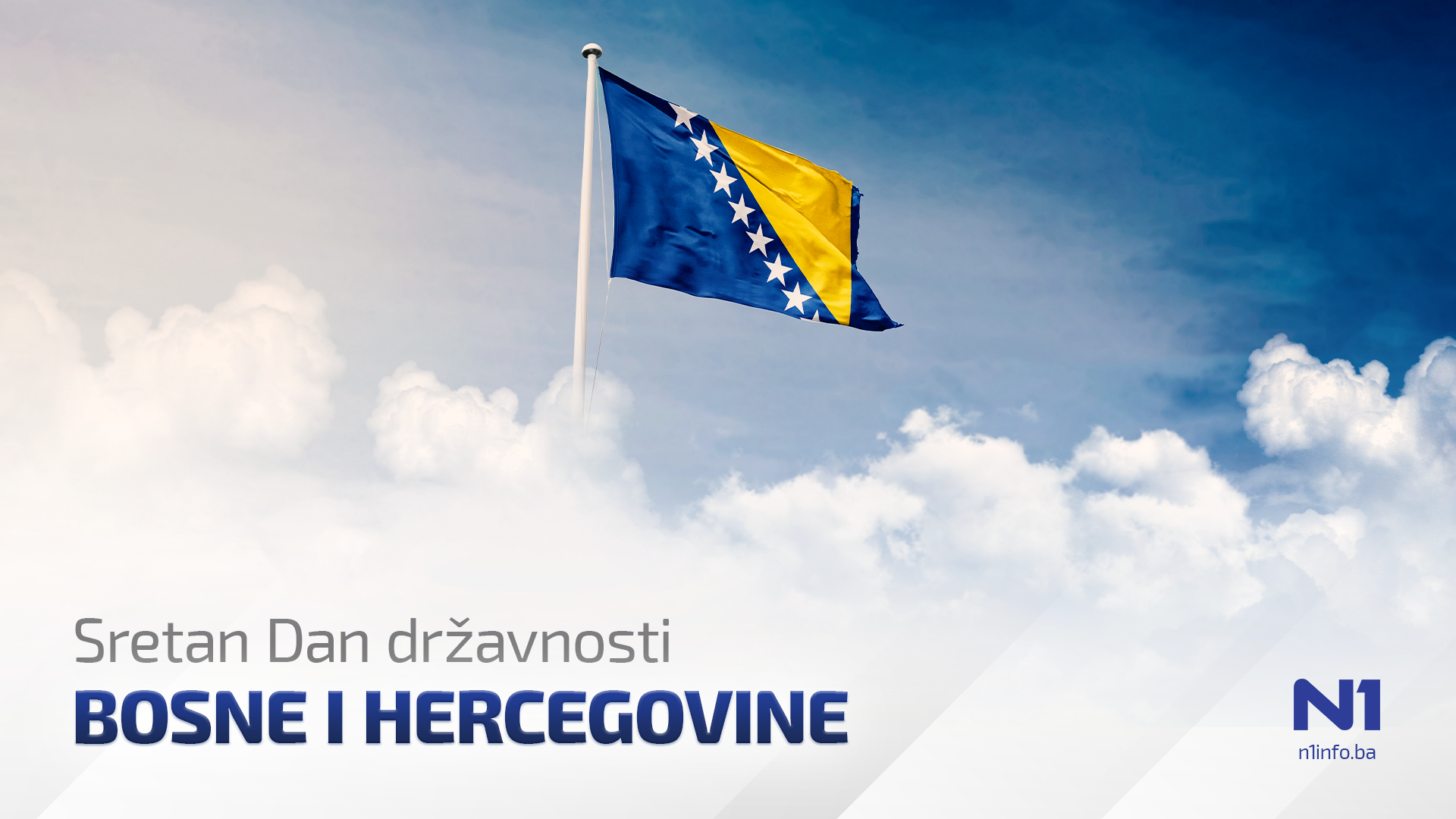
Bosnia and Herzegovina is marking Statehood Day today, commemorating the 83rd anniversary of the First Session of the State Anti-Fascist Council for the National Liberation of Bosnia and Herzegovina (ZAVNOBiH). Held in Mrkonjic Grad during the Second World War, the historic gathering restored the statehood Bosnia had lost in 1463. Yet 31 years after the Dayton Peace Agreement, the country still lacks a state-level law on public holidays, leaving 25 November a non-working day exclusively in the Federation of Bosnia and Herzegovina, while remaining a regular working day in Republika Srpska and Brcko District.
The First Session of ZAVNOBiH began on the evening of 25 November 1943 in a building in Mrkonjic Grad, then known as Varcar-Vakuf, which was under Partisan control, concluding in the early morning hours of 26 November. Representatives of Serbs, Muslims, and Croats from across the country gathered at the assembly, many arriving directly from the front lines. Delegates elected 173 council members, a 31-member Presidium, and a five-member Presidency chaired by physician Dr Vojislav Kecmanovic, with Avdo Humo, Aleksandar Preka, and Djuro Pucar Stari serving as vice-presidents and Hasan Brkic as secretary. Rada Vranjesevic, who was later proclaimed a People's Hero, also addressed the session.
The assembly's most consequential document was the ZAVNOBiH Resolution, which defined Bosnia and Herzegovina as an equal federal unit within the future Yugoslavia within its historical borders, rejecting any division among neighbouring territories. Historians regard the resolution’s declaration that the country is "neither Serb, nor Croat, nor Muslim, but Serb, and Muslim, and Croat, a free and brotherly Bosnia and Herzegovina in which full equality and parity of all Serbs, Muslims, and Croats will be ensured" as the cornerstone of modern Bosnian statehood. Delegates were also elected in Mrkonjic Grad to attend the Second Session of AVNOJ in Jajce four days later, on 29 November 1943, where the foundations of federal Yugoslavia were laid.
Subsequent sessions further solidified these institutions. At its Second Session in Sanski Most from 30 June to 2 July 1944, attended by 107 of the 148 accredited delegates, ZAVNOBiH declared itself the supreme legislative and executive body of Bosnia and Herzegovina and adopted the Declaration on the Rights of Citizens. Its third and final session took place in Sarajevo from 26 to 28 April 1945, three weeks after the city's liberation, transforming ZAVNOBiH into the People's Assembly of Bosnia and Herzegovina and forming its first People's Government.
Observed as a holiday of the Republic of Bosnia and Herzegovina during socialist Yugoslavia, 25 November was retained as Statehood Day throughout the 1992–1995 war and codified by a 1995 law published in the Official Gazette of RBiH. Under the continuity principle enshrined in the Dayton Constitution, existing laws remain in force until replaced by new legislation. However, all attempts to pass a unified state holiday law have failed due to disputes over both 25 November and 1 March, Independence Day.
Today, three separate holiday laws govern the two entities and Brčko District, sharing only New Year's Day and 1 May in common. Republika Srpska's holiday legislation does not recognise Statehood Day; authorities in the entity maintain that present-day Bosnia and Herzegovina was created by the Dayton Agreement and instead observe 21 November, the date the accord was initialled in 1995.
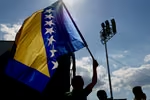
Observances traditionally begin with the raising of the state flag and the playing of the national anthem on Hum Hill above Sarajevo, followed by wreath-laying ceremonies at the Eternal Flame and memorials dedicated to anti-fascist fighters and defenders of Bosnia and Herzegovina. Anti-fascists also gather annually outside the ZAVNOBiH building in Mrkonjic Grad, while commemorations have in recent years been held at the Srebrenica–Potočari Memorial Centre as well.
In Sarajevo today, the programme commenced at 8:30 am with the flag-raising ceremony on Hum Hill, followed by delegations from all levels of government, alongside SABNOR and the Coordination of Veterans' Organisations of Sarajevo Canton, laying flowers at the Eternal Flame at 9:00 am, the Kovaci Martyrs' Cemetery and the grave of the first President of the RBiH Presidency Alija Izetbegovic at 9:30 am, the Memorial to the Murdered Children of Besieged Sarajevo 1992–1995 at 10:00 am, and Vraca Memorial Park at 10:30 am City of Sarajevo officials are scheduled to lay wreaths at the Lav, St Joseph, St Mark, and Stadion (Kosevo) cemeteries at 11:00 am, concluding at 11:30 am at the memorial outside the Municipality of Novi Grad Sarajevo.
Kakvo je tvoje mišljenje o ovome?
Učestvuj u diskusiji ili pročitaj komentare


Kakvo je tvoje mišljenje o ovome?
Učestvuj u diskusiji ili pročitaj komentare