Srbija
 Hrvatska
 Slovenija

Bosnia scores 79 on Gallup's Law and Order Index, among Europe's lowest-ranked countries


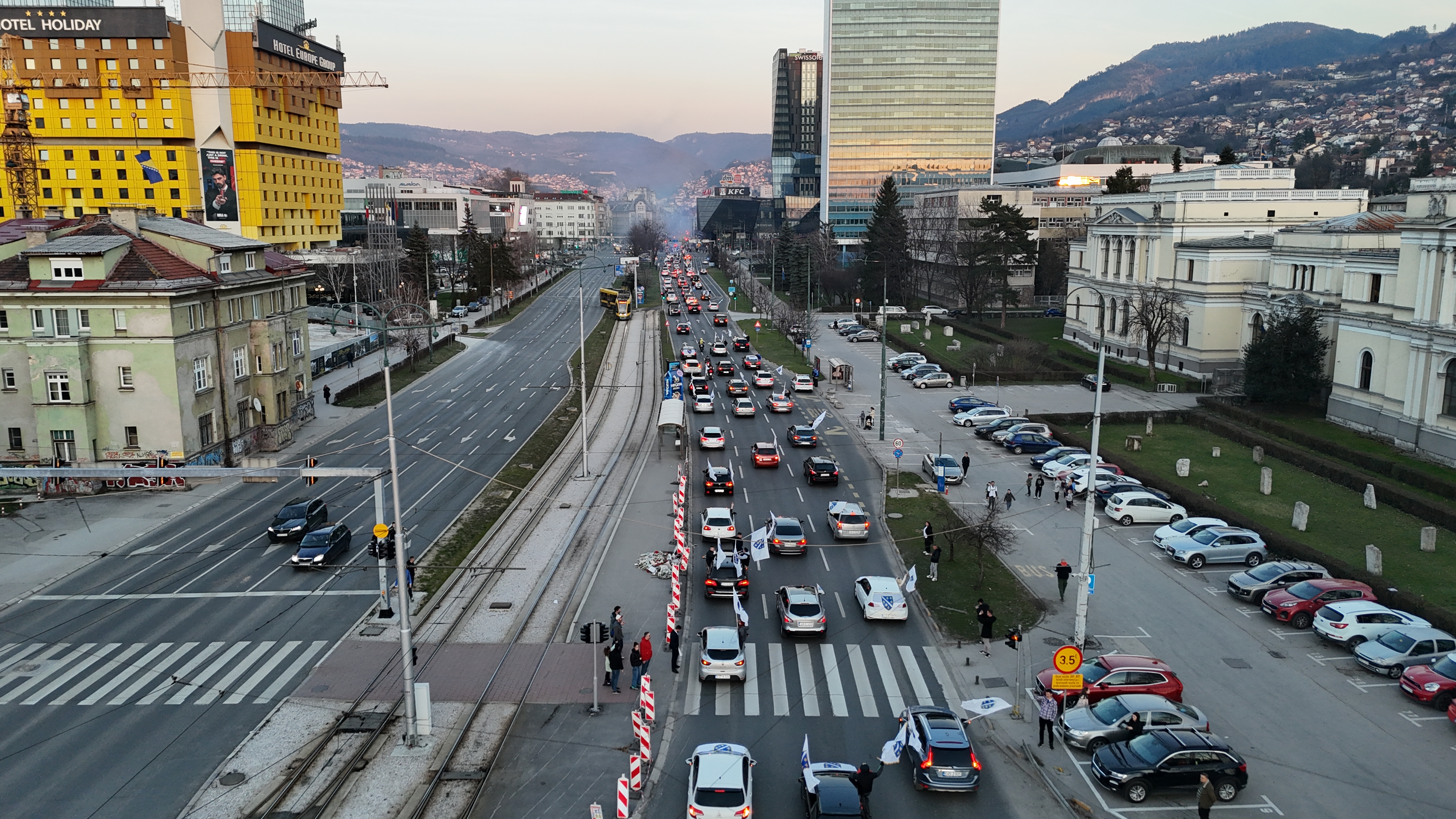
Bosnia and Herzegovina scored 79 out of a possible 100 points on Gallup's Law and Order Index, placing it among European countries with lower scores in terms of perceived personal safety and public confidence in law enforcement institutions.
According to the "Global Safety Report 2026," published by the U.S.-based research organization Gallup on November 17, the survey was conducted in 2025 among more than 143,000 respondents in 140 countries and territories worldwide.
Iceland tops the European list with 93 points, while Switzerland, Lithuania and Norway each scored 91. They are followed by Kosovo, Denmark and Finland, with 90 points each.
Among European countries with the lowest scores are Greece and Ukraine, with 75 points each, North Macedonia with 78, and Bosnia and Herzegovina and Cyprus with 79 points each.
Among countries in the region, Slovenia and Sweden scored 88 points each, Croatia and Albania 86 each, Montenegro 84, and Serbia 82.
Gallup's index is based on respondents' answers to four questions concerning their sense of safety when walking alone at night, confidence in local police, and experiences of theft and physical assault in the previous 12 months.
A higher score indicates a larger share of the population that feels safe in everyday life.
Globally, Tajikistan recorded the highest score, with 96 points, followed by Singapore and the United Arab Emirates with 95 each, and Vietnam with 94.
The global average was 80 points, three points lower than the previous year.
According to Gallup's survey, 69 percent of adults worldwide said they felt safe walking alone at night in the area where they live, a decline of four percentage points compared to the previous year.
However, this share is nine percentage points higher than in 2014, when one of the lowest levels in the past two decades was recorded.
Gallup emphasizes that a sense of personal safety and confidence in the police are important indicators of quality of life, but that the index results should not be equated with a country's overall level of security or official crime rates alone.
The survey shows that economic prosperity and homicide rates are more strongly associated with perceptions of personal safety than the mere presence of armed conflict.
Kakvo je tvoje mišljenje o ovome?
Učestvuj u diskusiji ili pročitaj komentare


Kakvo je tvoje mišljenje o ovome?
Učestvuj u diskusiji ili pročitaj komentare