

 Srbija
 Hrvatska
 Slovenija


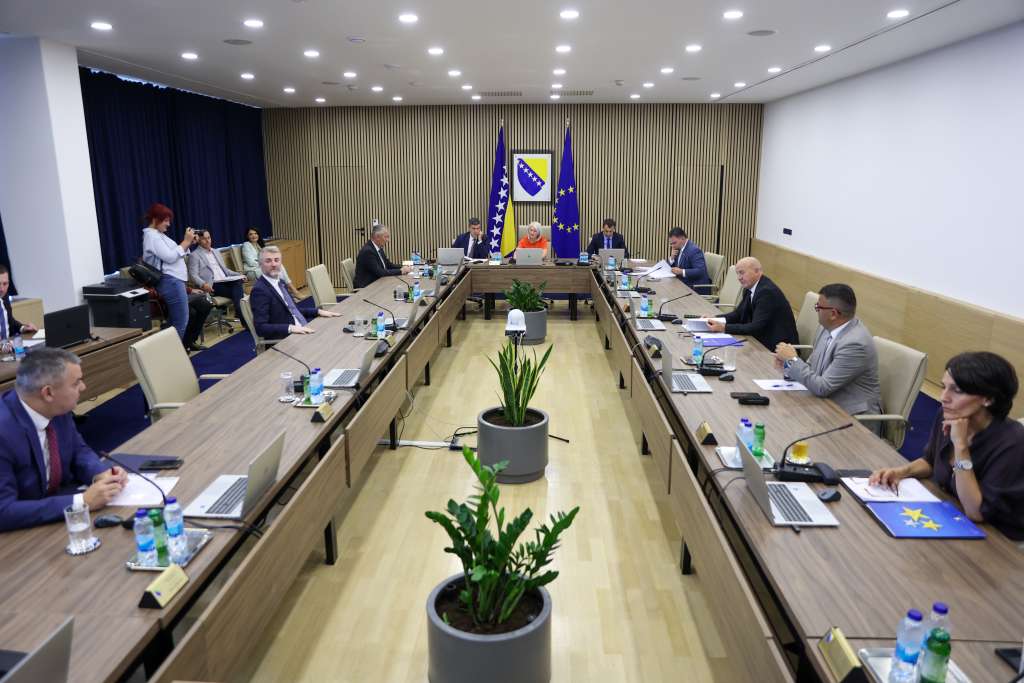
Bosnia and Herzegovina’s Council of Ministers once again failed to adopt the information on the implementation of activities for harmonising the country’s Reform Agenda and the accompanying List of Reforms at its session on Tuesday.
After an unsuccessful attempt during a recent emergency telephone session, the documents were resubmitted for consideration, but no agreement was reached. As a result, the EU Growth Plan, a key document for accessing European Union funds allocated to Western Balkan countries, has been blocked once more.
All ministers voted in favour of adopting the Growth Plan except for Stasa Kosarac of the Alliance of Independent Social Democrats (SNSD), who voted against it in the first round. Bosnia’s Finance Minister Srđan Amidzic (SNSD) was absent from today’s session.
The adoption of the Reform Agenda is crucial for Bosnia and Herzegovina to secure access to EU Growth Plan funds and to avoid further sanctions. The country already lost €108.5 million in July, and unless the document is adopted by the end of September, it risks losing another €108.5 million and potentially being excluded from the program altogether.
Following the vote, Predrag Kojovic of the opposition party Nasa stranka reacted on Facebook, writing: “By blocking the Growth Plan, Dodik has imposed sanctions on the citizens of Republika Srpska.”
The European Union’s Growth Plan for the Western Balkans, presented at the end of 2023, aims to accelerate regional integration into the European market and promote reforms. The plan is valued at around €6 billion, of which €2 billion are grants and €4 billion are favourable loans. Access to funds is conditional on progress in areas such as the rule of law, economic competitiveness, and administrative capacity.
The Growth Plan builds on Bosnia’s earlier Reform Agenda, adopted in 2015, which focused on socio-economic changes and improving the business environment. While the original agenda emphasised fiscal stability, the labour market, and economic growth, the EU’s new plan brings direct financial benefits, but only if Bosnia demonstrates readiness to fulfil its obligations.
The decision not to adopt the documents marks a setback in aligning Bosnia and Herzegovina with regional and EU priorities. The future of the process now depends on political will within the country’s institutions.
Kakvo je tvoje mišljenje o ovome?
Učestvuj u diskusiji ili pročitaj komentare


Kakvo je tvoje mišljenje o ovome?
Učestvuj u diskusiji ili pročitaj komentare