

 Srbija
 Hrvatska
 Slovenija

Bosnia’s Foreign Ministry audit flags financial irregularities, transparency issues


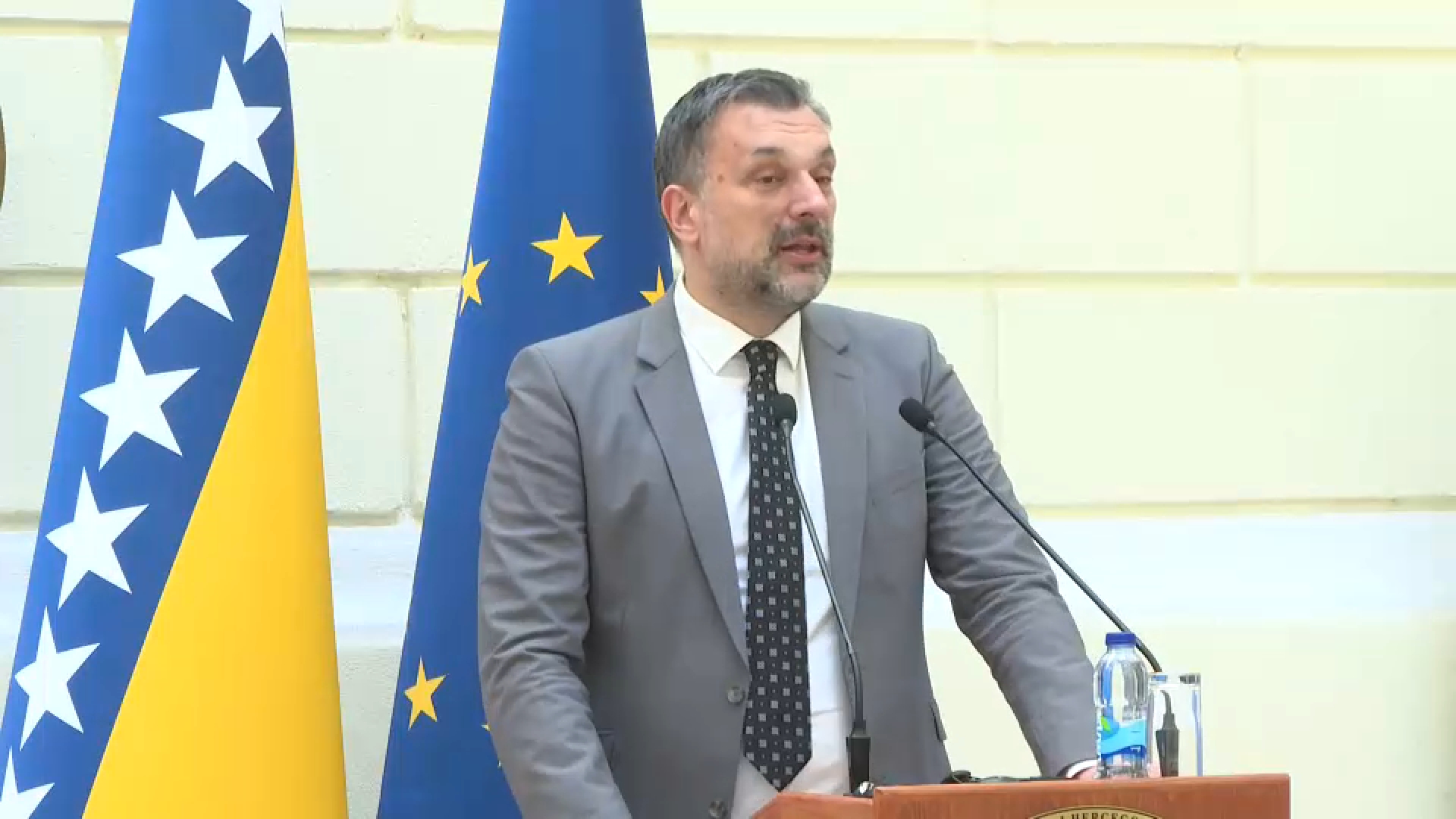
The Audit Office of the Institutions of Bosnia and Herzegovina has published its 2024 audit report for ministries and institutions, issuing a qualified opinion for the Ministry of Foreign Affairs (MFA). The report highlights financial irregularities, employment transparency concerns, and procedural deficiencies.
Key financial findings
The auditors noted discrepancies in advance payments for vehicle procurements at diplomatic missions in Stuttgart, Tokyo, and Cairo. A total of 193,260 Bosnian marks (approximately €98,750) in advances was either not properly recorded or misclassified. For instance, advances for Stuttgart and Cairo were recorded as assets in preparation, while the Tokyo transaction was not recorded at all.
Additionally, the Ministry was unable to provide documentation for some receivables dating back to its transition to the ISFU accounting system in 2002. A proposed write-off of 22,689 marks (approximately €11,600) in undocumented receivables has been submitted to the Finance Ministry.
The MFA purchased 16 vehicles for diplomatic-consular posts (DKPs) in 2024, valued at 1,081,005 Bosnian marks (approximately €552,400). One vehicle, worth 70,000 marks (approximately €35,750), was funded through donations for the embassy in Kuwait. However, auditors found procedural issues in several procurements, such as signing contracts before receiving legal clearance and recording assets before delivery.
Employment and transparency issues
The report criticises the Ministry’s non-transparent recruitment processes. Five civil servants were hired through external transfers from other institutions, and one was taken directly from an entity-level ministry. There is no evidence that internal recruitment options were exhausted before external hiring. Additionally, the criteria for verifying candidates’ qualifications were unclear, and the selection of institutions from which staff were transferred was not explained.
Auditors also raised concerns about the continued use of temporary work arrangements without public competition. Thirteen civil servants were assigned to higher-level duties without formal promotion. Notably, three senior management positions, the Ministry Secretary and two Assistant Ministers, have been vacant for years, with lower-ranked staff covering these roles through ministerial delegation.
Irregular internal transfers and promotions
In 2024, 26 staff members were internally reassigned, while 11 employees received internal promotions. The internal mobility largely involved returning diplomats reassigned to headquarters. However, the report points out that the criteria for reassignments and promotions remain undefined and inconsistent, particularly when staff return from higher-ranking positions abroad.
According to the auditors, this lack of a standardised policy continues to create confusion and potential bias in HR practices. Similar concerns were flagged in previous years without corrective measures.
Contracts for regular duties
The Ministry continued hiring external collaborators under service contracts to perform regular administrative tasks, some on a month-to-month basis. This violates regulations, which stipulate that such contracts should only be used for temporary, non-systematic work.
“The Ministry must ensure that service contracts are limited to exceptional cases and not used for regular job functions,” the Audit Office stated.
While the Ministry’s financial statements are deemed largely fair, material uncertainties regarding assets, receivables, and employment practices have led to a qualified audit opinion. The Audit Office urged the Ministry to strengthen transparency, adhere to procurement protocols, and align HR practices with established legal frameworks.
Kakvo je tvoje mišljenje o ovome?
Učestvuj u diskusiji ili pročitaj komentare


Kakvo je tvoje mišljenje o ovome?
Učestvuj u diskusiji ili pročitaj komentare