

 Srbija
 Hrvatska
 Slovenija


The Republika Srpska (RS) entity is set to adopt a new Law on Payment Services and a regulation on the physical transfer of cash, marking a critical step toward Bosnia and Herzegovina joining the Single Euro Payments Area (SEPA). The draft law was submitted to parliamentary procedure late last year and is expected to be on the agenda of the next National Assembly session.
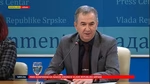
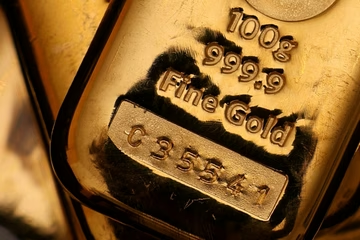
In addition to this legislation, a regulation on physical cash transfers is being finalized, with remaining harmonizations focused on the entry of investment gold. Marko Djogo, a professor at the Faculty of Economics, University of Istocno Sarajevo, noted that joining SEPA sends a vital signal to potential investors. "Our economy is small and open, meaning businesses will face lower costs when making payments in euros," Djogo explained, adding that membership should also help formalize remittance flows from the diaspora.
While reports suggest that BiH loses 100 million euros annually by remaining outside the SEPA zone, Djogo stated the calculation method is unclear, though he confirmed that cross-border transactions in euros will undoubtedly become cheaper.
Central Bank Governor Jasmina Selimovic confirmed that a pre-application for SEPA was submitted in December 2025. "BiH is ready for the next stages as both entity governments have adopted the necessary laws. The formal application is expected in the first quarter of 2026, aiming for faster and safer euro payments," Selimovic stated.
The SEPA zone currently covers 41 countries. Bosnia and Herzegovina remains the only country in the region that has not yet integrated into this unified payment system.
Kakvo je tvoje mišljenje o ovome?
Učestvuj u diskusiji ili pročitaj komentare


Kakvo je tvoje mišljenje o ovome?
Učestvuj u diskusiji ili pročitaj komentare