Srbija
 Hrvatska
 Slovenija

Bosnia's transport sector, FBiH employers again call for solution to Schengen restrictions on drivers


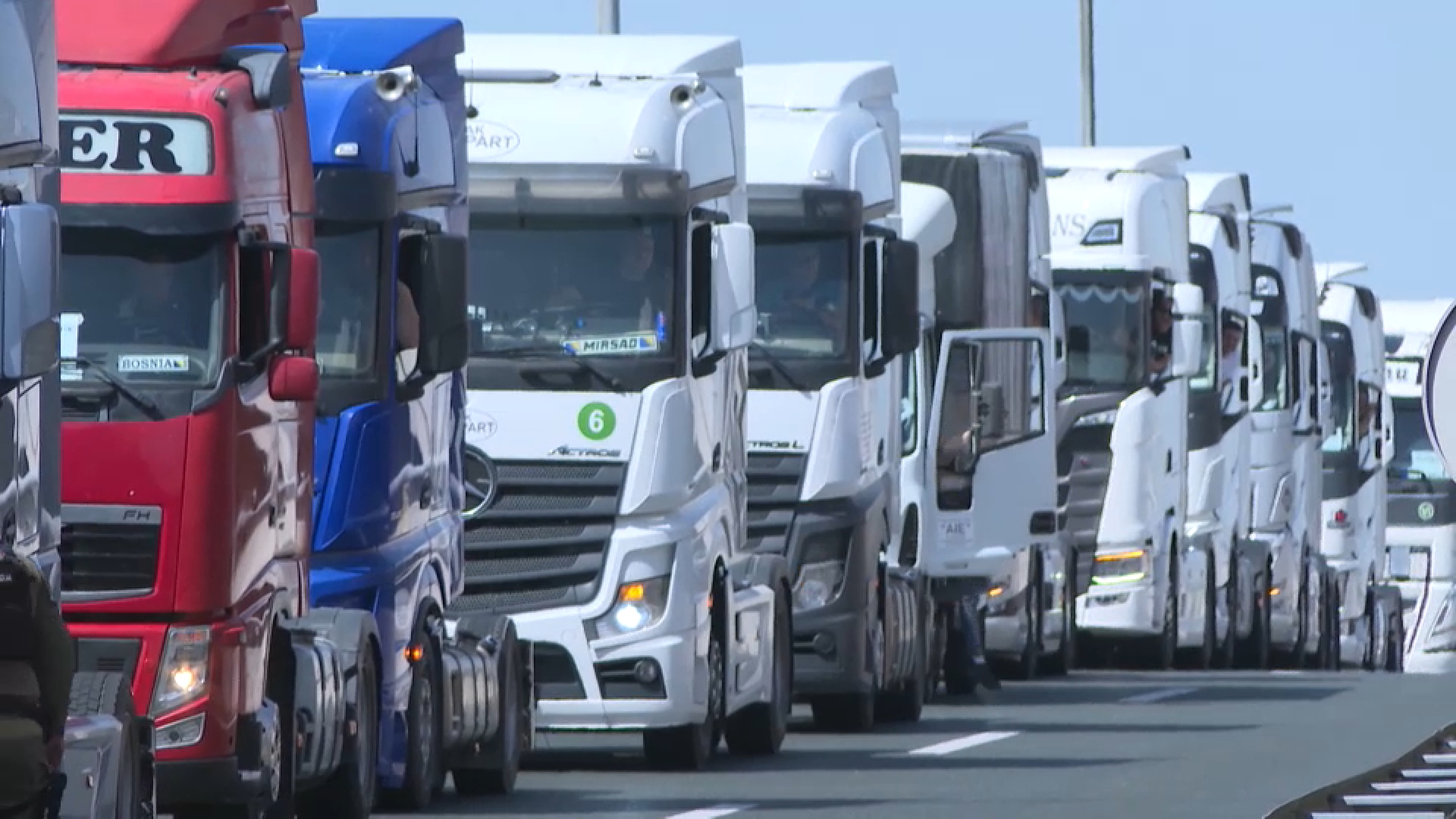
At the initiative of the Logistika Consortium in Bosnia and Herzegovina, a meeting was held between representatives of the Consortium and the Employers' Association of FBiH, in line with the conclusions adopted by the Association's Board of Directors at a meeting held on October 7 in Travnik. They are calling for a solution to the problem of BiH professional drivers' stay in EU countries.
The meeting was attended on behalf of the Consortium by Sanel Hodzic and Dino Durmic, while the Employers' Association of FBiH was represented by Board of Directors member Zijo Tanjo, Association Director Mario Nenadic, and associates Jasmina Kurspahic and Amra Duvnjak Halilovic.
The meeting was convened as a renewed appeal to address the implementation of the Schengen 90/180-day rule and the consequences already arising from restrictions on the length of stay of drivers from Bosnia and Herzegovina in EU countries, as well as the serious impact on international transport and the country's economy in general.
Participants analyzed the problems and serious consequences for transport companies and domestic businesses involved in importing and exporting goods to the EU. A large number of transport companies are actively seeking solutions by relocating their operations outside Bosnia and Herzegovina, as the currently available arrangements for Bosnian drivers to stay in EU countries, and consequently their overall business operations, have become unsustainable.
The economic consequences of this issue are extremely serious. Transport costs have risen significantly because domestic carriers are unable to transport goods. As a result, businesses have to use foreign carriers, increasing transportation costs, which are ultimately passed on to manufacturers, exporters, importers, and consumers.
Payments to carriers from other countries increase the outflow of money and reduce the competitiveness of domestic companies. Drivers are not the only ones losing their jobs. The consequences also heavily affect freight forwarding companies, repair shops, tire service providers, insurance companies, leasing firms, gas stations, spare parts dealers, and accounting and administrative services.
Business investment in the transport sector has declined due to uncertainty, while businesses are moving capital and operations out of the country to EU member states because they are unable to operate under the current conditions.
"The limited progress recently made regarding Croatian visas does not resolve such complex issues, as Croatian visas address stays in Croatia only, while the Schengen restriction remains in force for the rest of the EU," they emphasized.
Kakvo je tvoje mišljenje o ovome?
Učestvuj u diskusiji ili pročitaj komentare


Kakvo je tvoje mišljenje o ovome?
Učestvuj u diskusiji ili pročitaj komentare