

 Srbija
 Hrvatska
 Slovenija


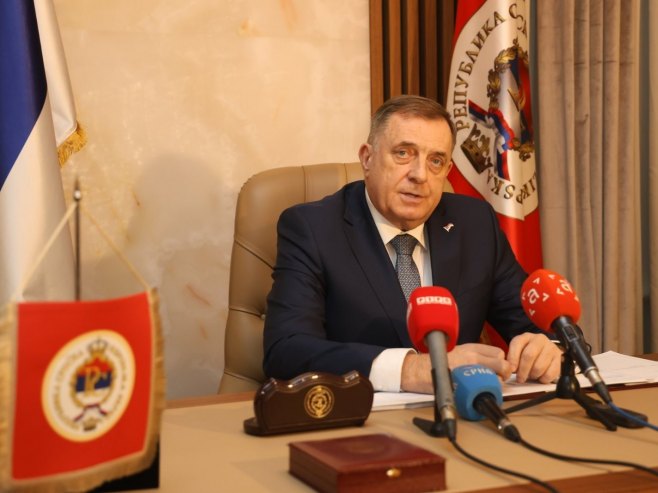
The decision by Republika Srpska President Milorad Dodik to sign decrees enacting laws that ban the operations of Bosnia and Herzegovina’s state institutions within the entity has triggered strong reactions from top state officials as well as those from the Federation of Bosnia and Herzegovina (FBiH) and Republika Srpska (RS) entities.
FBiH Minister of the Interior Ramo Isak described Dodik’s actions as an attack on Bosnia’s constitutional order, calling for criminal accountability. “Milorad Dodik, Nenad Stevandic, and Radovan Viskovic have committed the crime of attacking the constitutional order, punishable under the Criminal Code of Bosnia and Herzegovina. All three knowingly and deliberately attempted to change the country's constitutional structure and overthrow its highest institutions,” Isak said. He added that with an ongoing investigation into what he labeled an attempted coup, the state prison in Vojkovići “will be too small to hold all internal enemies who have attacked the constitutional order.”
RS Vice President Camil Durakovic went even further, stating that Dodik had effectively staged a coup and de facto seceded the entity from Bosnia and Herzegovina. He warned that this decision directly threatens the security of returnees in eastern Bosnia, Krajina, Posavina, and Semberija. “Those who do not see this as an existential threat are completely blind. People returned to these areas with the guarantee that the central government of Bosnia and Herzegovina would ensure their security. Today, Dodik has effectively placed us back under the control of the RS Interior Ministry,” Durakovic said.
Bosnia’s Defence Minister Zukan Helez dismissed Dodik’s decrees as legally meaningless. “He might as well throw them out the window because they have no value whatsoever. The Constitutional Court of Bosnia and Herzegovina has the final say, and these laws will be annulled as unconstitutional. There is no legal basis for Dodik to enact them,” Helez stated. He confirmed that the Prosecutor’s Office of Bosnia and Herzegovina is already handling the case and will summon those responsible to court. “If they refuse to appear, an arrest warrant will be issued, and they will be detained. That is the end of the story—no panic, no fear,” he added.
Helez also noted that the government will not rush into any immediate response, as he believes Dodik is trying to provoke conflict. “Dodik wants to create chaos so he can flee and leave the people to suffer the consequences. We will not play into his hands. The courts will act first, and if he tries to enforce his decisions through force, we will respond accordingly,” Helez emphasized, adding that Dodik will not be able to leave the country in the event of his arrest.
Prime Minister of the Federation of Bosnia and Herzegovina Nermin Niksic also reacted strongly, stating that Dodik has embarked on a “path of no return.” Expressing disappointment, he said he had hoped Dodik would not take such a dangerous course. “Dodik has now positioned himself as the orchestrator of an unconstitutional coup and a direct threat to peace. He will be removed from the political scene and ultimately convicted and imprisoned,” Niksic said.
He called for immediate action, urging Bosnia’s state institutions and the international community to respond decisively. “There is no room for hesitation or appeasement. Those who threaten the constitutional order must be stopped immediately. This is the most serious challenge to peace since the war. As should international peacekeeping forces, the judiciary must act now,” Niksic stressed. He also called on all political actors in Bosnia and Herzegovina to support the removal of the Dodik’s Alliance of Independent Social Democrats (SNSD) officials from state-level institutions. “This is no longer a matter of political negotiation—it is a necessity to preserve the legal order and peace in Bosnia and Herzegovina,” he concluded.
Meanwhile, Igor Crnadak, head of the Party of Democratic Progress (PDP) caucus in the National Assembly of Republika Srpska, warned that the law banning state institutions from operating in the entity creates a legal basis for potential conflicts. Speaking to BHRT, Crnadak emphasized that the decrees signed by Dodik could lead to serious institutional clashes.
“This law assigns the RS Ministry of the Interior the duty to prevent SIPA from operating in Republika Srpska. However, SIPA has its own law, which mandates it to execute court and prosecutorial orders throughout Bosnia and Herzegovina, including Republika Srpska,” Crnadak explained on BHRT.
“SIPA has a significant presence here in Banja Luka. Its headquarters are in Istocno Sarajevo (RS). With the obligations now placed on the RS Interior Ministry and the political rhetoric surrounding this issue, I don’t see how anyone can remain calm,” Crnadak warned in his interview with BHRT.
Dodik’s decision to sign the controversial decrees came on Thursday evening, following the passage of laws in the National Assembly of Republika Srpska on February 27. These laws, set to take effect on Friday, March 7, seek to block the authority of Bosnia’s Court, Prosecutor’s Office, and judicial council within the entity, a move widely seen as unconstitutional and a direct challenge to the country’s legal framework.
Kakvo je tvoje mišljenje o ovome?
Učestvuj u diskusiji ili pročitaj komentare


Kakvo je tvoje mišljenje o ovome?
Učestvuj u diskusiji ili pročitaj komentare