

 Srbija
 Hrvatska
 Slovenija

Dutch government rejects proposal for national sanctions against Milorad Dodik


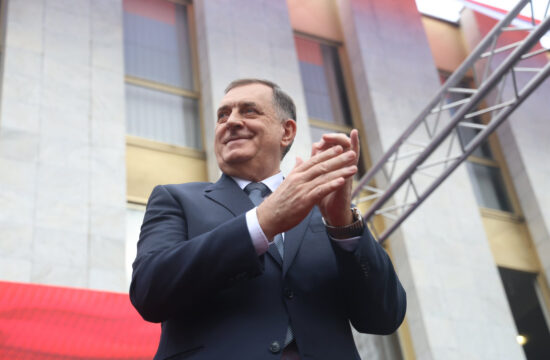
The Government of the Netherlands has declined to support the idea of imposing national sanctions against Milorad Dodik, President of Republika Srpska entity, stating that such a move is not "sufficiently justified" at this time.
The response came Tuesday following a formal inquiry by members of the Dutch House of Representatives, who had unanimously urged the government last month to explore sanctions against Dodik, including a potential travel ban to the Netherlands.
The initiative was spearheaded by MP Kati Piri of the GroenLinks–PvdA parliamentary group, who argued that Dodik poses a threat to the stability of the Western Balkans. In addition to the proposed Dutch measures, the parliament had also requested that the government examine possibilities for sanctions at the European Union level.
In a written response published on the Dutch Parliament’s official website, the government confirmed that the matter had indeed been raised at the EU Foreign Affairs Council meeting held on April 14. At that meeting, Luxembourg—speaking on behalf of the Benelux countries—advocated for EU-level sanctions against Dodik and called for additional measures, including the suspension of EU-funded projects benefiting Republika Srpska.
While confirming its support for such multilateral approaches, the Dutch government explained why it has chosen not to act independently at this time. “In certain cases, national measures may be taken when there is a threat to public order. However, in this instance, such action cannot be sufficiently justified,” the response reads. The government emphasised its preference for using EU mechanisms due to their broader impact and effectiveness.
The Dutch position contrasts with recent decisions by Germany and Austria, both of which have imposed entry bans on Dodik, Republika Srpska Prime Minister Radovan Viskovic, and RS National Assembly Speaker Nenad Stevandic.
The Netherlands, while not taking unilateral action for now, maintains its commitment to monitoring the situation and supporting collective EU responses to political destabilisation in Bosnia and Herzegovina.
Kakvo je tvoje mišljenje o ovome?
Učestvuj u diskusiji ili pročitaj komentare


Kakvo je tvoje mišljenje o ovome?
Učestvuj u diskusiji ili pročitaj komentare