

 Srbija
 Hrvatska
 Slovenija

Former U.S. ambassador
Eric Nelson criticizes U.S. papers advocating further division in Bosnia and Herzegovina



Former U.S. Ambassador to Bosnia and Herzegovina Eric Nelson has said that human rights are a foundational value shared by both the United States and Europe, but warned that recent U.S. policies have weakened Washington’s credibility, opening space for Europe to take a stronger leadership role in defending democracy and human rights.
Speaking to N1, Nelson said that human rights are clearly prioritized in the founding documents of both the United States and Europe, but have been largely sidelined in recent U.S. policy agendas.
“When you read our founding documents, the foundational documents for Europe and for the United States, you see human rights equally prioritized. However, when you look at the agenda of the Trump administration and most recently read the national security strategy, it’s striking that human rights is barely mentioned,” Nelson said.
He added that the failure to consistently defend human rights has damaged U.S. credibility.
“When we haven’t done that, we’ve paid a hard price in our credibility and our reputation. Human rights is a value that binds the U.S. and Europe, but for me right now, I’m hoping for Europe to step in as the new champion of democracy and human rights,” he said.
Sanctions and political responsibility
Commenting on U.S. sanctions against Republika Srpska President Milorad Dodik and his party SNSD, Nelson said Washington hopes the measures will have positive effects and encourage more constructive political behavior.
“Washington certainly hopes that this will produce some positive effects, that this will bring SNSD and Dodik back to being constructive actors as we knew them to be at the beginning of his career,” Nelson said.
He emphasized that the legal framework underpinning the sanctions remains in place.
“It’s important to emphasize that the authorities and the laws supporting the sanctions still exist, and they can be easily reapplied if the U.S. doesn’t see satisfactory results,” he said, adding that the sanctions themselves have shown limited effectiveness.
Nelson noted that some argued the sanctions had given Dodik an electoral advantage.
“Some argued that it gave Milorad Dodik an electoral advantage because he could claim to be the victim. Well, now he can’t claim to be the victim anymore. He needs to stake a claim for being a problem solver in Bosnia and Herzegovina,” he said.
According to Nelson, sanctions are unlikely to deliver real change without broader international backing.
“These sanctions are of limited effectiveness for achieving real change, especially when they’re not more broadly supported by the European partners where so much of the ill-gotten gains of corrupt leaders is hidden,” he said.
He stressed that the ultimate form of accountability lies with citizens.
“The ultimate sanction rests with the citizens and the voters, and that’s at the ballot box,” Nelson said.
Opposition to calls for division
Nelson also directly criticized a recent policy paper published by the Heritage Foundation, saying it fails to reflect established European human rights principles.
“I’ve read papers like the recent Heritage Foundation paper and find it really very inadequate because it fails to recognize certain key principles that the European Court of Human Rights has made very clear,” Nelson said.
He warned that such proposals promote further division or segregation in Bosnia and Herzegovina and contradict the country’s international commitments.
“There are papers that are advocating for division or some kind of further segregation of Bosnia and Herzegovina, but that’s not compatible with the commitments that Bosnia and Herzegovina has already made as a member of the Council of Europe and as a candidate for integration to the European Union,” Nelson said.
Euro-Atlantic integration and constitutional reform
Nelson underlined that solutions for Bosnia and Herzegovina must be locally driven and anchored in Euro-Atlantic integration.
“The future of Bosnia and Herzegovina, integrated into the transatlantic community as a trusted member of NATO and the European Union, is the best solution for the future of the country,” he said.
He noted that collective security and the rule of law, prioritized by the EU and NATO over nationalism, have brought decades of peace and prosperity to Europe and remain relevant for Bosnia and Herzegovina.
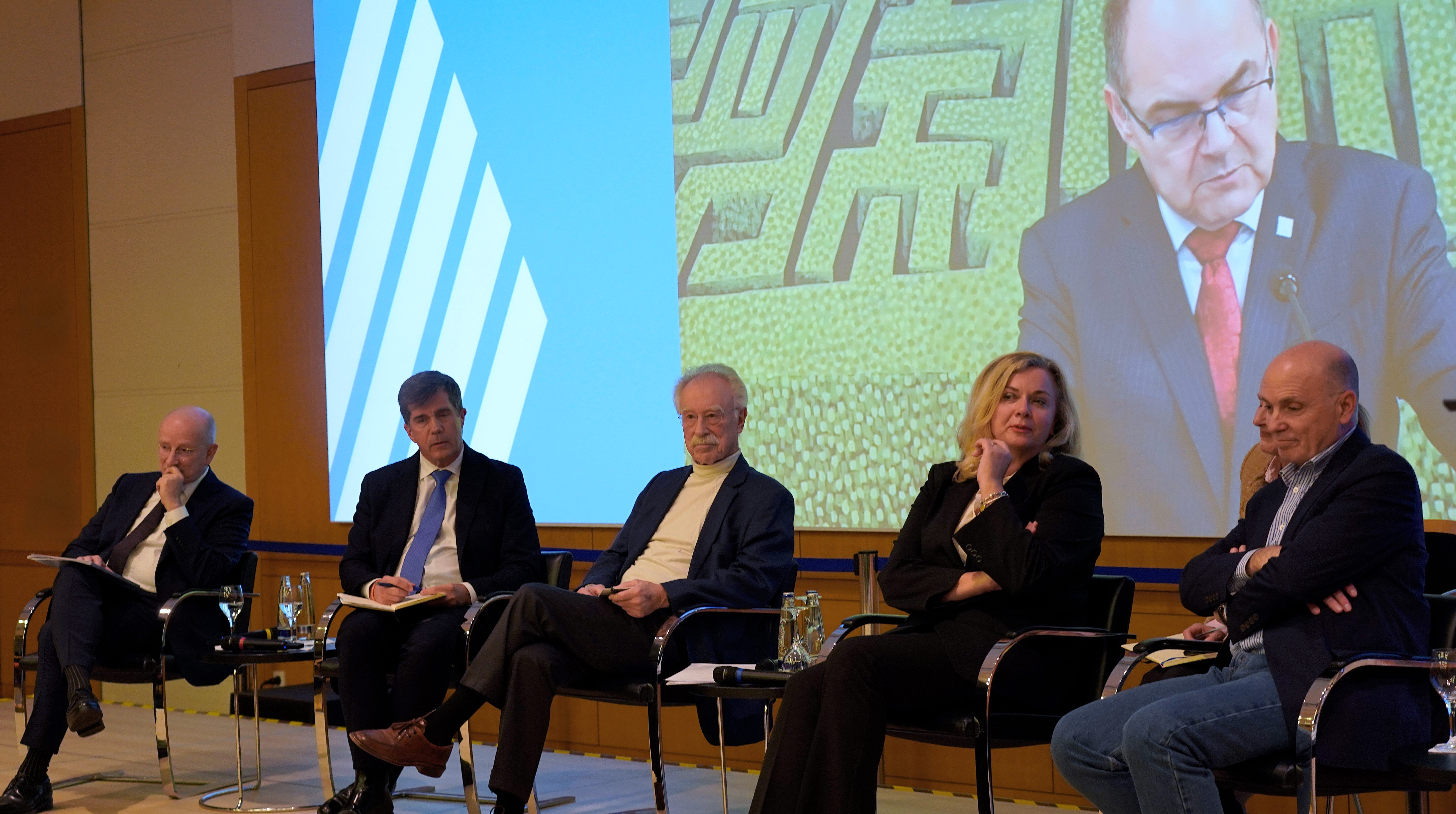
Addressing constitutional reform, Nelson said there is no contradiction between rulings of the European Court of Human Rights and the existence of constituent peoples in Bosnia and Herzegovina.
“There’s no incompatibility between the judgments of the Court of Human Rights and the existence of the three constituent peoples and others in Bosnia and Herzegovina and their need to find ways to live together in peace and in a functional state,” he said.
He emphasized that the Court’s core principle is equality.
“The power of the principle that the Court of Human Rights is trying to advance is that each citizen is equal,” Nelson said, adding that constitutional arrangements allowing discrimination to remain entrenched must be addressed.
He concluded by distinguishing between inclusive power-sharing mechanisms and electoral systems that institutionalize discrimination.
“There’s a difference between effective power sharing and electoral organization that allows all communities to feel represented and guarantee discrimination, as the Constitution of Bosnia and Herzegovina now calls for,” Nelson said.
Kakvo je tvoje mišljenje o ovome?
Učestvuj u diskusiji ili pročitaj komentare


Kakvo je tvoje mišljenje o ovome?
Učestvuj u diskusiji ili pročitaj komentare