


 Srbija
 Hrvatska
 Slovenija

exclusive interview
Former US ambassador Eric Nelson to N1: Bosnia and Herzegovina needs “Brussels” not a new Dayton


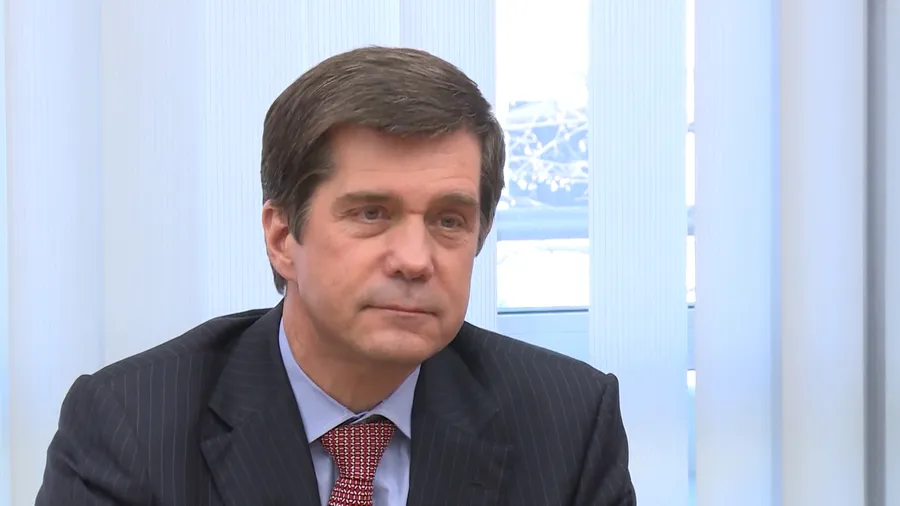
Bosnia and Herzegovina needs a constitutional framework aligned with European Union standards rather than a new Dayton-style political arrangement, former United States ambassador Eric Nelson said in an exclusive interview with N1, stressing that the country’s future lies in gradual reform, local compromise, and the strengthening of the rule of law.
Nelson, who served as US ambassador to Bosnia and Herzegovina from 2019 to 2022 after being nominated during Donald Trump’s previous term, said that calls for a new “Dayton 2” framework misunderstand both the purpose of the original peace agreement and the country’s current needs.
“Dayton was about ending the war,” Nelson said. “What Bosnia and Herzegovina needs today is compatibility with European Union standards.”
He described the Dayton Constitution as a starting point rather than a finished framework, noting that its signatories anticipated further constitutional development to ensure a functional state. That process, he said, remains unfinished.
Local solutions require consensus and compromise
Addressing the frequently cited concept of “local solutions,” Nelson stressed that such solutions can only work if they are based on broad consensus and genuine compromise.
“The key to local solutions is that they have to be achieved through consensus, and consensus requires compromise,” he said, adding that political polarization and resistance to compromise are challenges faced by many democracies, including the United States.
Nelson cautioned that local solutions should not result in disadvantage for any group, emphasizing that all three constituent peoples, as well as all citizens of Bosnia and Herzegovina, share responsibility for improving the country’s functionality.
Mostar agreement as a rare example of success
Speaking in an exclusive interview with N1’s Nikola Vucic, Nelson pointed to the Mostar Agreement as evidence that political compromise is possible when local actors are willing to engage constructively. The agreement enabled local elections in Mostar after more than a decade without them.
“It was not a perfect solution,” Nelson said, “but it gave Mostar an important new lease on local government and the ability for citizens to elect their representatives.”
He noted that the agreement was approved by parliament and has since resulted in a functioning local government, with opposition and accountability mechanisms in place.

According to him, the Mostar case demonstrates that compromise does not necessarily lead to political defeat, a fear he said continues to discourage political leaders across the country.
“Too often, leaders in Bosnia and Herzegovina have been punished for their willingness to compromise, and that continues to hold the country back,” he said.
Constitutional reform and human rights standards
Nelson said that broader reform efforts stalled after the Mostar agreement, particularly when discussions turned to national-level constitutional changes. He noted that Bosnia remains out of compliance with European Court of Human Rights rulings due to discriminatory provisions embedded in the current constitutional framework.
“The Court has been very clear on multiple occasions that the constitution is incompatible with European standards,” he said.
He rejected proposals that would further divide the country’s institutional structure, calling them incompatible with European human rights norms and counterproductive to long-term stability.
“Further fragmentation will not help Bosnia and Herzegovina,” Nelson said.
No quick transition to a civic state
Nelson also dismissed the idea that Bosnia could rapidly transform into a fully civic state through a single political decision or electoral reform.
“There’s no switch that can be flipped,” he said, pointing to the deep influence political parties exert over institutions, media, and the economy.
He added that concerns among citizens about losing existing protections should not be ignored, particularly in a system where equality before the law has yet to be fully achieved.
Rule of law as the central objective
According to Nelson, both the European Union and the United States have consistently supported advancing the rule of law as the foundation for reform, stressing that equality must be guaranteed in practice, not just in principle.
“There is no quick fix,” he said. “Progress requires a clear commitment to a system where the rule of law protects everyone equally, regardless of identity.”
Such a process, he added, would inevitably involve transitional safeguards to ensure fairness while reforms take hold.
“Brussels, not Dayton”
Summing up his position, Nelson said Bosnia’s future depends on aligning its constitutional framework with European norms through a gradual and continuous reform process.
“It’s not about reconvening Dayton,” he said. “It’s about building a future where citizens of Bosnia can enjoy the same freedoms, security, and prosperity as their neighbours in the European Union and NATO.”
Nelson served as the United States ambassador to Bosnia and Herzegovina from 2019 to 2022, a period that coincided with prolonged institutional deadlock, renewed debates over constitutional reform, and intensified international engagement aimed at preserving stability and advancing the country’s European path. During his mandate, he was directly involved in diplomatic efforts that led to the Mostar Agreement, which enabled local elections in the city after more than a decade and is widely cited as one of the few examples of successful political compromise in recent years.
Kakvo je tvoje mišljenje o ovome?
Učestvuj u diskusiji ili pročitaj komentare


Kakvo je tvoje mišljenje o ovome?
Učestvuj u diskusiji ili pročitaj komentare