

 Srbija
 Hrvatska
 Slovenija


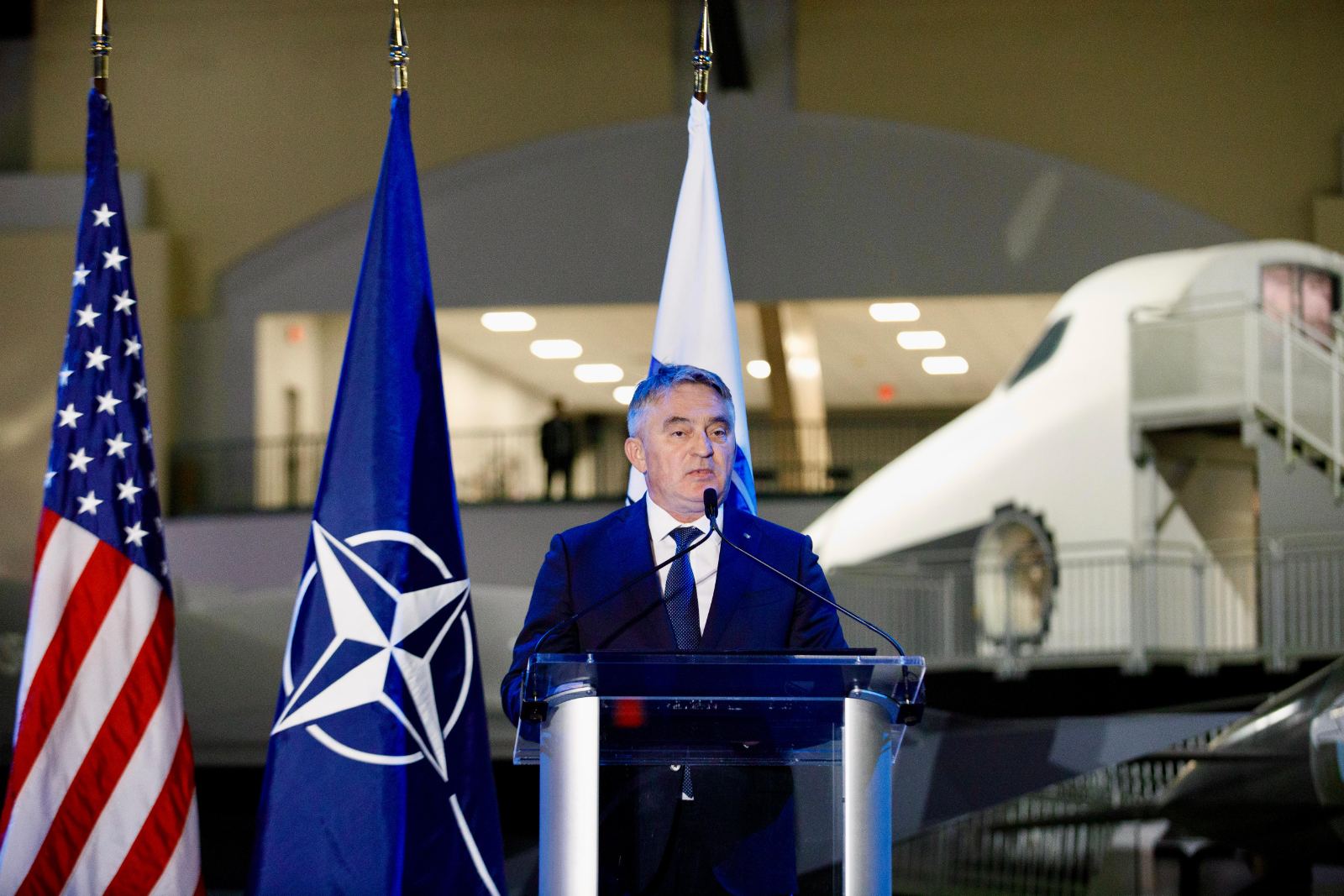
Bosnia Presidency member Zeljko Komsic addressed the NATO Parliamentary Assembly’s ceremonial dinner marking the 30th anniversary of the Dayton Peace Agreement.
Komsic began his speech by emphasising that, as a member of Bosnia and Herzegovina’s Presidency, he could speak only about the state of affairs in his own country and urged other speakers from the region to do the same.
"Considering my position and the foreign policy objectives of my country, I can only speak about Bosnia and Herzegovina and the constitutional and legal responsibilities I hold as a member of the Presidency, without commenting on the internal affairs or goals of other countries in the region. If I may, I would expect the same approach from other participants in relation to Bosnia and Herzegovina," Komsic said.
He noted that the event was taking place at a location of historical significance for Bosnia and Herzegovina and expressed gratitude to the hosts for their continued engagement with the country from 1995 to the present.
"Bosnia and Herzegovina is a country that understands the value of peace. The vast majority of people in BiH will do everything to preserve that peace so that future generations of Bosnians and Herzegovinians never experience the horrors my generation went through," he stated.
Komsic underlined that people in Bosnia and Herzegovina are acutely aware that “the gates of hell are easily opened but are very hard—sometimes impossible—to close.”
"On the other hand, peace, a stable country, and a stable society are not guaranteed forever. These are things we must work on daily, fight for, and protect. This is also how the Dayton Agreement should be viewed. It is certain that the Dayton Agreement can be considered the foundation of peace and stability in BiH and, indirectly, the entire region. With 30 years of hindsight, I believe we can properly assess the positive achievements of the Agreement, but we also have the right to ask ourselves: ‘Has the time come to move forward?’ I know it’s a difficult and complex question, but we owe it to the future to ask it—and to try to find an honest and forward-looking answer,” he said.
Komsic asked another question during the dinner—whether the constitutional framework set out in Dayton is sufficient for the country to progress.
“To avoid any misunderstanding, I am not referring to the country’s administrative structure. I know that we can’t reach an agreement on that now or in the future. I am primarily referring to human rights, and closely tied to that is the issue of the rule of law. The fact, repeatedly confirmed by the European Court of Human Rights in Strasbourg, is that Bosnia and Herzegovina discriminates against its citizens on identity-related grounds and violates their human rights,” said Komsic.
He stressed that there is no acceptable justification for this.
"The simple and logical truth is that correcting this injustice toward our citizens would certainly not destroy or dismantle the Dayton Constitution or the constitutional and administrative framework of Bosnia and Herzegovina as regulated by the Agreement. That is why I emphasise the urgent need to correct this injustice, as it is a conditio sine qua non for Bosnia and Herzegovina’s progress. I fear that unless this issue is resolved, we will remain permanently locked in the past and in conflicting interpretations of it, lacking the strength and capacity to leave that past behind and turn toward the future," Komsic concluded.
Kakvo je tvoje mišljenje o ovome?
Učestvuj u diskusiji ili pročitaj komentare


Kakvo je tvoje mišljenje o ovome?
Učestvuj u diskusiji ili pročitaj komentare