Srbija
 Hrvatska
 Slovenija

New expulsions renew concerns over Tehran’s intelligence activities in Bosnia and Herzegovina


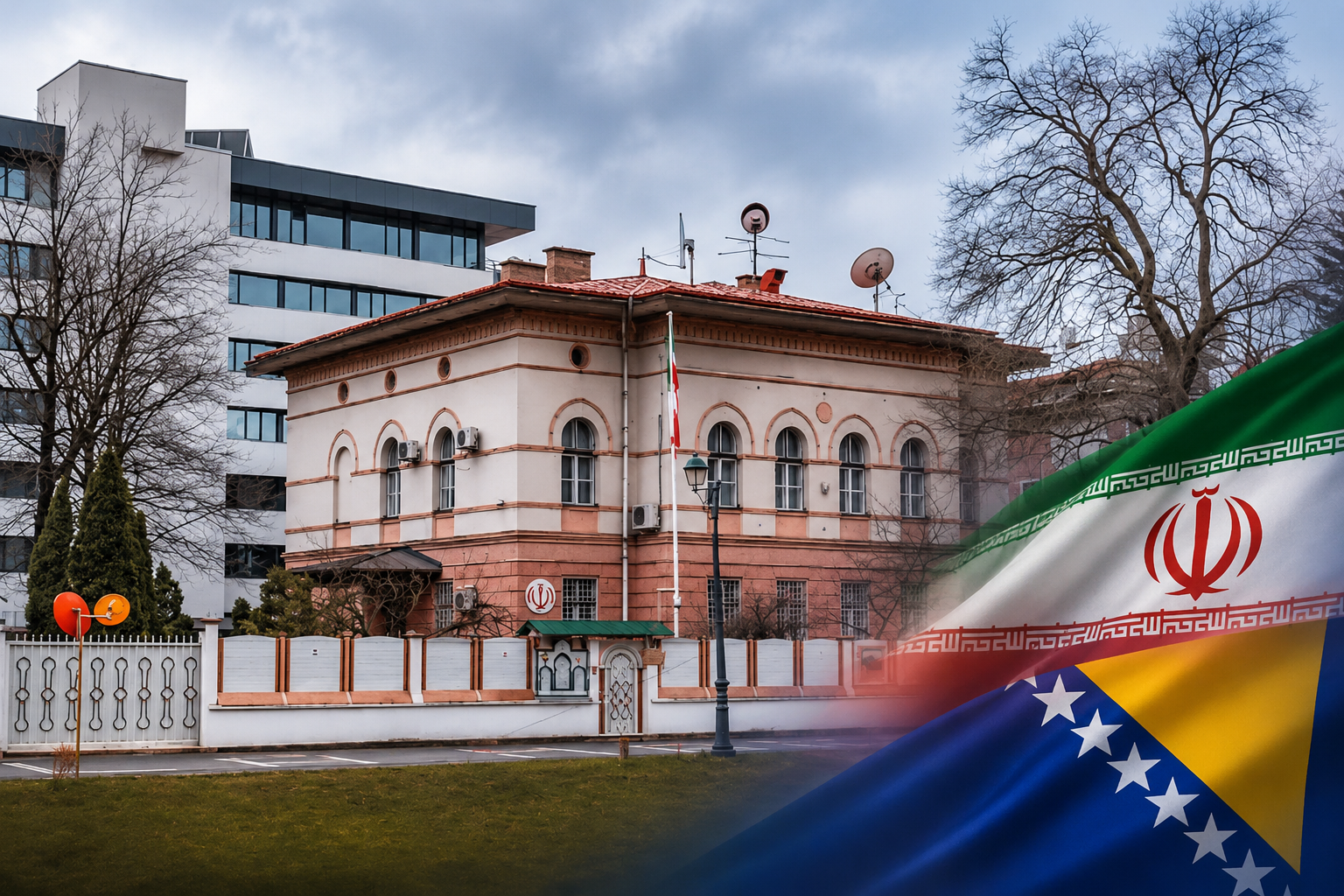
Four Iranian nationals have been declared undesirable persons in Bosnia and Herzegovina and left the country during November, Radio Free Europe/Radio Liberty (RFE/RL) reports. They have been linked to suspected intelligence activities on behalf of Tehran.
The four individuals are Hossein Mahdian Fard, Ehsan Sajjadi Monazzah, Morteza Fazali and Seyed Yaser Seyed Mohammadi.
Three of them held diplomatic status in Bosnia and Herzegovina. Mahdian Fard served as third counsellor at the Iranian Embassy in Sarajevo, while Monazzah and Fazali were accredited as attachés. Mohammadi has not appeared on the diplomatic lists of Bosnia and Herzegovina’s Ministry of Foreign Affairs since October 2025.
According to RFE/RL, the individuals have been linked to Iran’s Ministry of Intelligence and the Islamic Revolutionary Guard Corps (IRGC).
The Foreign Ministry told RFE/RL that it could not comment on the case, describing it as a security rather than a diplomatic matter.
The authorities have not officially disclosed the specific reasons for the expulsions. Neither Bosnia and Herzegovina’s Ministry of Security nor Iranian Ambassador Abuzar Ebrahimi Torkaman responded to RFE/RL’s requests for comment.
Former Ibn Sina Institute officials identified as security threats
According to RFE/RL, Bosnia and Herzegovina’s Intelligence and Security Agency (OSA) identified two former senior officials of the Sarajevo-based Ibn Sina Institute, Mohammad Hossein Abbasi Valadi and Jafar Azimzadeh, as threats to national security in September or October this year.
Both were outside Bosnia and Herzegovina at the time and neither held diplomatic status.
Established in the mid-1990s, the Ibn Sina Institute is among the most prominent Iranian-linked cultural and academic institutions in Bosnia and Herzegovina. Its activities include publishing, academic conferences and the promotion of Iranian philosophical and religious thought.
The reasons behind the security assessment have not been made public. The institute did not respond to RFE/RL’s request for comment. No evidence has been publicly presented implicating the institute itself in intelligence operations.
Three decades of security concerns over Iranian activities
Concerns over Iranian intelligence activities in Bosnia and Herzegovina date back to the 1990s.
In February 1996, NATO-led Implementation Force (IFOR) troops uncovered a training facility at Pogorelica, near Fojnica, where Iranian instructors had been working with members of Bosnia’s then intelligence agency, AID.
The incident triggered a diplomatic and security crisis, prompting strong pressure from Washington to terminate operational intelligence cooperation with Tehran.
On June 26, 1996, US President Bill Clinton signed a presidential determination certifying that intelligence cooperation between Iranian and Bosnian officials in training, investigations and related activities had been terminated.
Bosnia previously expelled Iranian diplomats
In 2013, two Iranian diplomats, Hamzeh Doolab Ahmad and Jadidi Sohrab, were required to leave Bosnia and Herzegovina over activities that domestic authorities deemed incompatible with their diplomatic functions.
The case was also documented in the US State Department’s Country Reports on Terrorism for 2013.
Under the Vienna Convention on Diplomatic Relations, a receiving state may declare a foreign diplomat persona non grata without being required to explain its decision.
The latest expulsions have renewed scrutiny of Iranian intelligence activities in Bosnia and Herzegovina, although the authorities have yet to disclose the full extent of their findings.
Kakvo je tvoje mišljenje o ovome?
Učestvuj u diskusiji ili pročitaj komentare


Kakvo je tvoje mišljenje o ovome?
Učestvuj u diskusiji ili pročitaj komentare