Srbija
 Hrvatska
 Slovenija

Reporters Without Borders warns of deteriorating media freedom in Bosnia


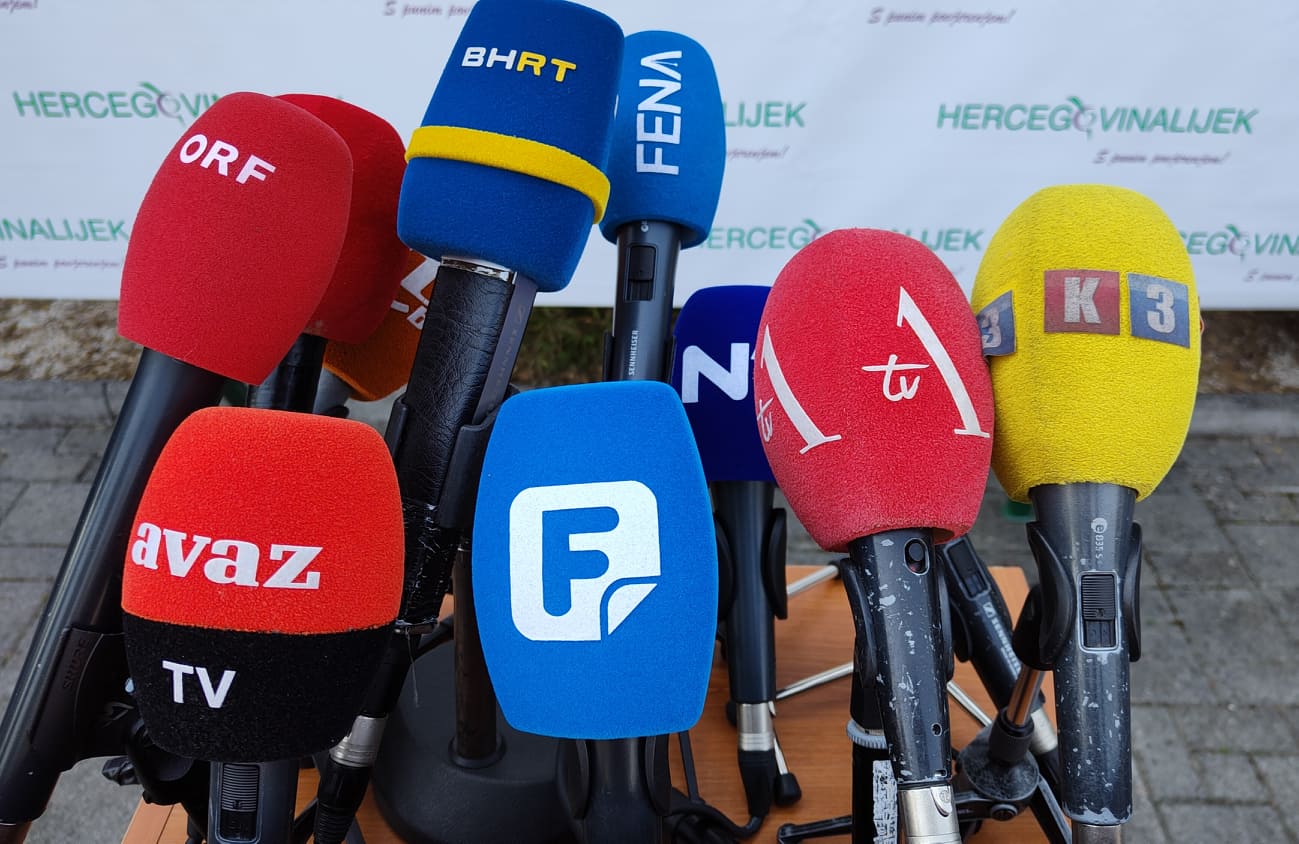
Media freedom and journalistic integrity in Bosnia and Herzegovina remain starkly inconsistent, dictated by regional political climates and an increasingly hostile environment. A damning report by Reporters Without Borders (RSF) highlights a particularly grim situation in Republika Srpska (RS) entity, where the re-criminalisation of defamation and the creeping shadow of Russian propaganda have significantly undermined public-interest journalism.
On the surface, the country boasts a vast media landscape, comprising approximately 40 television channels, 150 radio stations, and nearly 600 online portals. However, RSF cautions that sheer volume does not equate to genuine pluralism. While a handful of broadcasters produce high-quality content and digital outlets serve as the primary bastions for investigative reporting, the broader picture is one of fragmentation and political interference.
"The political climate is broadly inimical to media freedom, though the severity varies by entity," the report notes. In Sarajevo and the Federation of BiH, conditions are described as marginally better. Conversely, authorities in the RS have tightened their grip on the public broadcaster RTRS and allowed the national broadcaster, BHRT, to drift toward financial ruin. Simultaneously, RT Balkans, the regional arm of the Russian state-controlled network, is reportedly expanding its reach within the country.
Despite a legal framework that largely aligns with international benchmarks, the report identifies a stagnant policy environment. The re-introduction of criminal penalties for defamation in Republika Srpska has fostered a culture of self-censorship. Furthermore, recent reforms requiring prior consent for the publication of personal data, under threat of custodial sentences, have placed an additional burden on the press.
Economically, the outlook is equally bleak. Journalists operate within a saturated market of limited size, plagued by a lack of sustainable funding and heavy reliance on political or commercial power brokers. This dependence frequently discourages critical reporting. The industry is further splintered along ethnic lines and faces stiff competition from media groups in neighbouring countries.
The RSF findings also shed light on the precarious position of women in the sector and a society still grappling with its wartime legacy. Divisions persist between those championing reconciliation and those stoking historical tensions.
Compounding these issues is the lack of physical safety. Journalists are frequently subjected to verbal abuse, threats, and physical violence. With little faith in the police or the judiciary, many feel dangerously exposed. While some legal initiatives have been introduced to bolster safety, a profound sense of insecurity remains.
Globally, the RSF World Press Freedom Index reveals a disturbing milestone: for the first time in its 25-year history, more than half of the world’s nations are classified as having "difficult" or "very serious" situations. The average global score has hit an all-time low, driven by a sharp decline in the legal protection of journalists and an alarming trend toward the criminalisation of the profession.
Kakvo je tvoje mišljenje o ovome?
Učestvuj u diskusiji ili pročitaj komentare


Kakvo je tvoje mišljenje o ovome?
Učestvuj u diskusiji ili pročitaj komentare