


 Srbija
 Hrvatska
 Slovenija


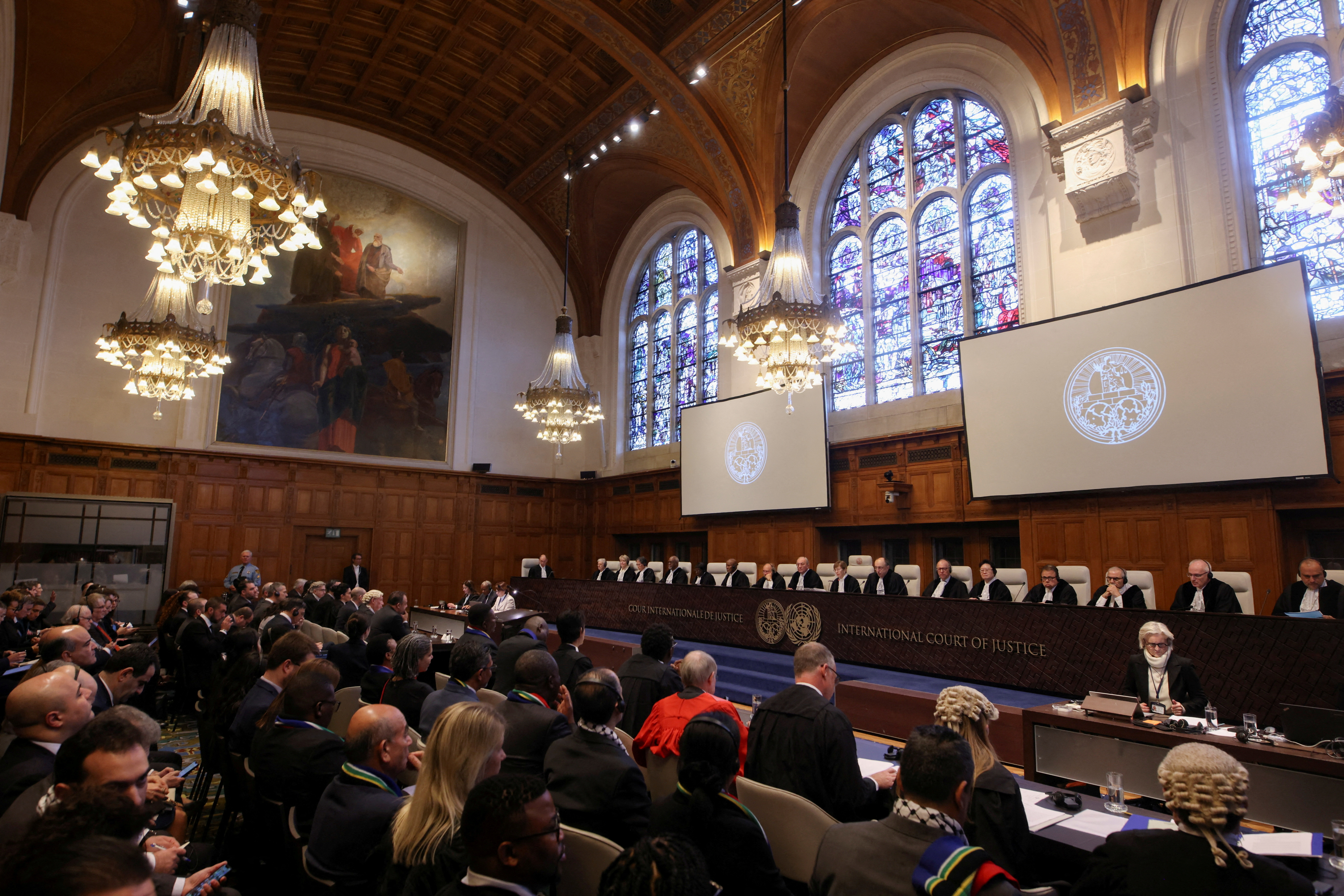
Menachem Z. Rosensaft, a professor of law at Cornell and Columbia universities, criticized a U.S. legal submission supporting Israel at the International Court of Justice (ICJ), saying it failed to draw on a key precedent from the court’s 2007 genocide ruling in the Bosnia and Herzegovina v. Serbia and Montenegro case.
In an opinion piece published by the Jewish Telegraphic Agency (JTA), Rosensaft described the U.S. declaration of intervention in the case South Africa v. Israel as “underwhelming and pro forma at best,” arguing that it did not make effective use of existing ICJ jurisprudence.
He said the omission of the Bosnia ruling was particularly significant, as that judgment remains one of the court’s most authoritative interpretations of the Genocide Convention, especially on the issue of intent.
Rosensaft noted that in 2007 the ICJ held that genocidal intent cannot be inferred solely from a policy of “ethnic cleansing” without clear evidence that such a policy was aimed at the destruction of a protected group.
According to the court in that case, ethnic cleansing can only qualify as genocide if it falls within the acts prohibited under Article II of the Genocide Convention. The ICJ further found that a policy aimed at rendering a territory “ethnically homogeneous,” as well as operations carried out to implement such a policy, cannot in themselves be classified as genocide.
The court emphasized that genocide requires the intent “to destroy, in whole or in part” a protected group, and that the forced deportation or displacement of a population, even if carried out by force, is not necessarily equivalent to the destruction of that group.
Rosensaft argued that this principle is directly relevant to the current case concerning Gaza, where the central legal question is whether Israel acted with the specific intent required to constitute genocide.
While the U.S. submission stresses that proving genocide under the 1948 Genocide Convention requires specific intent (dolus specialis), he said it failed to explicitly anchor that argument in the ICJ’s own case law, including the Bosnia judgment.
He also criticized the filing for relying on general legal principles without offering concrete factual support or engaging more directly with arguments by other states advocating a broader interpretation of genocidal intent.
“A third-party submission that does not educate the court and merely reiterates the obvious will not be taken seriously,” Rosensaft wrote.
He concluded that the U.S. intervention represented a missed opportunity to present a more compelling legal argument grounded in established jurisprudence.
“If one of my students were to submit a term paper of the quality of the U.S. intervention, they would not be happy with their grade,” he added.
Proceedings before the ICJ were initiated in December 2023, when South Africa accused Israel of violating the Genocide Convention in its military operations in Gaza. Israel rejects the allegations, saying it is acting in self-defense following Hamas’ October 7, 2023 attack.
Several countries have since filed declarations of intervention, offering differing interpretations of the Convention, while the court has yet to issue a final ruling on the merits of the case.
Kakvo je tvoje mišljenje o ovome?
Učestvuj u diskusiji ili pročitaj komentare


Kakvo je tvoje mišljenje o ovome?
Učestvuj u diskusiji ili pročitaj komentare
NAJČITANIJE



















Najnovije













ZDRAVLJE





LIFESTYLE




SHOWBIZ




N1 KVIZ