


 Srbija
 Hrvatska
 Slovenija

Srebrenica Memorial Centre convenes international oral history conference to honour genocide victims


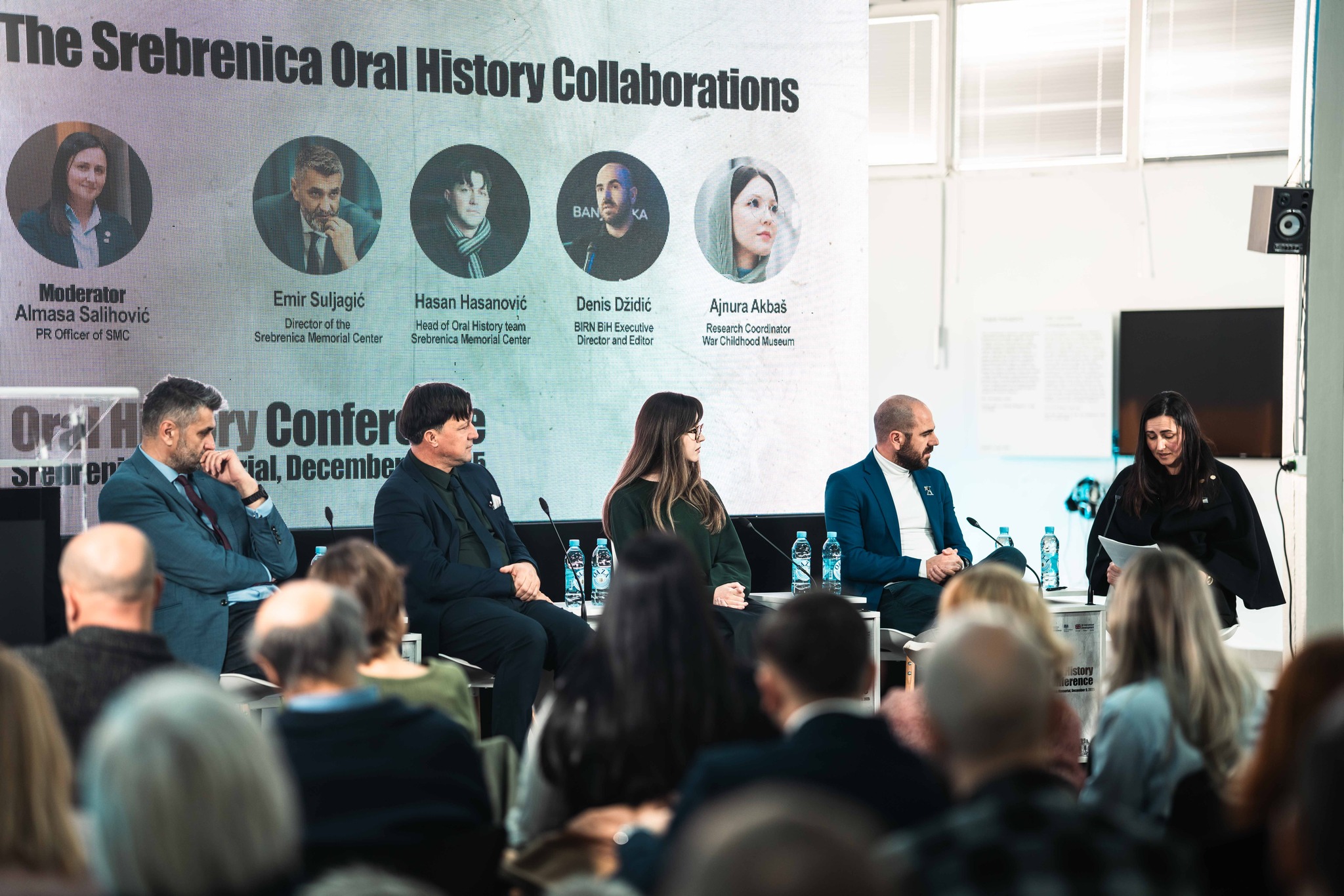
To mark the International Day of Commemoration and Dignity of the Victims of Genocide, the Srebrenica Memorial Centre hosted a major international conference that focused on the pivotal role of oral history in comprehending genocide and safeguarding collective memory.
The prestigious event successfully brought together a distinguished roster of survivors, historians, archivists, and international experts to deliberate the ethical, educational, and methodological aspects of documenting personal testimonies.
The opening session, aptly titled “The Srebrenica Oral History Program”, featured poignant contributions from survivors and researchers. They passionately stressed that gathering and preserving testimony is not merely a technical methodological task, but a profound moral responsibility owed to truth, justice, and future generations.
A subsequent discussion panel, “Srebrenica Oral History Collaborations”, saw experts from BIRN BiH, the War Childhood Museum, and the Memorial Centre itself gather to exchange views. Speakers highlighted the vital importance of institutional co-operation in bolstering evidence, supporting education, and actively challenging denial. Particular attention was dedicated to safeguarding the voices of children affected by the war, whose accounts form an essential part of the historical memory.
The afternoon sessions shifted focus to the future trajectory of oral history. Panels examined emerging research techniques, educational strategies, and the ever-expanding role of oral history within public remembrance. Experts underscored the crucial point that how societies listen to survivors today will definitively shape the collective understanding of the past for decades to come.
The conference concluded with a serious discussion centred on ethics and contemporary relevance. International specialists, including the renowned Professor Alessandro Portelli, emphasised the necessity for sensitivity, respect, and ethical rigor when handling testimonies. Speakers reached a consensus that oral histories serve not only as records of the past but also as instruments for education, prevention, and for building robust, informed communities.
In closing, the Srebrenica Memorial Centre firmly reiterated its commitment to preserving survivor testimonies and ensuring that the lessons gleaned from history remain a fundamental cornerstone of collective memory.
Kakvo je tvoje mišljenje o ovome?
Učestvuj u diskusiji ili pročitaj komentare


Kakvo je tvoje mišljenje o ovome?
Učestvuj u diskusiji ili pročitaj komentare