

 Srbija
 Hrvatska
 Slovenija

Lagumdzija says Arria and Maduro represent two Venezuelas and two views of international law


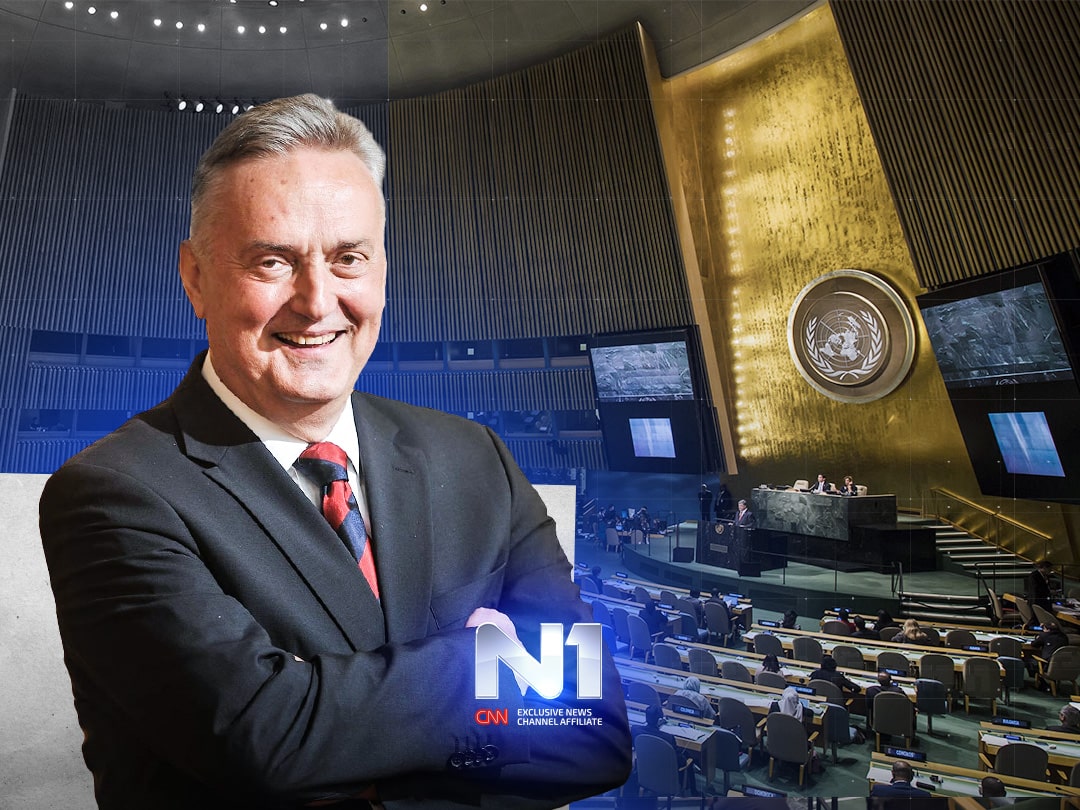
Bosnia and Herzegovina’s Ambassador to the United Nations and university professor Zlatko Lagumdzija commented on growing international debates surrounding Nicolás Maduro and his arrest, drawing a comparison between Maduro and former Venezuelan UN ambassador Diego Arria, as well as their fundamentally different approaches to international law and the genocide in Srebrenica.
In his statement, Lagumdzija said that Arria and Maduro symbolize two entirely different visions of Venezuela and two opposing concepts of international law.
“Diego Arria and Nicolás Maduro are symbols of two different Venezuelas and two diametrically opposed attitudes toward international law,” Lagumdžija said.
Arria and the defense of international law
Lagumdžija described Diego Arria as a symbol of a once-prosperous and internationally respected Venezuela, noting that Arria is now among millions of Venezuelans who found refuge in the United States after fleeing political persecution and economic collapse.
“At the time when Arria represented Venezuela at the United Nations, the country was respected and prosperous, while today nine out of ten citizens live in poverty,” Lagumdžija stated.
He added that Venezuela’s economic decline is particularly striking when viewed in a global context.
“Venezuela’s economic output is lower today than it was three decades ago, while global wealth has increased fourfold during the same period,” he said.
Lagumdžija emphasized Arria’s role during the war in Bosnia and Herzegovina, recalling that as President of the UN Security Council, Arria was among the first to warn the international community about the danger facing Srebrenica.
“Arria warned the UN Security Council and the world’s leading media that a ‘slow-motion genocide’ was unfolding before the eyes of the international community,” Lagumdžija said.
He also noted that the informal UN Security Council meetings known as the ‘Arria-formula’ were named after Diego Arria, reflecting his contribution to more open and substantive dialogue on peace and security.
Maduro and double standards
In contrast, Lagumdžija described Maduro as a symbol of the collapse of a once-wealthy state and of the selective application of international law.
“Maduro brought his country and its citizens to the brink of ruin and used international law according to a ‘black handbook of double standards,’” Lagumdžija said.
Referring to Maduro’s legal situation, he added:
“After governing the state through its institutions, he is now facing trial in New York on charges related to running a drug cartel using state mechanisms.”
Srebrenica and the UN resolution
Lagumdžija also addressed the campaign against the UN General Assembly Resolution establishing 11 July as the International Day of Remembrance of the Genocide in Srebrenica, noting that Venezuela voted against the resolution.
“During the orchestrated campaign against the resolution, the President of Serbia publicly thanked Maduro for his support,” Lagumdžija said.
The resolution was ultimately adopted by a large majority of UN member states, while fewer than ten percent voted against it.
According to Lagumdžija, the placement of the Srebrenica Flower memorial in front of the UN headquarters in New York serves as a response to attempts to deny or relativize the genocide.
Looking ahead
Speaking about Venezuela’s future, Lagumdžija said the country’s transition must be led by its citizens, but within a framework of international law and lessons learned from past global interventions.
“International law and coordinated action by key international actors are a necessary foundation for a post-Maduro period,” he said.
He concluded that the example of Srebrenica, a genocide confirmed by final judgments of international courts, clearly illustrates the difference between what he called “Arria’s international law” and a selective, politically motivated interpretation of international law.
Kakvo je tvoje mišljenje o ovome?
Učestvuj u diskusiji ili pročitaj komentare


Kakvo je tvoje mišljenje o ovome?
Učestvuj u diskusiji ili pročitaj komentare