

 Srbija
 Hrvatska
 Slovenija

BiH’s UN envoy reveals ‘Roadmap to dismantle Bosnia,’ warns of 'Greater Serbia'


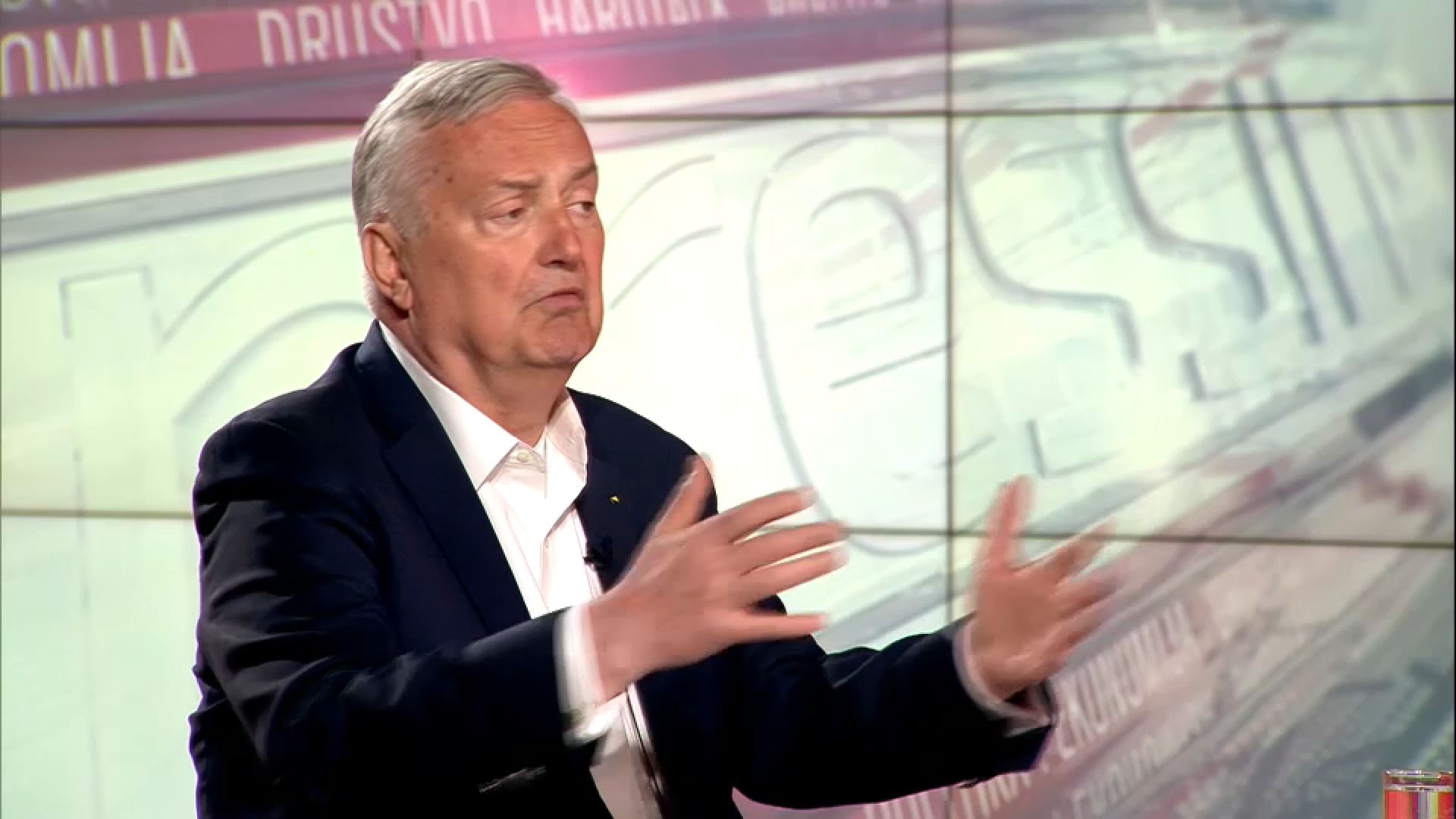
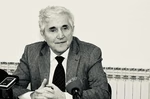
Zlatko Lagumdzija, Bosnia and Herzegovina’s Permanent Representative to the United Nations, revealed in an exclusive interview on N1’s Pressing a so-called "Roadmap to the Dismantling of Bosnia and Herzegovina" – a document that has been guiding the country’s diplomatic efforts led by Presidency member Denis Becirovic to counter what he described as a plan to create a “Greater Serbia.”
Lagumdzija claims the declaration adopted at the recent “All-Serb Assembly” is part of a concrete operational effort to establish a Greater Serbia. He says he first raised the issue at the UN Security Council in November 2024, using Becirovic’s roadmap as proof that the Republika Srpska (RS) entity leadership, backed by Russia and Serbia, is engaged in a systematic attack on Bosnia’s constitutional framework and the Dayton Peace Agreement.
“The plan envisages an assault from RS on the Dayton Peace Agreement and the constitutional order of Bosnia and Herzegovina,” Lagumdzija said. “Russia and Serbia are the direct instructors of the RS authorities.”
He described this axis of influence as the "MBB Axis" — Moscow, Belgrade, and Banja Luka — and stressed that BiH Presidency member Becirovic has been campaigning with this document for the past two years.
According to the roadmap, the first target is the Constitutional Court of Bosnia and Herzegovina through efforts to expel international judges. Lagumdzija explained they have successfully argued before the UN that the High Representative and international judges are not “self-proclaimed emperors,” but part of the Dayton structure — just as was the case with Austria in 1995, when it joined the EU after international supervision ended.
Further phases in the RS plan allegedly include dismantling national-level institutions such as the BiH Prosecutor’s Office, Court of BiH, State Investigation and Intelligence Agency (SIPA), and the Intelligence-Security Agency (OSA), followed by obstruction of the Parliamentary Assembly, Council of Ministers, and the BiH Presidency, culminating in RS’s withdrawal from state institutions and the Armed Forces.
“This roadmap ends with the RS as an independent state,” Lagumdzija warned.
Timeline of escalation and legal pushback
He linked these developments to a sequence of political events. On February 26, the BiH Court delivered a ruling against Milorad Dodik. The very next day, the RS government adopted laws denying the authority of the state-level judiciary, including the BiH Prosecutor’s Office, the Court, and the High Judicial and Prosecutorial Council (HJPC). These were published in the RS Official Gazette on March 4. Becirovic swiftly filed an appeal to the Constitutional Court, which issued a temporary suspension of the laws.
Appeals were also filed against proposed amendments to the RS Constitution, which, Lagumdzija says, rendered RS's decisions legally invalid and blocked the attempted dismantling of the constitutional order.
Parallels to wartime attacks and diplomatic campaign in New York
“In the real world, (former RS Army general Ratko) Mladic was shelling us, including the Presidency of the Republic of Bosnia and Herzegovina. Legally, that war gave birth to our state,” Lagumdzija said. “I went to New York with two goals: the adoption of the Srebrenica Resolution, and to stop this attempt to dismantle Bosnia.”
Position of global powers
He emphasized the strong support of European countries: Germany, Austria, France, Italy, and the United Kingdom, all firmly backing Bosnia’s territorial integrity. China, while avoiding confrontation, continues to affirm Bosnia’s sovereignty, which Lagumdzija attributes to China’s parallel concerns over Taiwan. Importantly, China also reiterated its support for EUFOR, which was confirmed again in the UN Security Council.
As for the Islamic world, Lagumdzija noted that Serbian and Russian diplomacy had succeeded in dissuading some countries from supporting the Srebrenica Resolution. Pakistan, however, stood firm despite heavy pressure and has been a strong ally in the Security Council.
Tactics used by Serbia and Russia globally
Describing Serbia and Russia’s international tactics, Lagumdzija stated: “Their embassies are lobbying governments around the world and coordinating closely with their missions in New York.” As an example, he claimed that Serbia set up a school in Honduras, after which the country reversed its stance on the Srebrenica Resolution.
In the UN Security Council, Lagumdzija said the furthest they got was securing support for the Dayton Peace Agreement, Bosnia’s constitutional order, EUFOR’s mandate, and the country’s territorial integrity. “There were attempts to condemn Dodik, but the Russians blocked it. They also tried to insert a clause declaring the High Representative illegal, but that failed too. So did the request to arrest Dodik as a state saboteur,” he added.
On the “call for dialogue” and Vucic’s unintended help
Lagumdzija addressed international calls for dialogue, clarifying that it doesn’t necessarily involve direct talks with Dodik. “This is a dialogue within institutions. The RS National Assembly will have to roll back all the disputed laws — that’s the context of the call for dialogue: a return to the constitutional framework,” he said.
He also made a surprising revelation regarding Serbia’s president: “Let me tell you something for the first time — Vucic helped us with the Srebrenica Resolution. With their barbaric rhetoric and anti-civilizational propaganda, denying the Hague Tribunal and the genocide, they inadvertently drew global attention to the issue. People began to understand that the resolution was no longer just about Srebrenica, but about upholding international law and judicial institutions.”
According to Lagumdzija, it was precisely because of this aggressive Serbian campaign that the world became more engaged. “Soon after that, the ‘All-Serb Assembly’ declaration appeared.”
Geopolitical shifts and the waning role of the US in the Balkans
Commenting on broader geopolitical changes, Lagumdzija observed that America is now preoccupied with its own domestic issues and has largely delegated responsibility for the Balkans to the European Union.
“Russia wants this region destabilised to divert attention from Ukraine,” he said. “A major geopolitical revolution is underway. Alongside it, a digital revolution. The very nature of the global economy is changing.”
Despite these changes, Lagumdžija expressed concern that Bosnia and the region are no longer high on the international agenda. But thanks to diplomatic efforts and — ironically — Serbia’s hostile stance, the world has been forced to confront the reality unfolding in Bosnia and Herzegovina.
Kakvo je tvoje mišljenje o ovome?
Učestvuj u diskusiji ili pročitaj komentare


Kakvo je tvoje mišljenje o ovome?
Učestvuj u diskusiji ili pročitaj komentare