

 Srbija
 Hrvatska
 Slovenija

Bosnia’s Srebrenica Memorial Center urges legal action after Covic meets with controversial nationalist singer Thompson


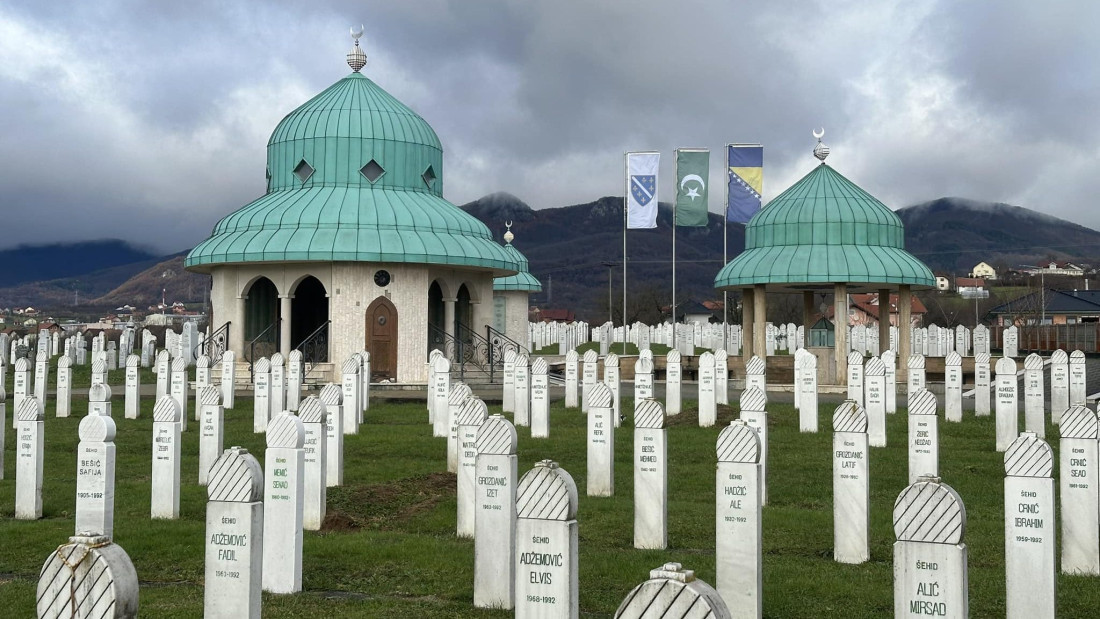
The Srebrenica Memorial Center has publicly called for the consistent enforcement of Bosnia and Herzegovina’s laws following the appearance of Dragan Covic, leader of HDZ BiH, alongside Croatian singer Marko Perkovic Thompson, whose public image and performances have long been controversial due to associations with Ustasa symbolism and historical revisionism.
In a statement posted on social media platform X, the Memorial Center said such public appearances represent a serious social and political concern, particularly in the context of respecting antifascist values and the rule of law in Bosnia and Herzegovina.
The Memorial Center noted that Thompson’s concerts and songs have frequently been linked to the use of the salute “Za dom – spremni” (“For the homeland – ready”), especially in connection with his song Bojna Cavoglave. The salute is widely associated with the Ustasa regime, which ruled the Nazi-allied Independent State of Croatia (NDH) during World War II.
The Center also highlighted lyrics from songs such as "E, moj narode", which reference alleged conspiracies involving “communists” and “freemasons,” and Geni kameni, whose lyrics allude to the year 1945, when the NDH collapsed.
Particular attention was drawn to Thompson’s song "Lijepa li si", which includes references to “Herceg-Bosna,” the wartime Croat political entity whose senior political and military leaders were later convicted of war crimes by the International Criminal Tribunal for the former Yugoslavia (ICTY).
The Memorial Center further stated that Thompson’s concerts have often been accompanied by the display of NDH insignia, Ustaša symbols, and isolated cases of Nazi salutes among members of the audience.
The statement also raised concerns about repeated acts of vandalism targeting the Partisan Memorial Cemetery in Mostar, a site dedicated to antifascist fighters. According to the Memorial Center, these incidents have occurred without sustained political commitment from HDZ-linked authorities to ensure adequate protection of the site.
The Center noted that many of the names engraved at the memorial include Jewish citizens such as Leon Levi, Dr. Leo Stern, Herman Altkorn, and Oskar Mandelbaum, who participated in the antifascist resistance.
It also pointed to the recent destruction of a monument dedicated to 77 players of FK Velež Mostar who died during World War II, further deepening concerns about the treatment of antifascist heritage in the city.
The Srebrenica Memorial Center emphasized that Bosnia and Herzegovina’s Criminal Code clearly defines the glorification or justification of war crimes as a criminal offense. It called on competent institutions to apply the law consistently and without selectivity.
“We will not remain silent in the face of the normalization of extremist symbolism, historical relativization, or the erosion of antifascist principles,” the statement said.
The reaction comes amid intensified public debate in Bosnia and Herzegovina about political responsibility, historical memory, and the preservation of antifascist values in contemporary society.
Kakvo je tvoje mišljenje o ovome?
Učestvuj u diskusiji ili pročitaj komentare


Kakvo je tvoje mišljenje o ovome?
Učestvuj u diskusiji ili pročitaj komentare