

 Srbija
 Hrvatska
 Slovenija


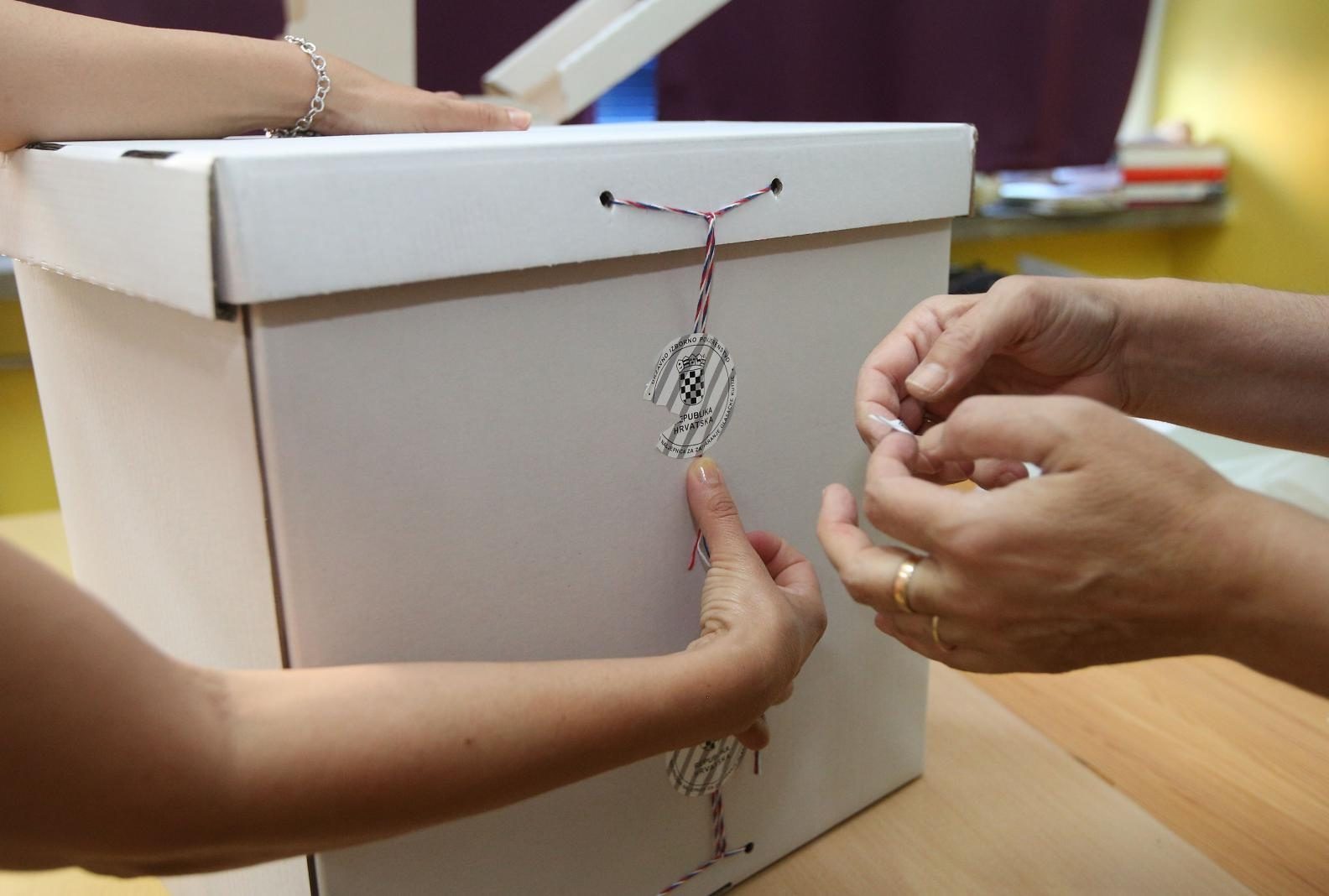
On Sunday, Croatia is holding local polls to elect local representative and executive authorities for the next four years, with particular political interest focused on the outcome of the voting in the three major cities: Zagreb, Rijeka, and Split.
In addition to the names of the mayors, it is still uncertain what the composition of the city councils and assemblies in these cities will look like, for which 28 candidate slates are competing.
For the 49 seats in the Zagreb City Assembly, 12 lists are in the running, while for the city councils of Rijeka and Split, each with 31 councillors, there are seven and nine lists respectively.
There are seven candidates for mayor of Zagreb, and six for Rijeka and Split each.
In the fourth major city, Osijek, the current mayor's approval ratings seem high, making the elections less exciting.
Election results from other cities such as Zadar, Pula, Varaždin, Dubrovnik, as well as Gospić, Sinj, Metković, and Samobor, are also being closely followed.
Sunday’s vote will also reveal which parties will govern Croatia’s counties, and whether there has been a shift in the balance of power since 2021, and in which counties.
Just over 3.5 million voters eligible to vote
Just over 3.5 million voters are eligible to elect local authorities, for which a total of 31,082 candidates are standing.
Compared to 2021, the number of voters this year is down by 147,000, and the number of candidates has decreased by 7,700.
Eligible voters will be able to exercise their right to vote at 6,600 polling stations, open from 7 a.m. to 7 p.m., during which a two-day election silence will remain in effect.
Local authorities are being elected in a total of 576 constituencies, though in some of them the outcome was effectively decided before election day.
In seven cities and 112 municipalities, the names of mayors and municipal heads are already known, as they were the only candidates. The compositions of 35 municipal councils are also known in advance, as only one list was submitted in each case.
Four years ago, around 10,500 observers monitored the elections, while this time just over 6,600 will do so.
Nearly 13 million ballot papers printed
Due to the large number of constituencies, candidates, and lists, local elections are technically more demanding to organise than other elections.
This is confirmed by the data on the number of ballot papers, nearly 13 million have been printed, which is three and a half times more than for the first round of the presidential elections, when 3.6 million were printed.
The ballots will be in different colours: blue for the elections of county prefects and the mayor of Zagreb, white for mayoral and municipal head elections, light brown for county assemblies, and pink for municipal and city councils.
The first election results will begin to be published at 9 p.m by the DIP State Electoral Commission, and they will be updated every 15 minutes.
Municipal heads, mayors, and county prefects are elected by a majority vote. To be elected, they must receive at least 50% plus one vote.
If no candidate succeeds in this on Sunday, a second round of voting will be held in two weeks, on 1st June, with the top two vote-getters running in the mayoral runoff elections.
In addition to municipal heads, mayors, and county prefects, their deputies from national minorities (79) and from the Croat people in municipalities where Croats are fewer will also be elected on Sunday, in 12 such municipalities.
Members of councils and assemblies will be elected through proportional representation.
Kakvo je tvoje mišljenje o ovome?
Učestvuj u diskusiji ili pročitaj komentare


Kakvo je tvoje mišljenje o ovome?
Učestvuj u diskusiji ili pročitaj komentare