

 Srbija
 Hrvatska
 Slovenija


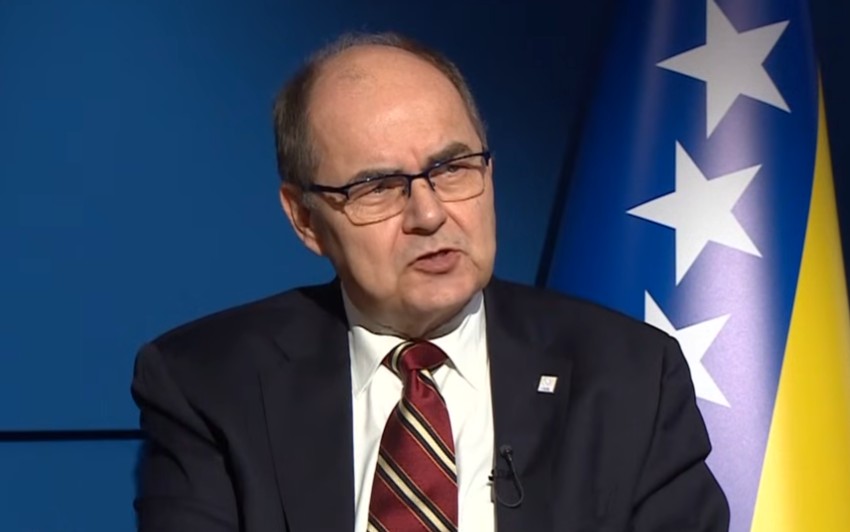
In a comprehensive interview with BHRT, the High Representative in Bosnia and Herzegovina, Christian Schmidt, addressed the prevailing political climate, rumors regarding his departure, and the critical financial state of the national broadcaster. Speaking during the morning program, Schmidt offered a candid assessment of the responsibilities held by domestic leaders and the international community’s role in the country’s future.
Addressing persistent speculation about his potential resignation, Schmidt clarified that he has no immediate plans to leave. He emphasized that his mandate is tied to the completion of the "5+2 Agenda," a set of requirements and objectives that must be met before the Office of the High Representative (OHR) can be closed. Schmidt expressed surprise at media reports suggesting a negotiated exit between Washington and Berlin, asserting that his focus remains on ensuring that Bosnia’s development becomes sustainable and irreversible.
Regarding the country's stalled path toward European Union integration, the High Representative described the past year as a period of "lost opportunities." While refusing to pin the blame on a single individual, he noted that the Council of Ministers could have achieved significantly more. He specifically highlighted the absence of a Minister of Security and questioned the overall functionality of the current ruling coalition. Schmidt argued that while domestic politicians often search for external scapegoats to distract from their own failures, the responsibility for progress lies squarely with those elected to lead.
The financial "agony" of BHRT and its employees was a significant point of discussion. Schmidt acknowledged receiving letters from the union and management, noting that he understands the deep uncertainty facing the staff. He pointed out that a functional public service broadcaster is a core requirement for EU integration. While mentioning that Minister Edin Forto is seeking temporary solutions, Schmidt stressed that the ultimate responsibility for a long-term funding concept and restructuring rests with the Parliament. He also noted that the international community and the EU are closely monitoring the situation, including the non-implementation of court rulings regarding unpaid RTV tax debts.
On the sensitive issue of state property, Schmidt reiterated that his initiatives are intended to prompt the Parliament to find a legal solution. He described claims that state property ownership denies the existence of Republika Srpska as "senseless," arguing that every level of government should use property for the benefit of the citizens. He warned that the lack of a resolution remains a major barrier to international investment and infrastructure projects like Corridor Vc.
Schmidt also addressed the controversial January 9 celebrations in Republika Srpska, which the Constitutional Court of BiH has declared unconstitutional. He suggested that it would be more constructive for the entity to choose a date that includes all citizens rather than a single ethnic group. Finally, the High Representative dismissed claims made by Milorad Dodik regarding his salary, denying that he receives €24,000 monthly and clarifying that his compensation is funded by the international community, not by Bosnia and Herzegovina.
Kakvo je tvoje mišljenje o ovome?
Učestvuj u diskusiji ili pročitaj komentare


Kakvo je tvoje mišljenje o ovome?
Učestvuj u diskusiji ili pročitaj komentare