Srbija
 Hrvatska
 Slovenija

Hutovo Blato Nature Park faces serious shortage of water as drought takes increasing toll on nature


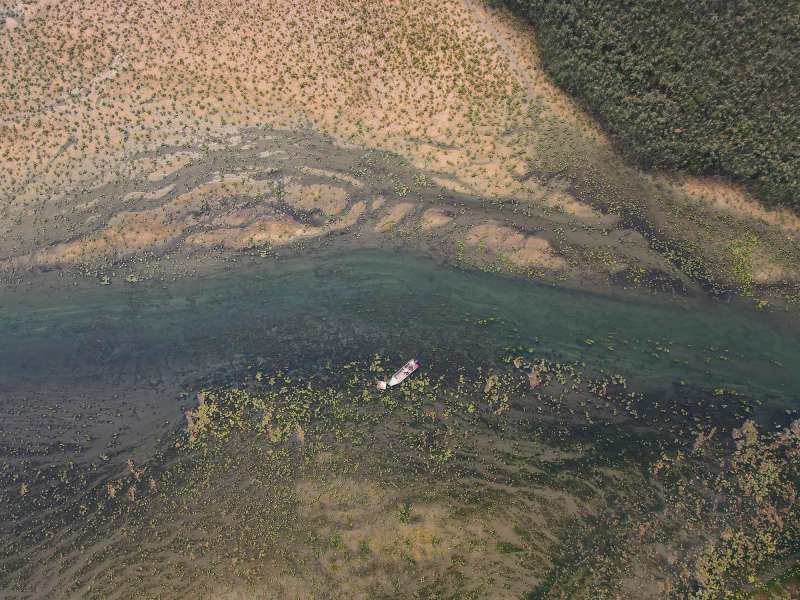
Prolonged high temperatures and a pronounced lack of rainfall are leaving increasingly visible consequences on nature. One of the areas where the effects of drought are particularly evident is Hutovo Blato Nature Park, where some natural areas are facing a serious shortage of water.
While during the summer months we monitor temperatures daily and seek shade, air-conditioned spaces and refreshment, nature faces high temperatures in a completely different way.
For a wetland ecosystem, every additional degree means greater evaporation, greater water loss and additional pressure on plant and animal species that depend on a stable water regime.
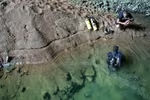
The effects of drought are becoming increasingly visible in Hutovo Blato. Areas that would normally be filled with water under natural water conditions are now almost completely dry in some places. Instead of water surfaces, increasingly large areas of muddy and exposed soil, as well as dry vegetation, can be seen.
But the disappearance of water from a wetland is more than just a change in the appearance of the landscape.
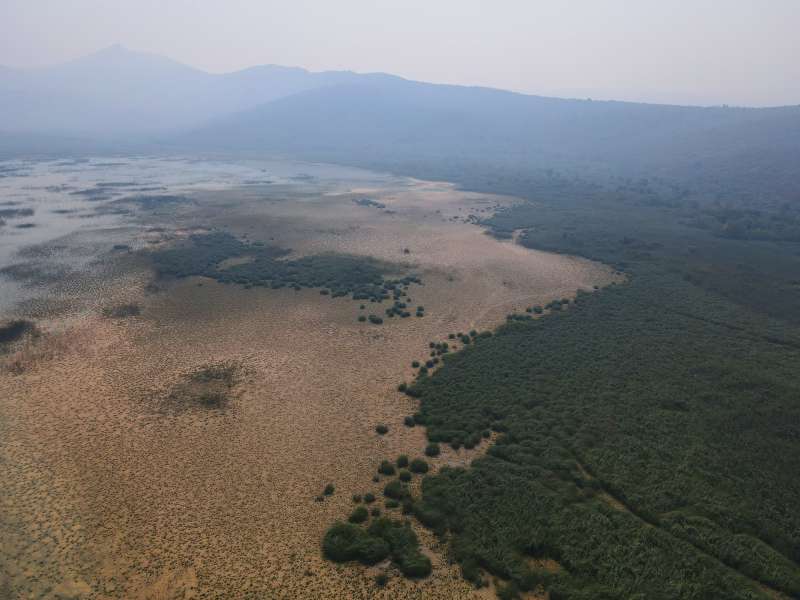
“A wetland is a complex and sensitive living system in which water, soil, plants and animals are interconnected. A change in one part of that system inevitably affects all the others,” the Hutovo Blato Nature Park said.
Hutovo Blato is one of the most valuable wetland areas in this part of Europe, and its importance stems precisely from the richness of habitats and species that depend on water.
Wetland and peatland habitats are particularly valuable. Peat soils play an important role in the carbon cycle because they can store large amounts of carbon over long periods. As long as these soils remain sufficiently wet, water slows the decomposition of organic matter and helps retain carbon in the soil.
The drying of peatland areas changes this natural process. When water disappears, soil conditions change, decomposition of organic matter increases, and carbon that has been stored in the soil for a long time can be released back into the atmosphere.
For this reason, water loss in a wetland is much more than the disappearance of a single body of water.
The problem is further complicated by the fact that climate change is not the only pressure to which natural systems are exposed.
Prolonged droughts and high temperatures are occurring alongside human-induced changes – the way we use land, water and other natural resources.
Changes in the water regime, habitat loss and fragmentation, intensive use of natural resources, and increasingly pronounced climate extremes are together creating pressures to which wetland ecosystems are particularly vulnerable.
The consequences compound one another.
“Less water means greater stress for plants and animals. Dry vegetation increases the risk of fires. Fires further destroy habitats, while changes to habitats threaten the species that depend on them. Everything is connected,” the Public Enterprise Hutovo Blato Nature Park added.
The consequences of such changes, it said, do not end at the boundaries of the nature park.
“Natural systems also play an important role for people. Clean water and air, soil conservation, temperature regulation, water retention, flood protection, pollination and carbon storage are just some of the processes on which quality of life depends. Therefore, the question is no longer simply how high temperatures will be. The question is how long natural systems can withstand the simultaneous pressure of climate change and human activities,” it added.
Drought cannot be prevented, nor can weather conditions be controlled. However, it is possible to manage water resources, land and natural habitats more responsibly.
That is why protecting wetlands is not only a matter of nature conservation, but also a matter of long-term security and resilience to climate change.
Preventive action is needed, along with monitoring the condition of ecosystems, protecting habitats and water resources, and making decisions about the use of natural resources with their long-term consequences in mind.
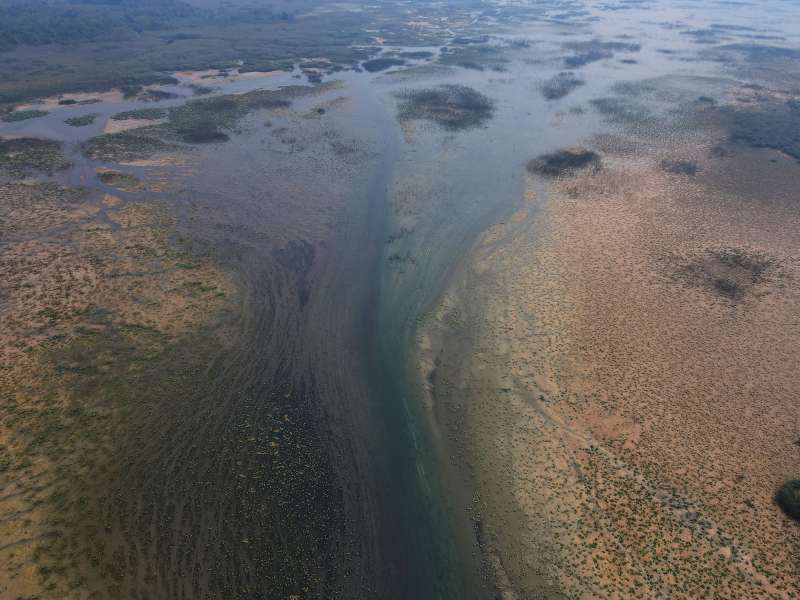
“Because once a habitat is lost, it is difficult to restore. When a species disappears, it cannot simply be recreated. And when the natural balance is seriously disrupted, the consequences do not stop in the area where the change occurred. Hutovo Blato is sending us an important message today precisely because of this: a dry wetland is not merely a changed landscape. It is a sign of changes in th
e natural conditions on which the entire ecosystem depends,” the Hutovo Blato Nature Park said.
The Hutovo Blato Nature Park therefore wants to remind the public that protecting nature is not an obstacle to development, but an investment in the future.
“Nature does not speak loudly. It cannot sit at the table, send a letter or issue a warning. But we can see its changes. We see them in the lack of water, dry vegetation, altered habitats and the increasing vulnerability of the area to fires and other extreme events.
“So, while we once again look at what the thermometer says today, it is worth looking around us as well.
“Not only at how hot it is for us, but also at how difficult it is for nature. Hutovo Blato needs water. And preserving water means preserving life. If concrete measures are not taken, the question is what awaits us in the years ahead,” the Hutovo Blato Nature Park said.
Kakvo je tvoje mišljenje o ovome?
Učestvuj u diskusiji ili pročitaj komentare


Kakvo je tvoje mišljenje o ovome?
Učestvuj u diskusiji ili pročitaj komentare