Srbija
 Hrvatska
 Slovenija

IRMCT President warns UN that glorification of war criminals undermines justice


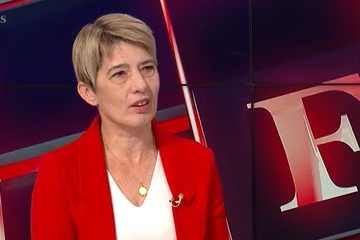
International Residual Mechanism for Criminal Tribunals (IRMCT) President Graciela Gatti Santana told the United Nations General Assembly that experts had warned that public events glorifying convicted war criminals risk undermining decades of efforts to establish the truth, end impunity and achieve justice.
Presenting the IRMCT’s annual report to the General Assembly, Gatti Santana said, among other things, that the recent funeral of Ratko Mladic, who was sentenced to life imprisonment by the Mechanism for crimes committed in Bosnia and Herzegovina, highlighted the potential dangers of faltering in the final stages of its work, including further harm to victims and survivors, Detektor reported.
''The hands of our clock are approaching midnight. Let us not allow the clock to strike before the work of the day is done,'' she said.
Gatti Santana explained that Mladic had died while hospitalized in The Hague, awaiting transfer to a state where he would serve his life sentence, and that the Dutch authorities had immediately taken the steps required under national law.
''After determining that Mladic had died of natural causes, the Dutch authorities did not open a criminal investigation, nor was an autopsy performed. In the interest of transparency, I ordered a parallel inquiry into this matter under the Mechanism’s regulatory framework. This inquiry is ongoing,'' she said.
She noted that Mladic’s funeral with military honours in Belgrade had prompted widespread international condemnation, particularly from United Nations experts and special rapporteurs. They had stressed that, for survivors of crimes committed in the former Yugoslavia and the families of those killed or forcibly disappeared, the public glorification of war criminals served to ''deepen suffering and undermine memory, truth and accountability''.
According to Gatti Santana, the experts and special rapporteurs had warned that public events appearing to glorify individuals convicted of crimes risked undermining decades of efforts to establish the truth, end impunity, and secure justice and reparations for those crimes.
''These experts and special rapporteurs further observed that 'if such blatant denial of genocide succeeds, it will set back the achievements in international criminal accountability against impunity forged in the fires of Nuremberg and Tokyo, and the International Criminal Tribunals for the former Yugoslavia and Rwanda','' the IRMCT president said.
The passage of time since these crimes were committed, Gatti Santana said, did not diminish the collective responsibility to ensure that justice was served.
"The Mechanism, on behalf of the United Nations, continues faithfully and effectively to uphold the international legal order established through decades of your support. As we await the Security Council’s decision, we call upon you, the General Assembly, to provide the support necessary to sustain our mandated activities. In doing so, this body will affirm that the United Nations delivers on its promises and upholds its obligations under the Charter," she said.
In her address, Gatti Santana also said that in December last year, the Secretary-General had issued recommendations presenting the Security Council with options for revising the Mechanism’s mandate. These changes would allow for a significant reduction in its size and activities while preserving due process, accountability and the legitimacy of its proceedings.
In February this year, the United Nations Office of Internal Oversight Services (OIOS) published its biennial evaluation of the Mechanism. OIOS stressed that, despite years of severe resource reductions, the Mechanism’s ability to evolve into a small, temporary and efficient structure had been hindered by the architecture of its mandate. This echoed the Secretary-General’s assessment that a Security Council decision was necessary to implement transformative changes.
In May, drawing on the recommendations of the Secretary-General and OIOS, Gatti Santana said the Mechanism had presented the Security Council with a comprehensive strategic plan outlining a responsible conclusion of all its activities within clearly defined timelines.
The plan identified which functions could be discontinued, which could be transferred and which limited judicial functions needed to remain at the international level. It also outlined opportunities to consolidate operations at a single location and streamline the organization to achieve substantial savings, including a reduction of nearly 90 percent in its current staff.
"The Mechanism needs a Security Council resolution to implement this radical but fair transformation," she said.
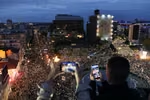
Ratko Mladic died in late August this year and was buried in Belgrade with state honours. The Mechanism sentenced him to life imprisonment for the genocide in Srebrenica and crimes committed in other towns.
Kakvo je tvoje mišljenje o ovome?
Učestvuj u diskusiji ili pročitaj komentare


Kakvo je tvoje mišljenje o ovome?
Učestvuj u diskusiji ili pročitaj komentare