

 Srbija
 Hrvatska
 Slovenija


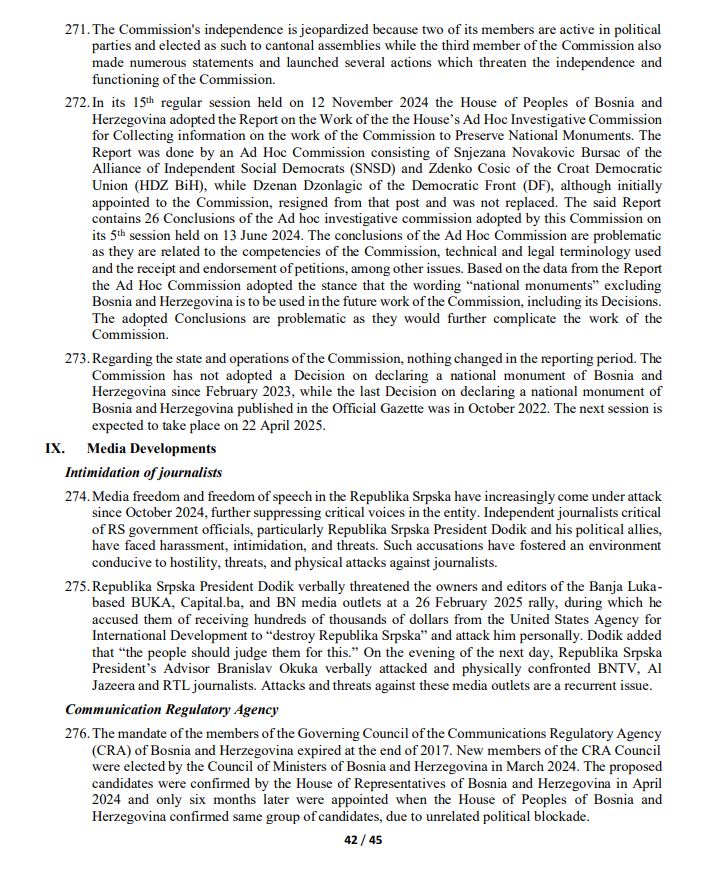
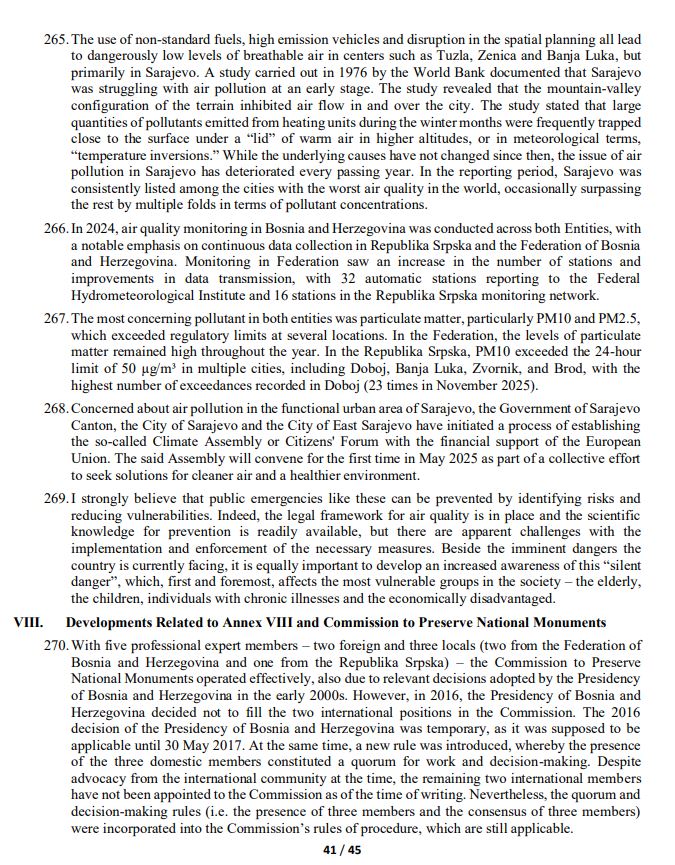
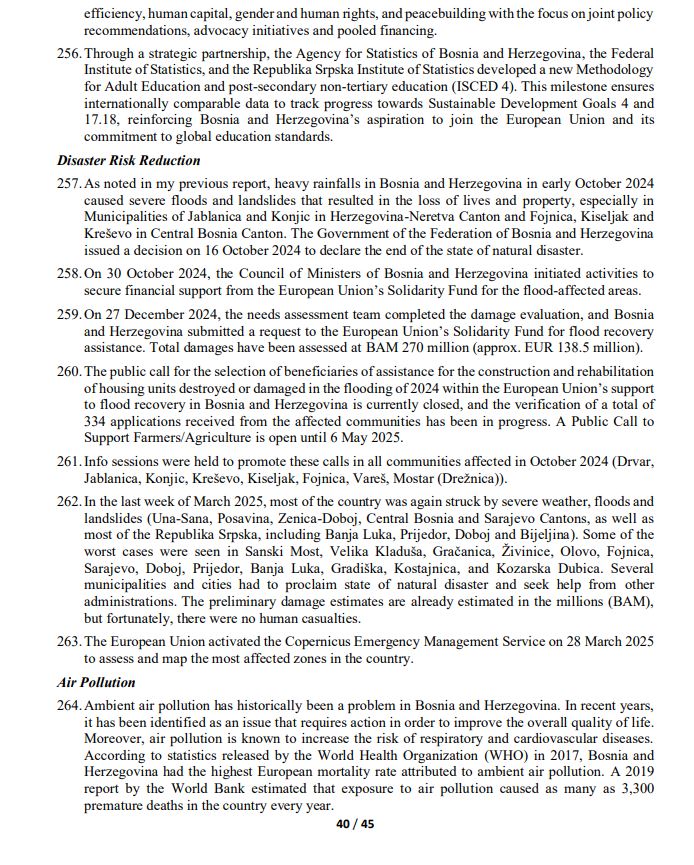
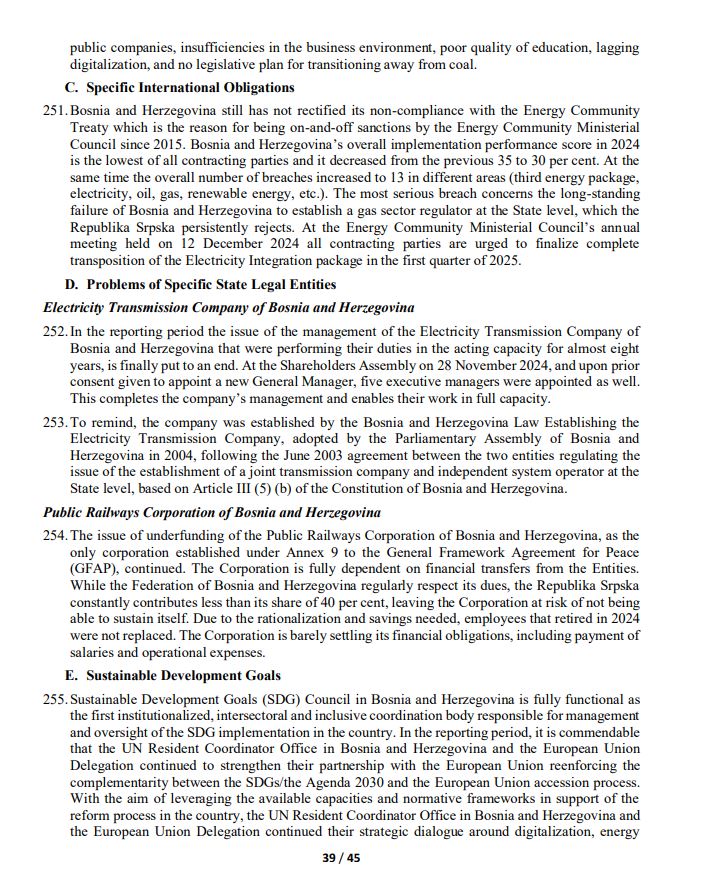
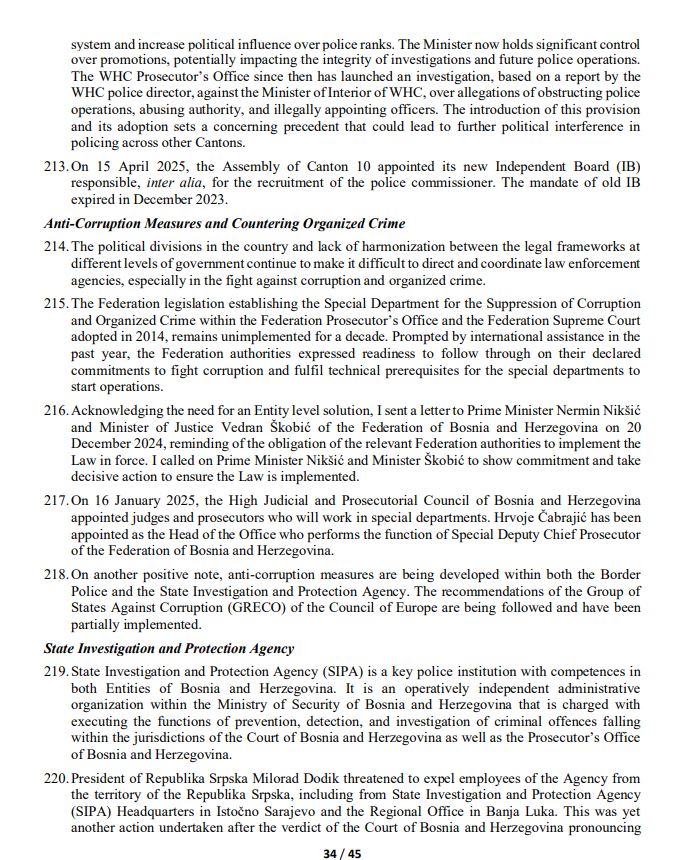
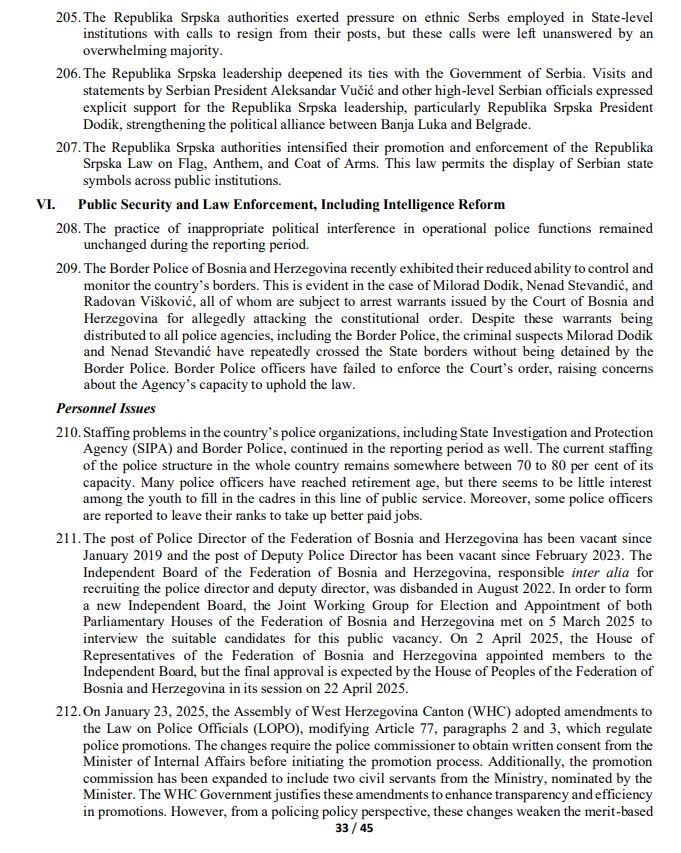
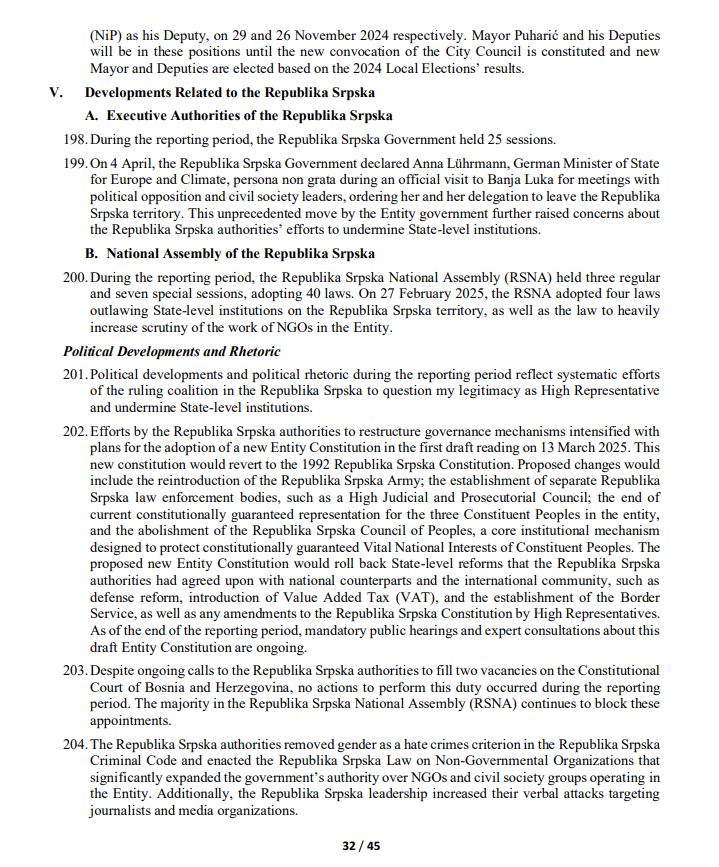
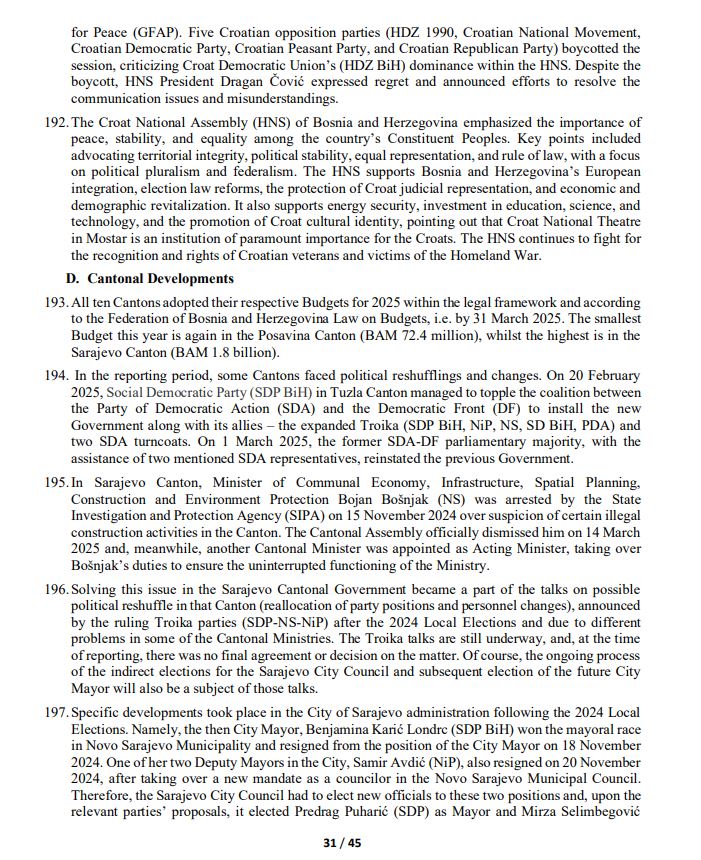
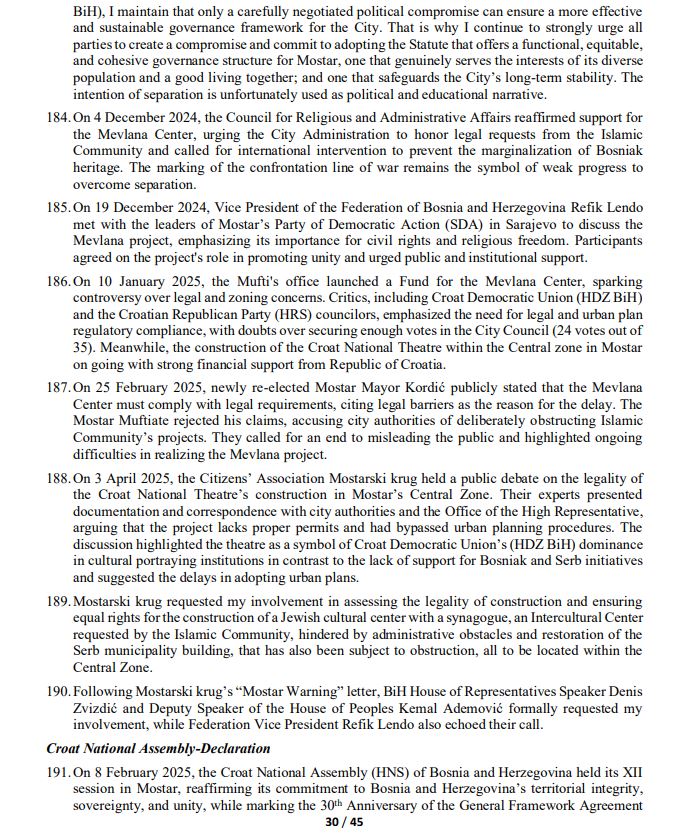
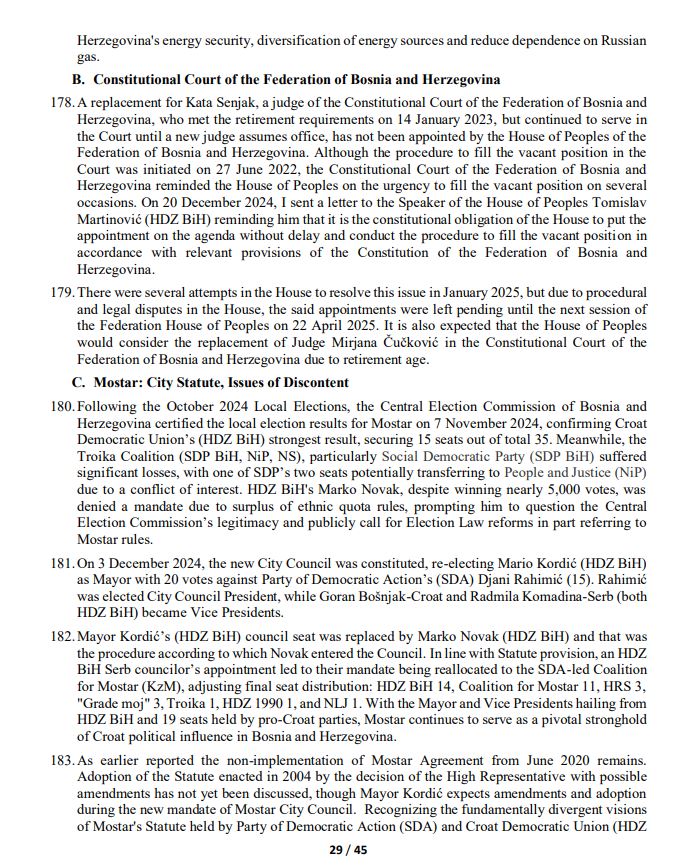
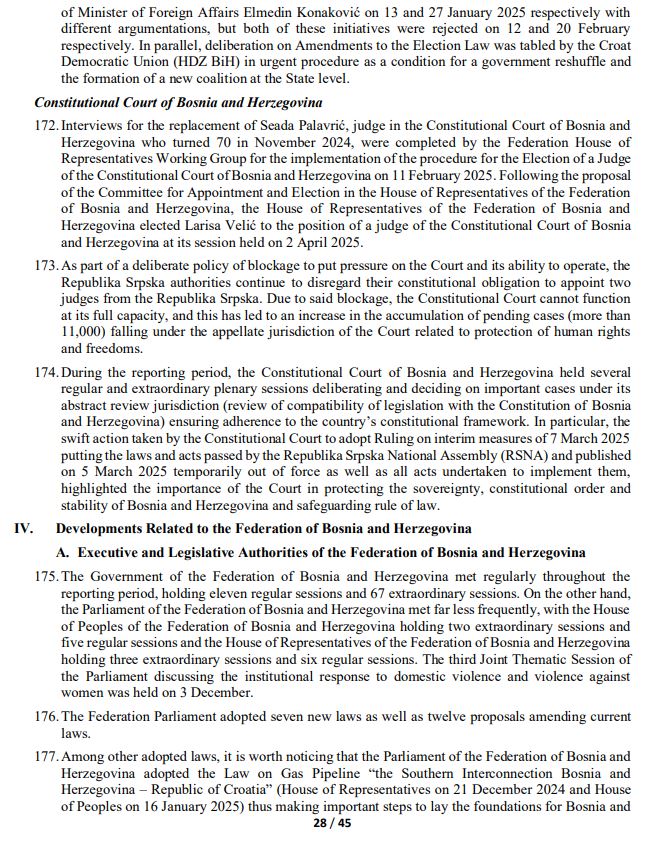
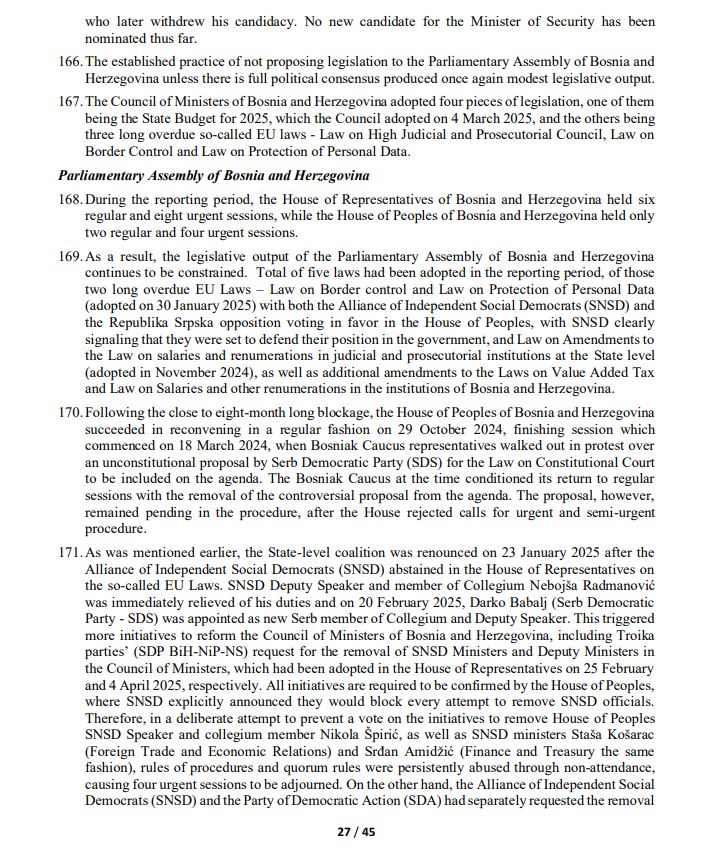
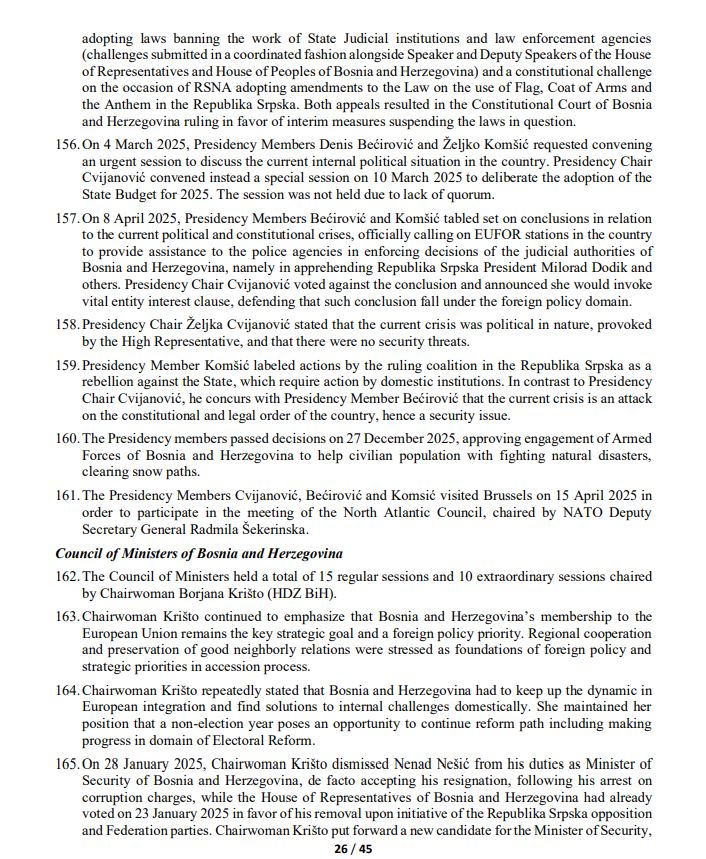
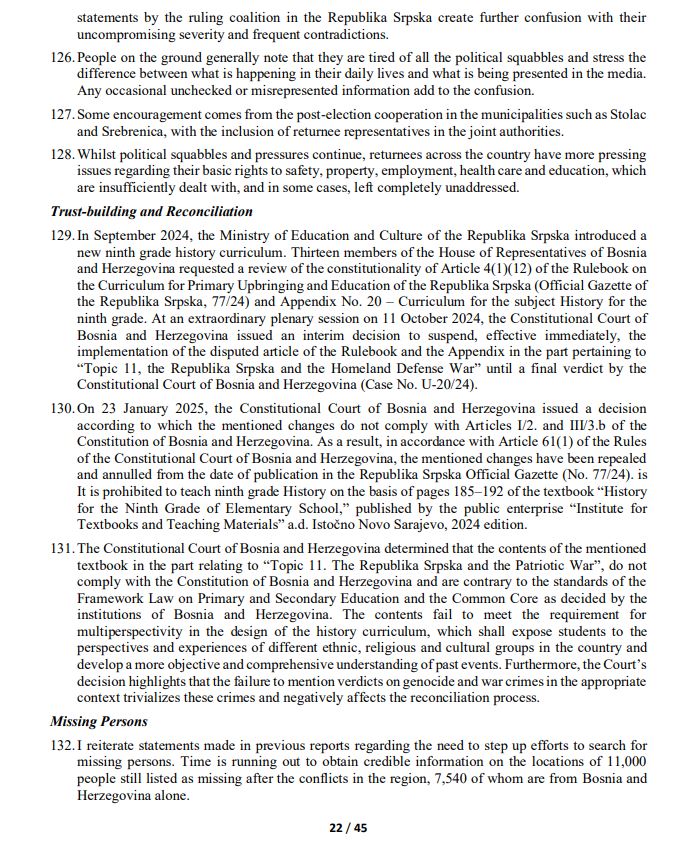
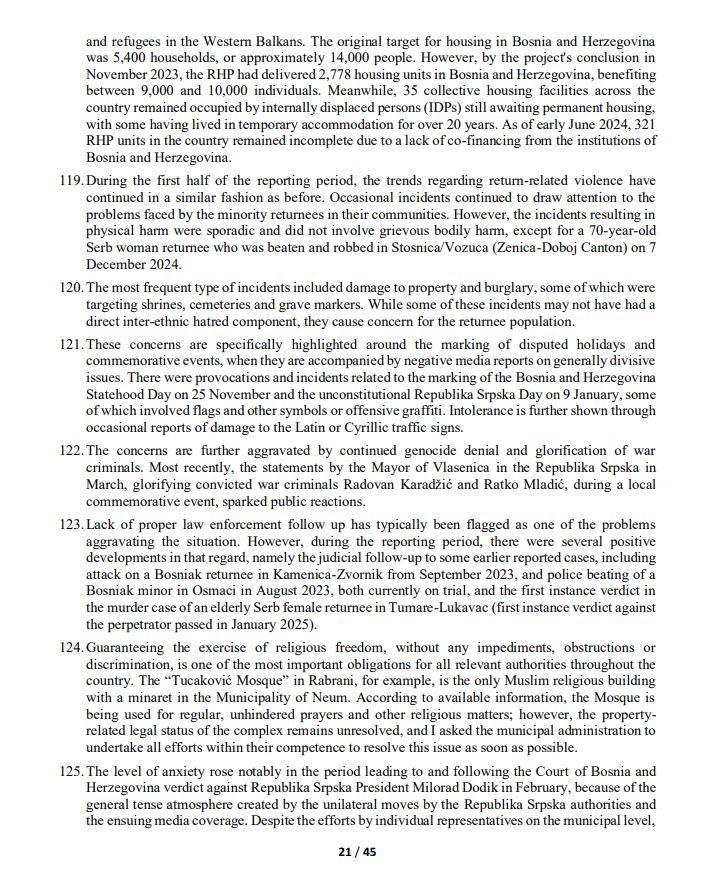
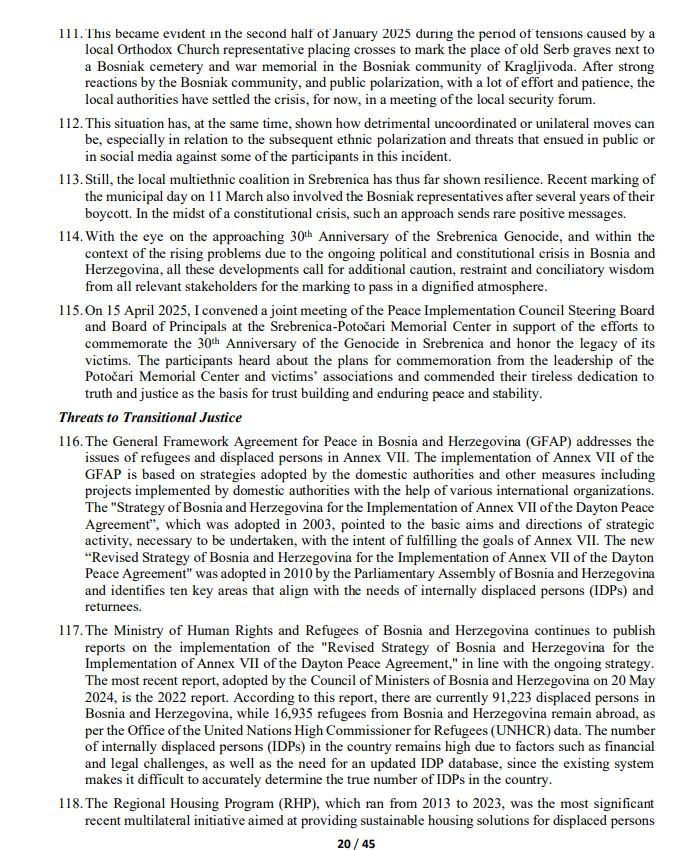
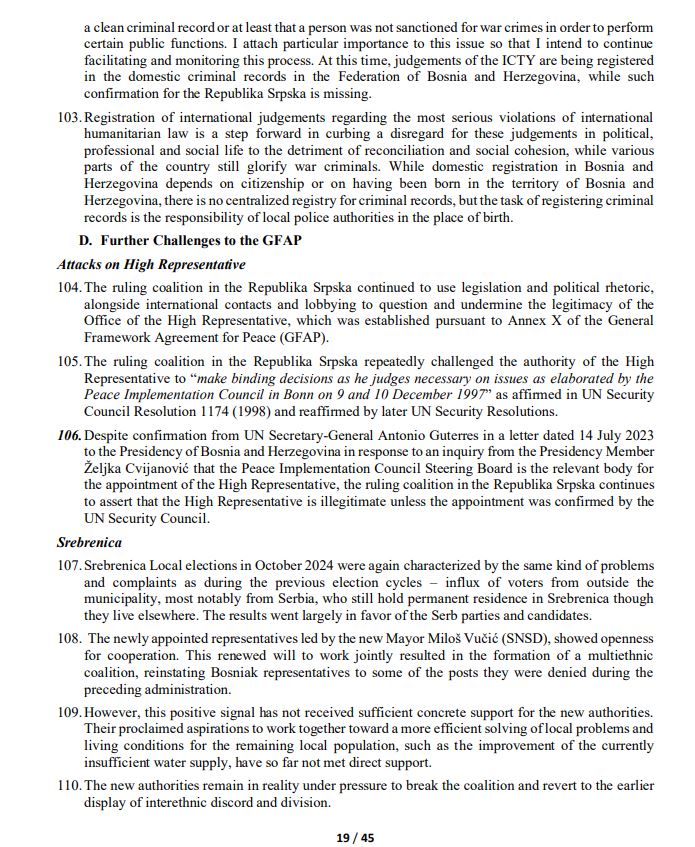
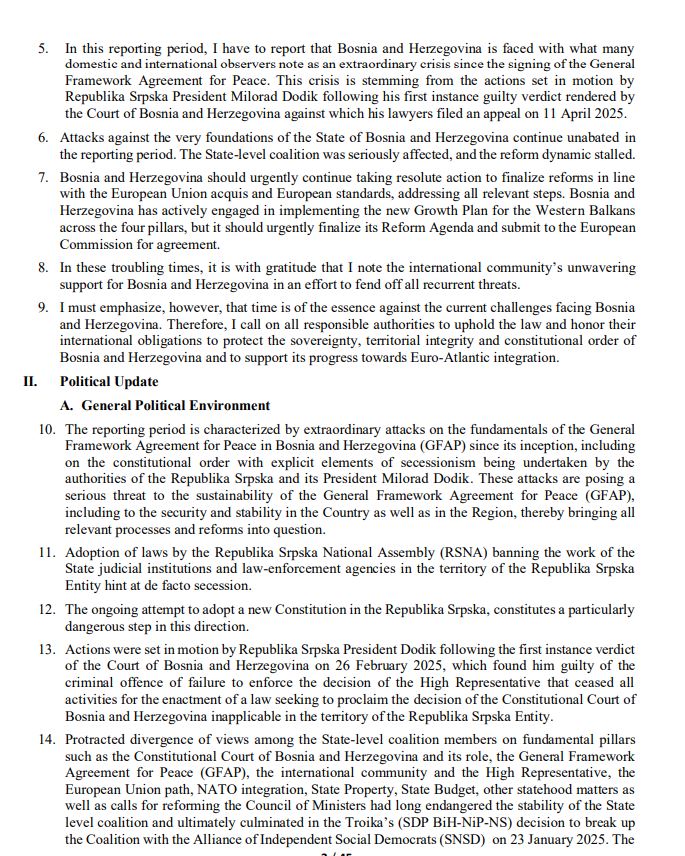
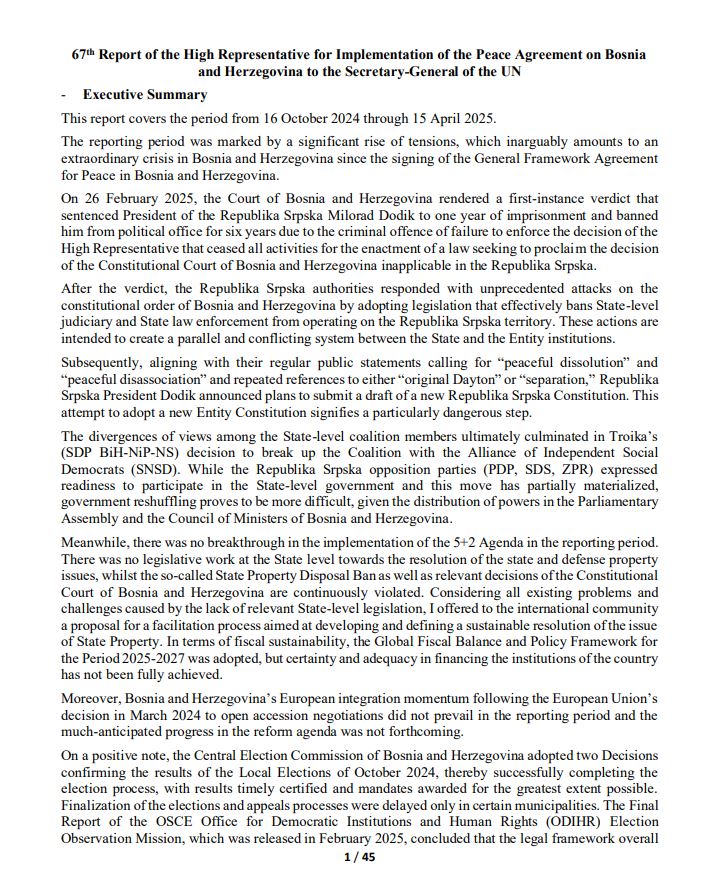
In his latest report to the United Nations Security Council, the High Representative for Bosnia and Herzegovina, Christian Schmidt, warned of a significant rise in political tensions between October 16, 2024, and April 15, 2025, describing the situation as the most serious crisis in Bosnia and Herzegovina since the signing of the Dayton Peace Agreement.
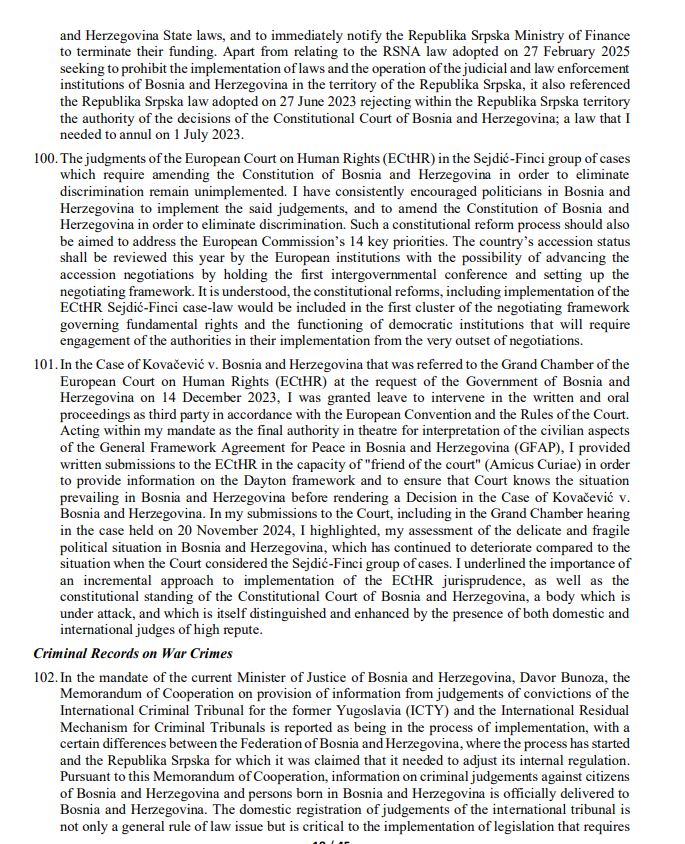
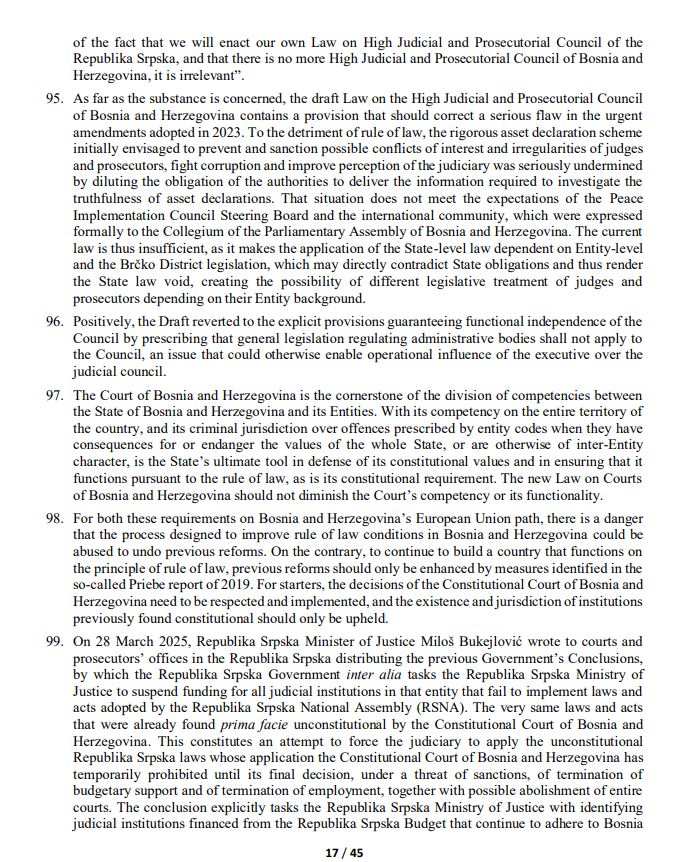
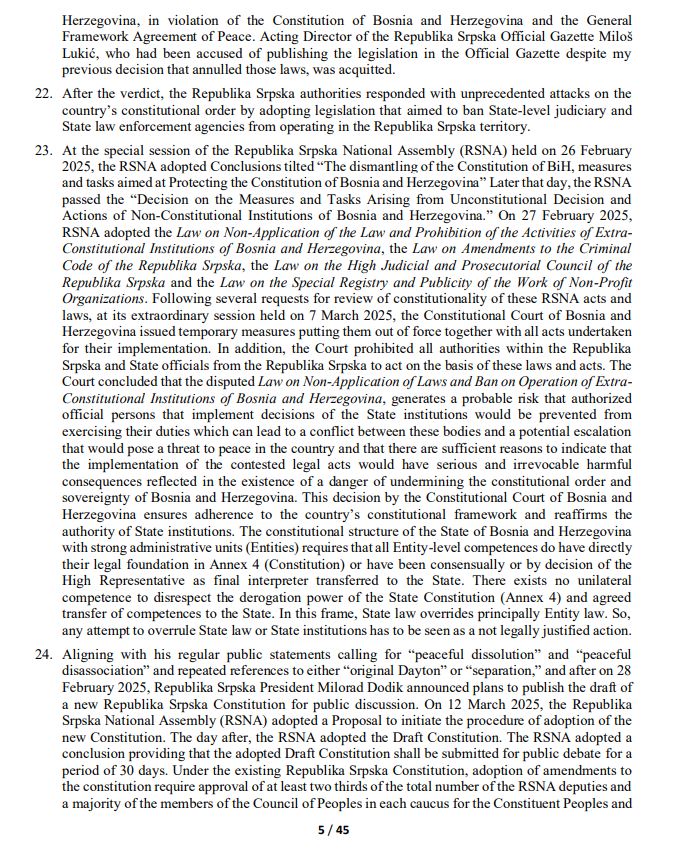
The key event defining this period was the February 26, 2025, first-instance verdict by the Court of Bosnia and Herzegovina, sentencing Republika Srpska (RS) President Milorad Dodik to one year in prison and banning him from holding political office for six years. Dodik was convicted for failing to implement the High Representative's decision, which had suspended all activities related to enacting a law in RS that would block implementation of rulings by the Constitutional Court of Bosnia and Herzegovina.
Following the verdict, RS authorities responded with what the report describes as unprecedented attacks on Bosnia and Herzegovina’s constitutional order, by passing legislation that essentially prohibits the functioning of state-level judicial institutions and law enforcement agencies in RS. Schmidt assessed these moves as efforts to establish a parallel and opposing system to the state-level institutions.
N1 | N1
N1 | N1
N1 | N1
N1 | N1
N1 | N1
N1 | N1
N1 | N1
N1 | N1
N1 | N1
N1 | N1
N1 | N1
N1 | N1
N1 | N1
N1 | N1
N1 | N1
N1 | N1
N1 | N1
N1 | N1
N1 | N1
N1 | N1
N1 | N1
N1 | N1
N1 | N1
N1 | N1
N1 | N1
N1 | N1
N1 | N1
N1 | N1
N1 | N1
N1 | N1
N1 | N1
N1 | N1
N1 | N1
N1 | N1
N1 | N1
N1 | N1
N1 | N1
N1 | N1
N1 | N1
N1 | N1
N1 | N1
N1 | N1
N1 | N1
N1 | N1
N1 | N1
In line with his repeated public calls for “peaceful disassociation” and references to “the original Dayton” or “dissolution,” RS President Dodik announced plans to introduce a draft of a new RS constitution. The High Representative labelled this initiative as a particularly dangerous step.
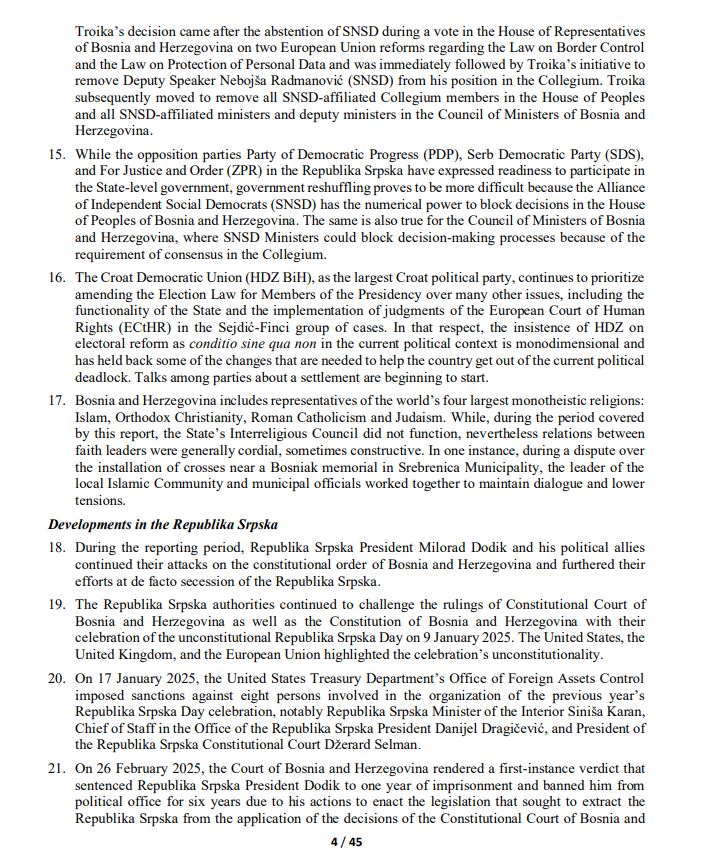
Divergences within the ruling coalition at the state level led to the decision by the so-called "Troika" (SDP BiH, NiP, NS) to terminate their coalition with Dodik’s Alliance of Independent Social Democrats (SNSD). Although opposition parties in RS (PDP, SDS, ZPR) expressed readiness to participate in state-level governance—resulting in partial progress—reconstructing the government has proved difficult due to the balance of power in the Parliamentary Assembly and the Council of Ministers.

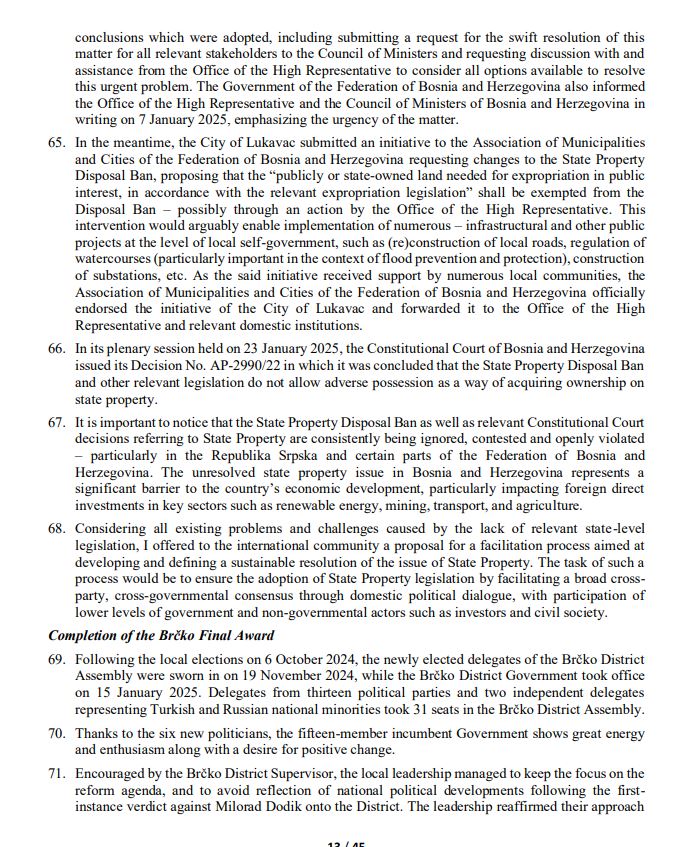
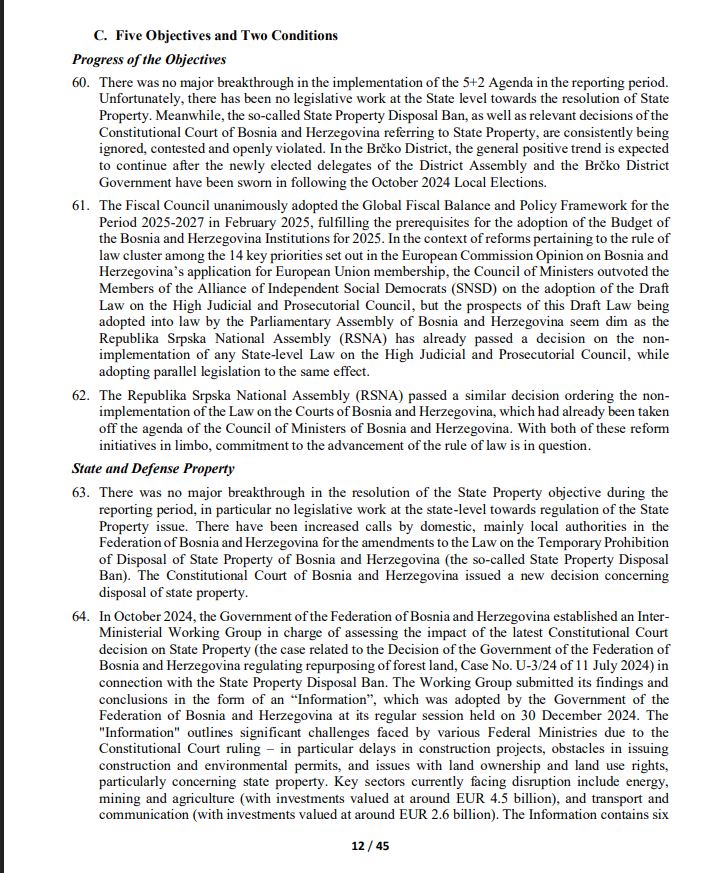
The report noted no progress on implementing the 5+2 Agenda. No legislative activity occurred at the state level regarding the resolution of state and defence property issues, while the ongoing ban on the disposal of state property and relevant rulings of the Constitutional Court of BiH continued to be violated. Given the persistent challenges, the High Representative proposed that the international community initiate a facilitation process to develop a sustainable solution for the state property issue.
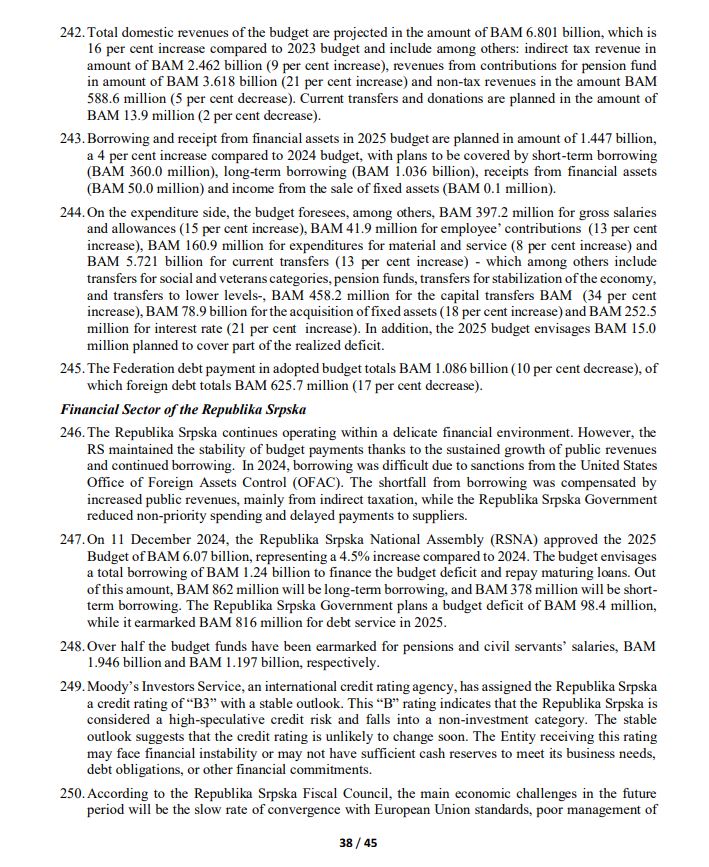
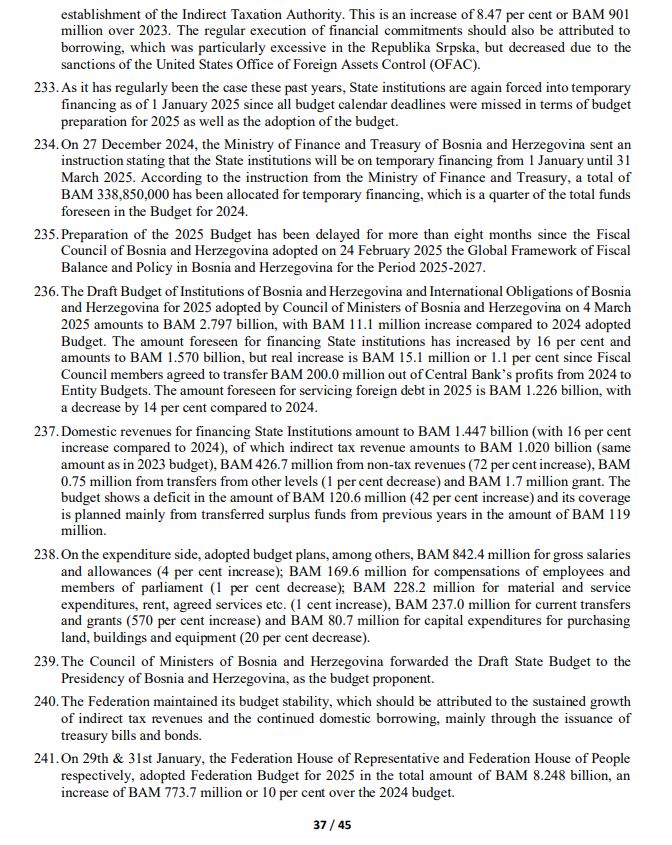
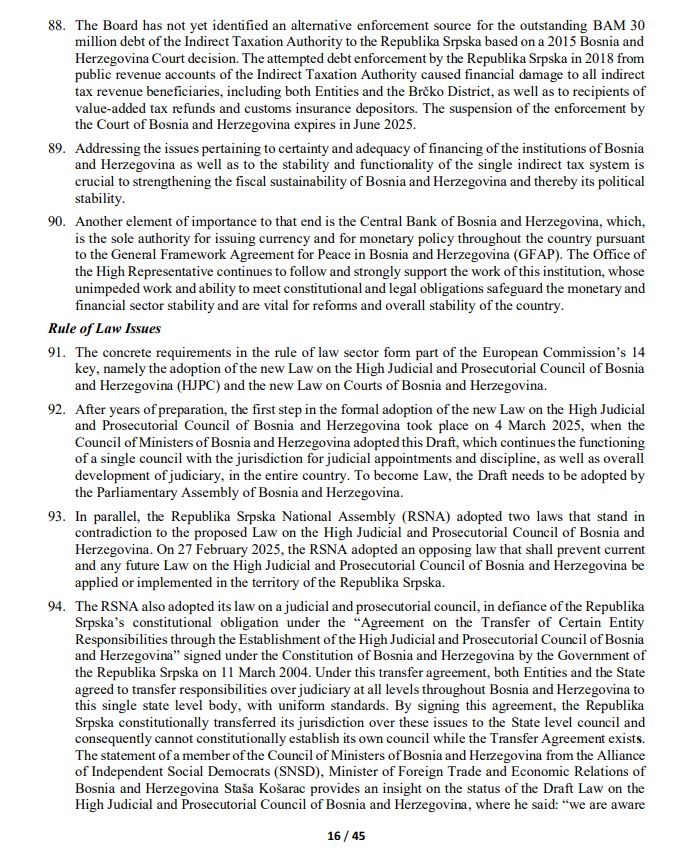
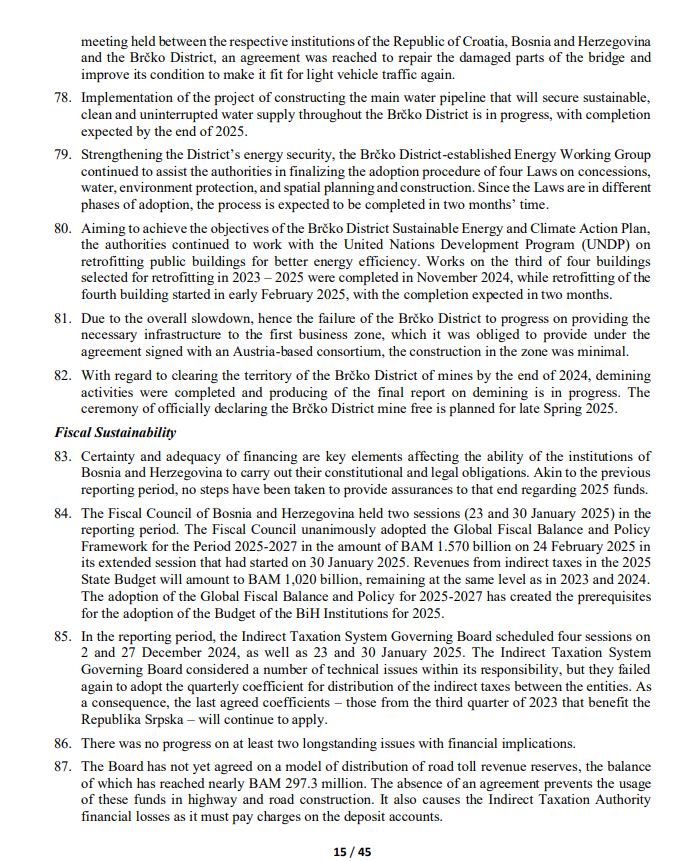
Regarding fiscal sustainability, the Global Fiscal Framework for 2025–2027 was adopted. However, complete financial security and adequate funding of state institutions have yet to be achieved.
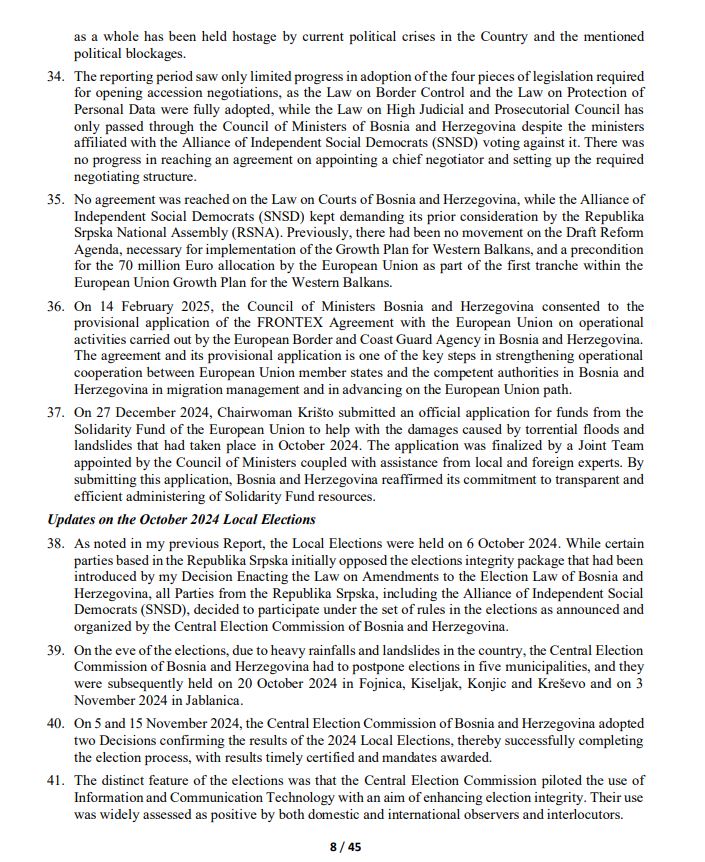
Bosnia and Herzegovina’s European integration process stalled during the reporting period, despite the European Union’s March 2024 decision to open accession negotiations. Expected progress on the reform agenda did not materialize.
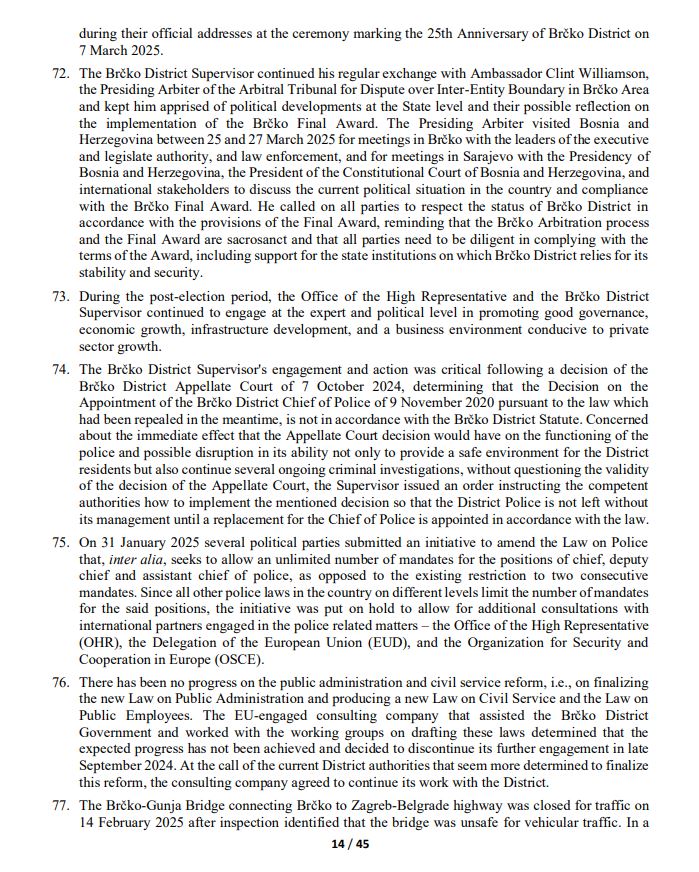
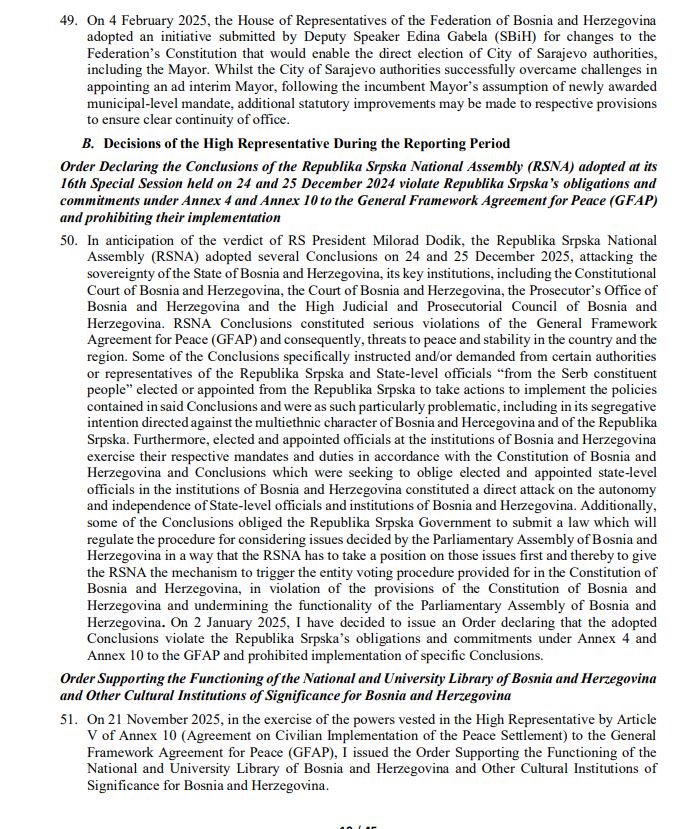
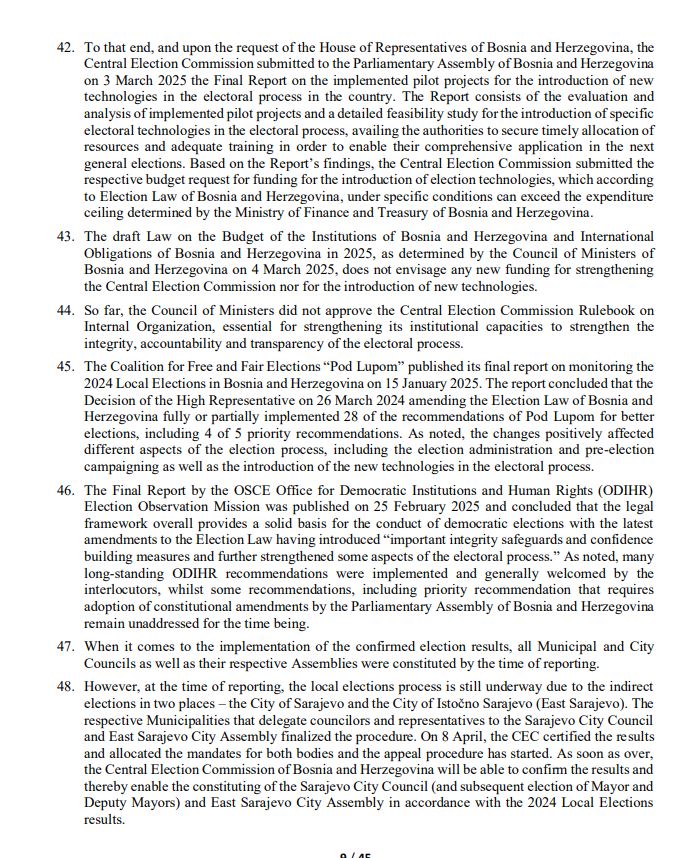
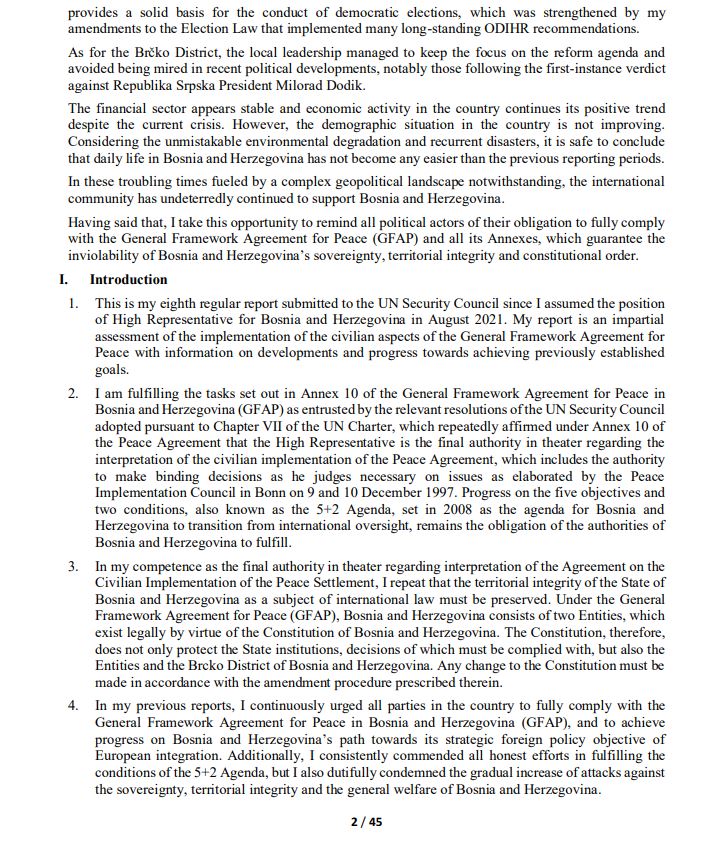
On a positive note, the Central Election Commission (CEC) of BiH adopted two decisions confirming the results of the October 2024 local elections, thus successfully concluding the electoral process. Delays in finalizing results and resolving complaints occurred only in certain municipalities. The final report by the OSCE/ODIHR Election Observation Mission, published in February 2025, found that the legal framework overall provides a solid foundation for democratic elections—further strengthened by Schmidt’s amendments to the Election Law. In the Brčko District, local authorities managed to stay focused on reforms and avoid entanglement in broader political conflicts.
The financial sector remains stable, and economic activity continues to trend positively despite the political crisis. However, demographic conditions show no improvement. Environmental deterioration and repeated natural disasters persist, making daily life increasingly difficult. In this challenging geopolitical environment, the international community continues to support Bosnia and Herzegovina. Schmidt reminded all political actors of their obligation to fully respect the General Framework Agreement for Peace and all of its annexes, which guarantee Bosnia and Herzegovina’s sovereignty, territorial integrity, and constitutional order.
Developments in Republika Srpska
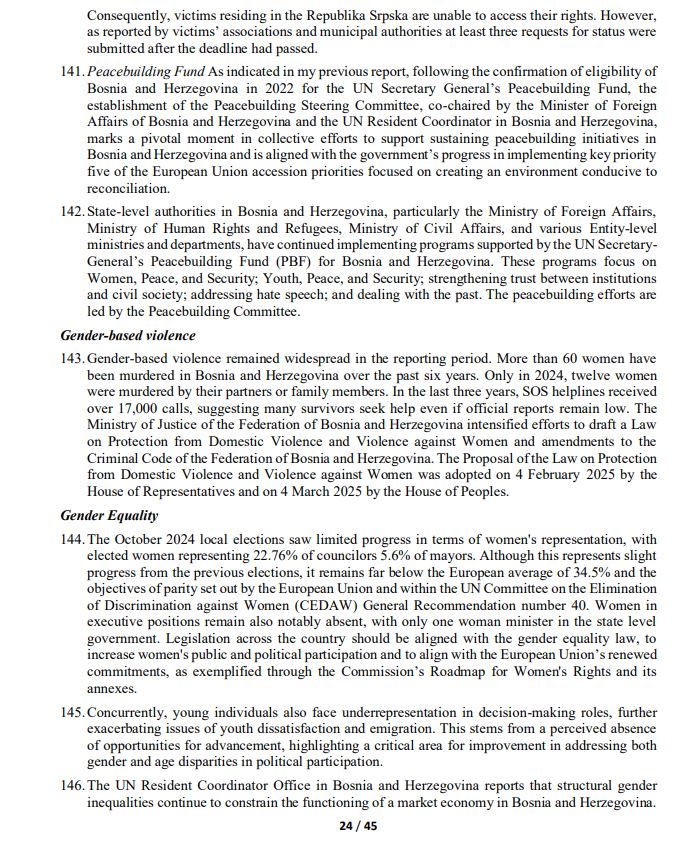
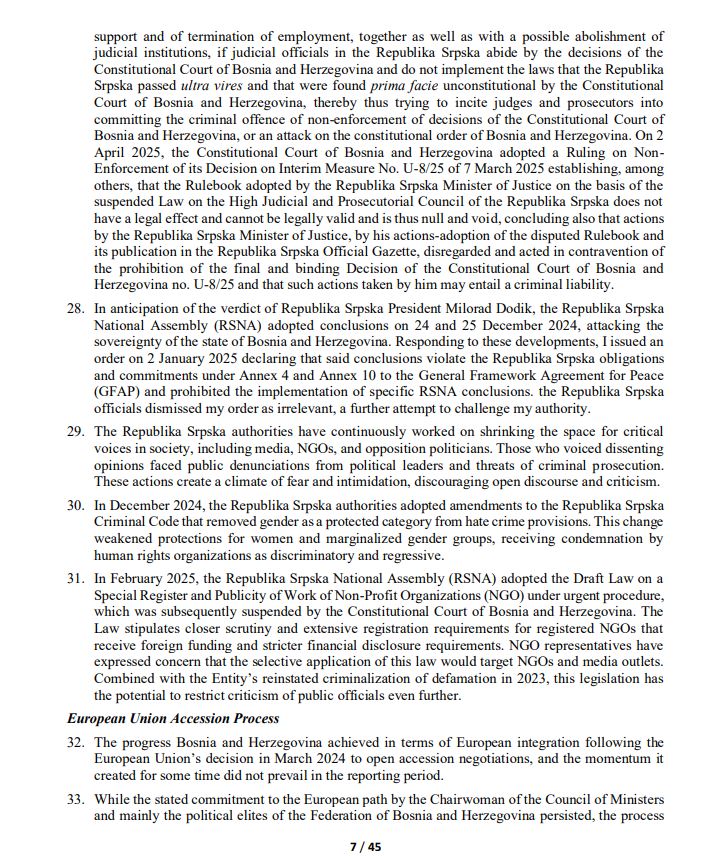
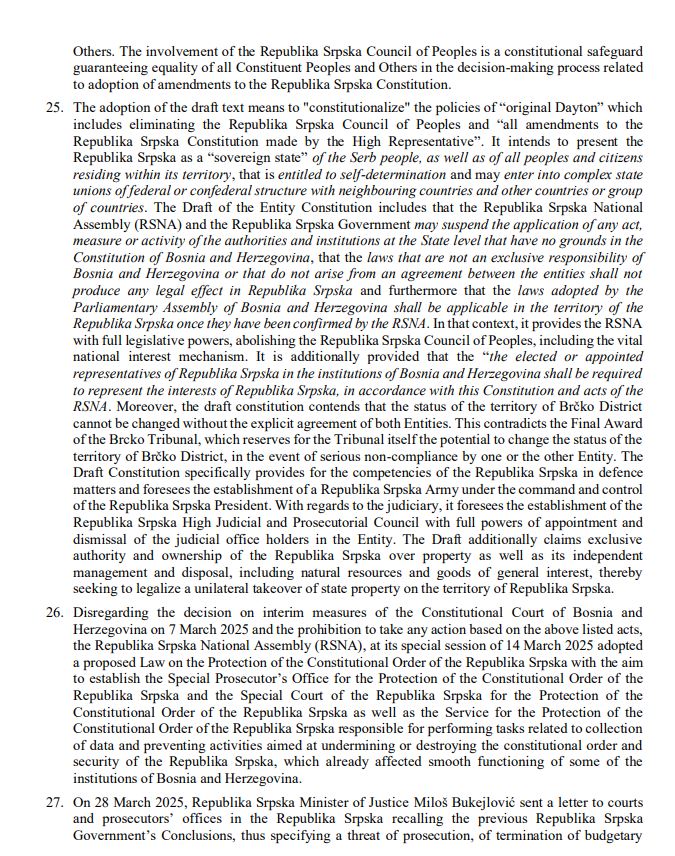
The High Representative warned that RS authorities, led by President Milorad Dodik, are intensifying efforts to undermine Bosnia and Herzegovina’s constitutional order while openly pursuing a policy of de facto secession. Schmidt listed several political and legislative steps that, in his view, directly violate the Dayton Peace Agreement and threaten the country’s stability.
During the reporting period, RS authorities continued to disregard Constitutional Court rulings, including celebrating the unconstitutional RS Day on January 9, despite condemnation from the U.S., EU, and the United Kingdom. Due to their involvement in the celebration, the U.S. Department of the Treasury sanctioned eight individuals, including key RS officials.
The critical moment came in February, when the Court of BiH sentenced Dodik and banned him from political office for attempting to legally block the application of Constitutional Court decisions. In response, RS authorities passed a legislative package barring the operation of state institutions within RS and initiated the formation of parallel judicial structures, which Schmidt deemed a direct threat to peace.
In March, the RS National Assembly adopted a draft of a new entity constitution that defines RS as a sovereign state with the right to self-determination. The draft eliminates institutions such as the Council of Peoples and asserts RS jurisdiction over defence, foreign policy, and state property—including Brcko District—thus challenging international arbitration rulings.
Despite a Constitutional Court decision suspending these laws, RS authorities continued their implementation. New judicial bodies were established to “protect the RS constitutional order,” and RS Justice Minister Milos Bukejlovic warned judicial officials that they could face sanctions for complying with decisions from state-level institutions.

Schmidt concluded that these actions represent a systematic attack on Bosnia and Herzegovina’s sovereignty. He warned that RS’s unilateral moves not only violate the Dayton Agreement but also push the country into a deep constitutional and security crisis, potentially jeopardizing its territorial integrity and the rule of law.
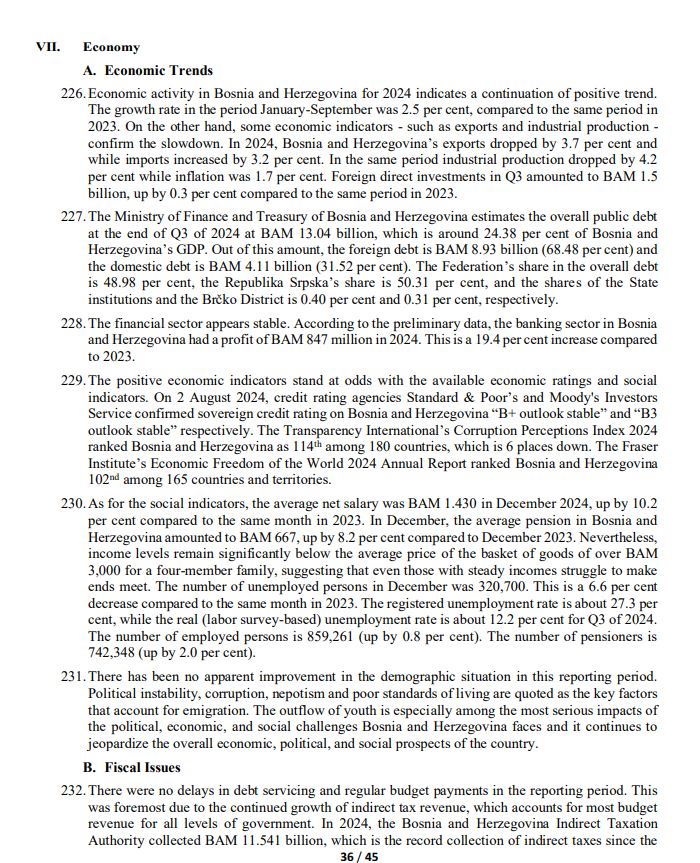
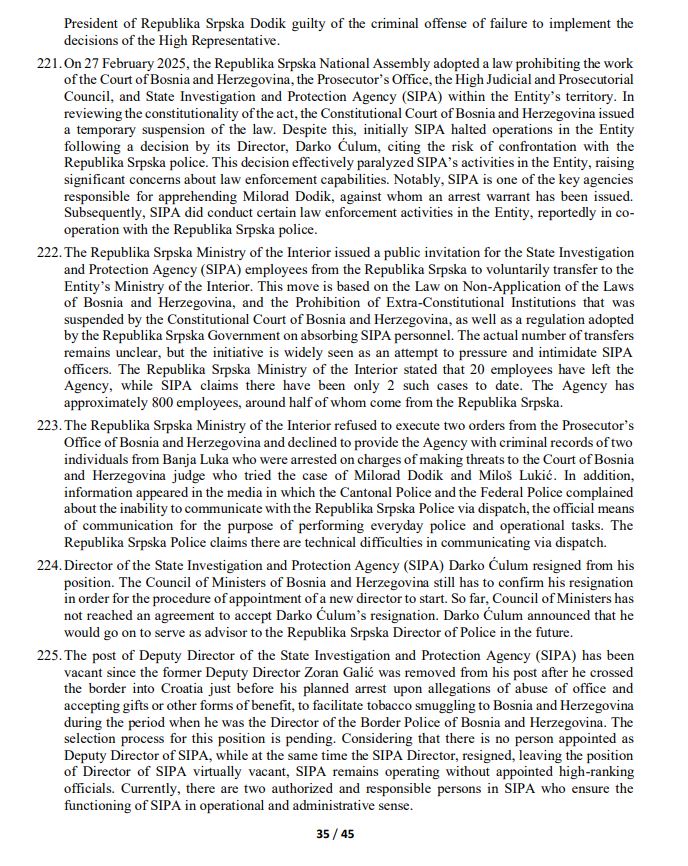
He recalled that on February 27, 2025, the RS National Assembly adopted legislation banning the operations of the Court of BiH, the Prosecutor’s Office, the High Judicial and Prosecutorial Council (HJPC), and the State Investigation and Protection Agency (SIPA) within the RS. While the Constitutional Court temporarily suspended the law, SIPA paused operations in RS, citing the risk of conflict with RS police.
The RS Ministry of Interior called on SIPA employees originating from RS to transfer to the entity’s police forces, despite the suspension of the law enabling such a move. RS authorities claimed 20 officers had already transferred, but SIPA confirmed only two cases. Schmidt highlighted that SIPA employs about 800 people, half of whom are from RS.
He further noted that the RS Ministry of Interior refused to comply with two orders from the BiH Prosecutor’s Office requesting criminal records for individuals from Banja Luka accused of threatening the judge who sentenced Dodik and Lukić. Additionally, police agencies from the Federation reported they were unable to communicate with RS police via the official dispatcher system.
The report also mentioned that SIPA Director Darko Ćulum resigned, although the BiH Council of Ministers has not yet formally accepted his resignation. Ćulum plans to continue his career as an advisor to the RS Police Director, Schmidt said.
Stalemate in EU reforms
The momentum Bosnia and Herzegovina gained on its path toward European Union membership after the European Council’s March 2024 decision to open accession negotiations has not been sustained, according to Schmidt’s report to the UN Security Council.
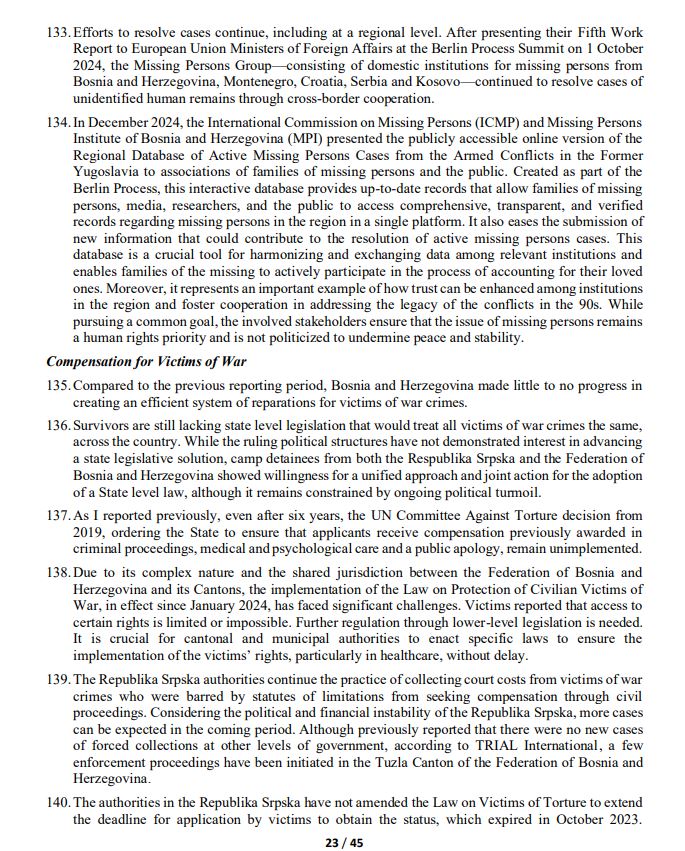
Although the Chairwoman of the Council of Ministers and most political elites from the Federation of BiH continued to express declarative support for EU accession, the process has become a hostage of internal political crises and systemic blockades, Schmidt stated.
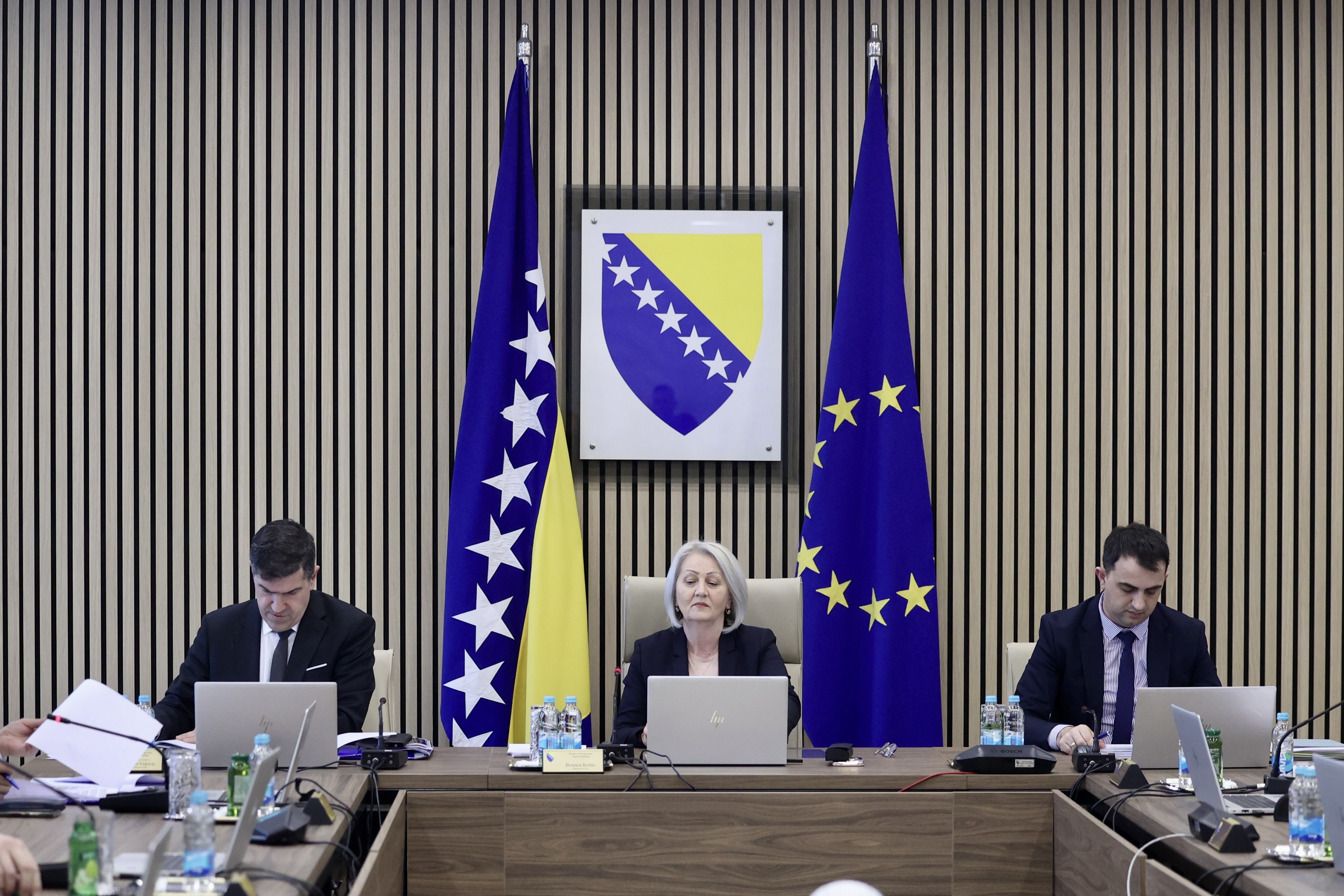
Only limited progress was made in adopting the four key laws required for the formal start of accession negotiations. The Law on Border Control and the Law on Personal Data Protection were adopted, while the Law on the High Judicial and Prosecutorial Council has only passed one chamber of Parliament.
High Representative's decisions
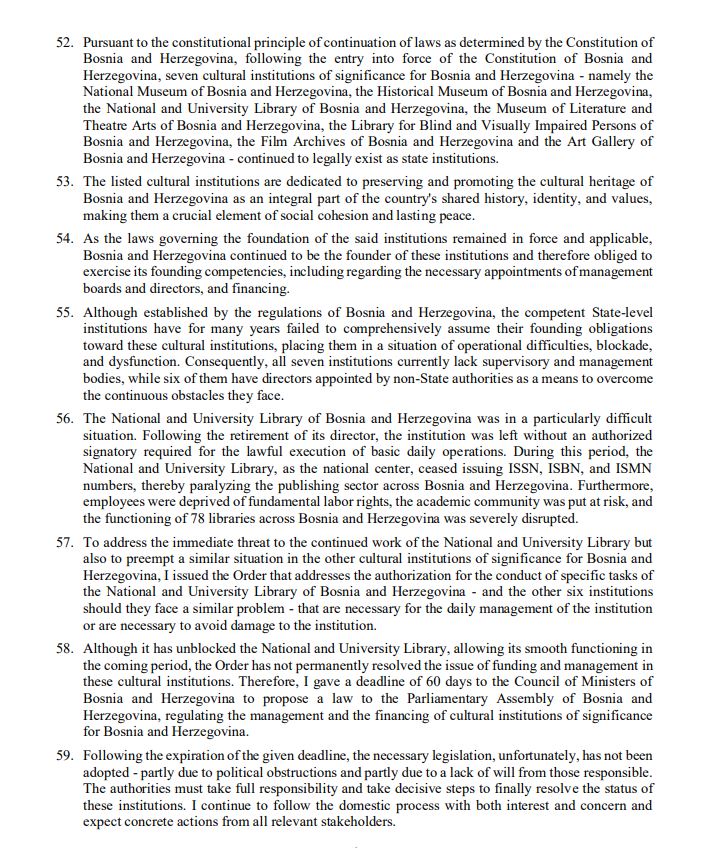
During the reporting period, the High Representative made two key decisions. The first decision annulled the conclusions of the National Assembly of Republika Srpska (RSNA) due to violations of the Dayton Peace Agreement. The second decision intervened to ensure the functioning of the National and University Library of Bosnia and Herzegovina, as well as other cultural institutions of state importance.

On January 2, 2025, Christian Schmidt declared that the RSNA conclusions, adopted on December 24 and 25, 2024, violated the obligations of Republika Srpska under Annexe 4 and Annexe 10 of the General Framework Agreement for Peace and prohibited their implementation. The conclusions were assessed as an attack on the sovereignty of BiH and its institutions, posing a threat to peace and stability. Some of the conclusions envisioned the adoption of a law in RS that would enable the systematic initiation of entity voting on issues considered by the Parliamentary Assembly of BiH, which Schmidt characterised as a direct attack on the constitutional functionality of state institutions.
The second important decision, made on November 21, 2024, ensures the functioning of the National and University Library of BiH and six other state cultural institutions: the National Museum, the Historical Museum, the Museum of Literature and Performing Arts, the Library for the Blind and Visually Impaired, the Film Archive, and the Art Gallery. These institutions had been blocked for years due to the failure of state institutions to fulfil their founding obligations.
Missing persons
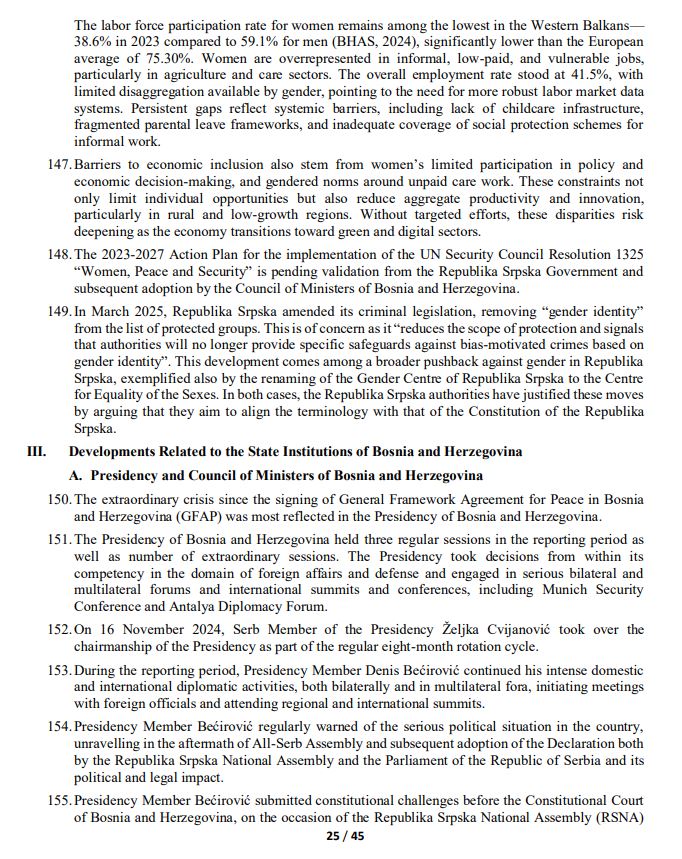
High Representative Christian Schmidt reiterated his appeal to accelerate efforts to find missing persons from the 1990s wars. He emphasised that time is running out to gather credible information about the locations of the remains of the remaining 11,000 missing persons, of whom 7,540 are listed as missing in Bosnia and Herzegovina. During the reporting period, activities continued to resolve missing persons cases, including regional cooperation. A regional online database of missing persons from the wars in the former Yugoslavia was also presented, aiming to keep the issue of missing persons as a humanitarian, not a political, matter.
No progress on state property
The reporting period saw no significant progress in the implementation of the 5+2 Agenda, particularly regarding the issue of state property. The High Representative recalled the initiative of the City of Lukavac to amend the Ban on the Disposal of State Property to enable the implementation of infrastructure projects. It was also highlighted that there is still no agreement between the entities on the distribution of toll revenues, which currently amount to 297.3 million Bosnian marks(approximately €152 million), hindering investments in road and highway construction and causing financial losses to the Indirect Taxation Authority.
Srebrenica shows resilience and gender inequality
In Srebrenica, the resilience of the multi-ethnic coalition was noted, and Bosniak representatives attended the Municipality Day celebration. However, pressures on the authorities to break the coalition persist. Regarding sustainable returns, attacks on returnees were mentioned, and a first-instance verdict was reached in the case of the murder of an elderly Serb returnee. The report also pointed to the problem of violence against women and gender inequality in politics and employment.
Disputes over cultural centres, diplomatic incident, and economic trends

Disputes regarding the construction of the Mevlana Centre and the Croatian National Theatre were mentioned in the report. A diplomatic incident was also recorded when the RS Government declared German Minister Anna Luhrmann persona non grata. Economic activities in BiH for 2024 show a positive growth trend of 2.5 percent, with a slight increase in foreign investment, but also a decline in industrial production and exports. RS faces a delicate financial environment but maintains budget stability.
Attacks on journalists, role of EUFOR and NATO
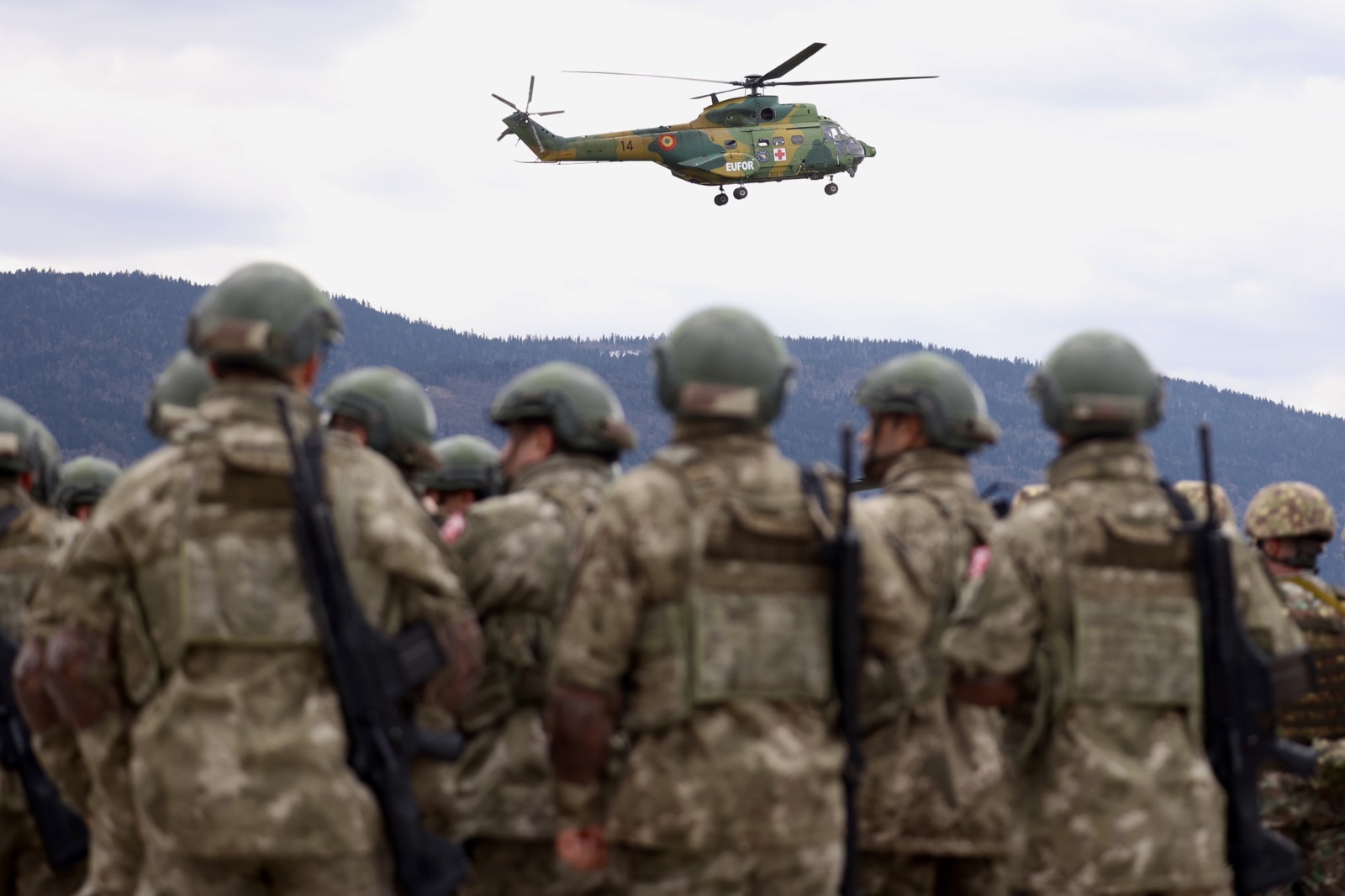
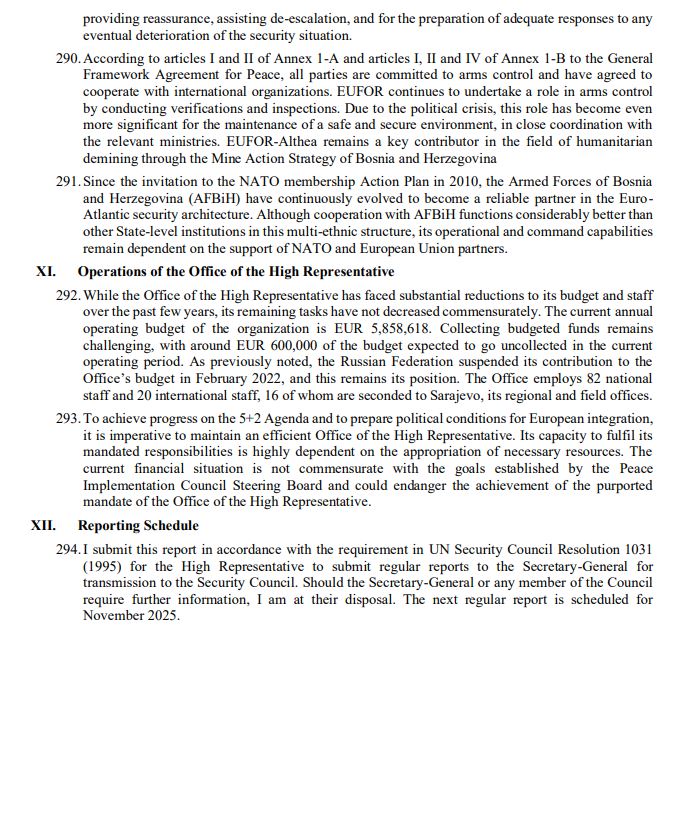
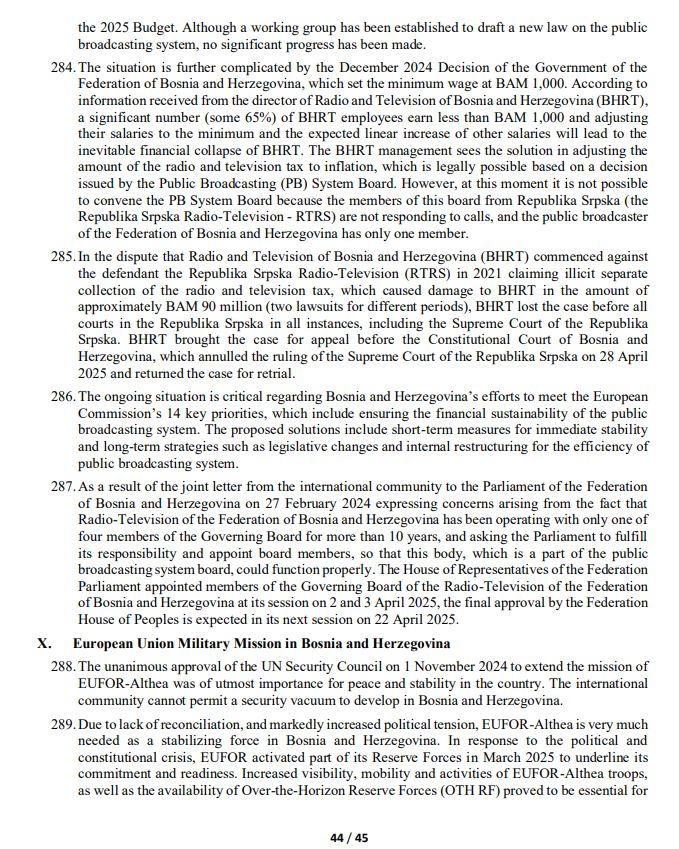
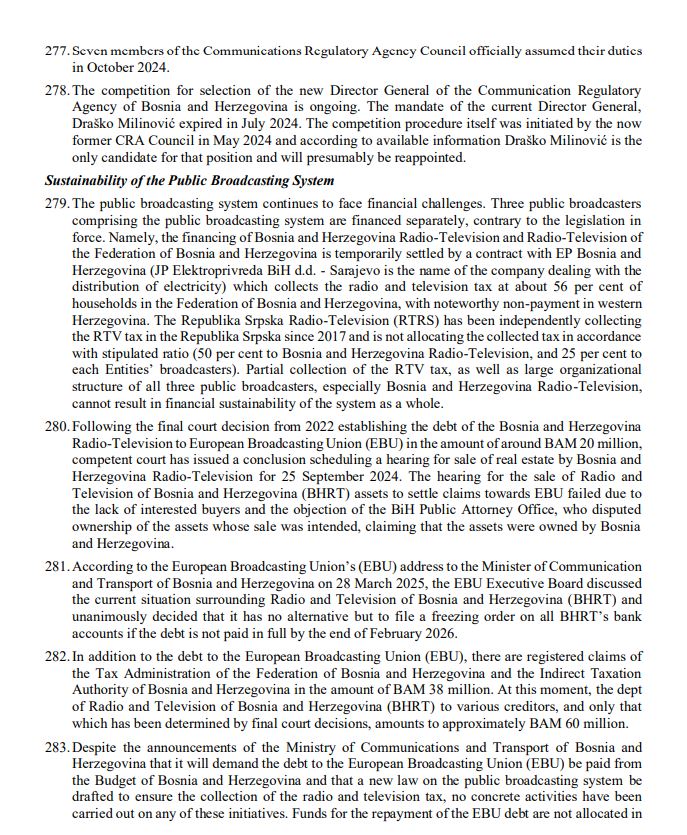
The High Representative warned about the problem of attacks on journalists, especially in RS, where the main actor in verbal attacks is President Milorad Dodik. Public broadcasters face financial challenges. Schmidt emphasised that the international community must not allow a security vacuum to develop in BiH. EUFOR activated part of its reserve forces in response to the political and constitutional crisis. The Armed Forces of BiH are developing as a reliable partner in the Euro-Atlantic security architecture, but their operational capabilities still depend on the support of NATO and EU partners.
Kakvo je tvoje mišljenje o ovome?
Učestvuj u diskusiji ili pročitaj komentare


Kakvo je tvoje mišljenje o ovome?
Učestvuj u diskusiji ili pročitaj komentare