Srbija
 Hrvatska
 Slovenija

Women helped lay the foundations of Bosnia's statehood but remained in the shadow of political power


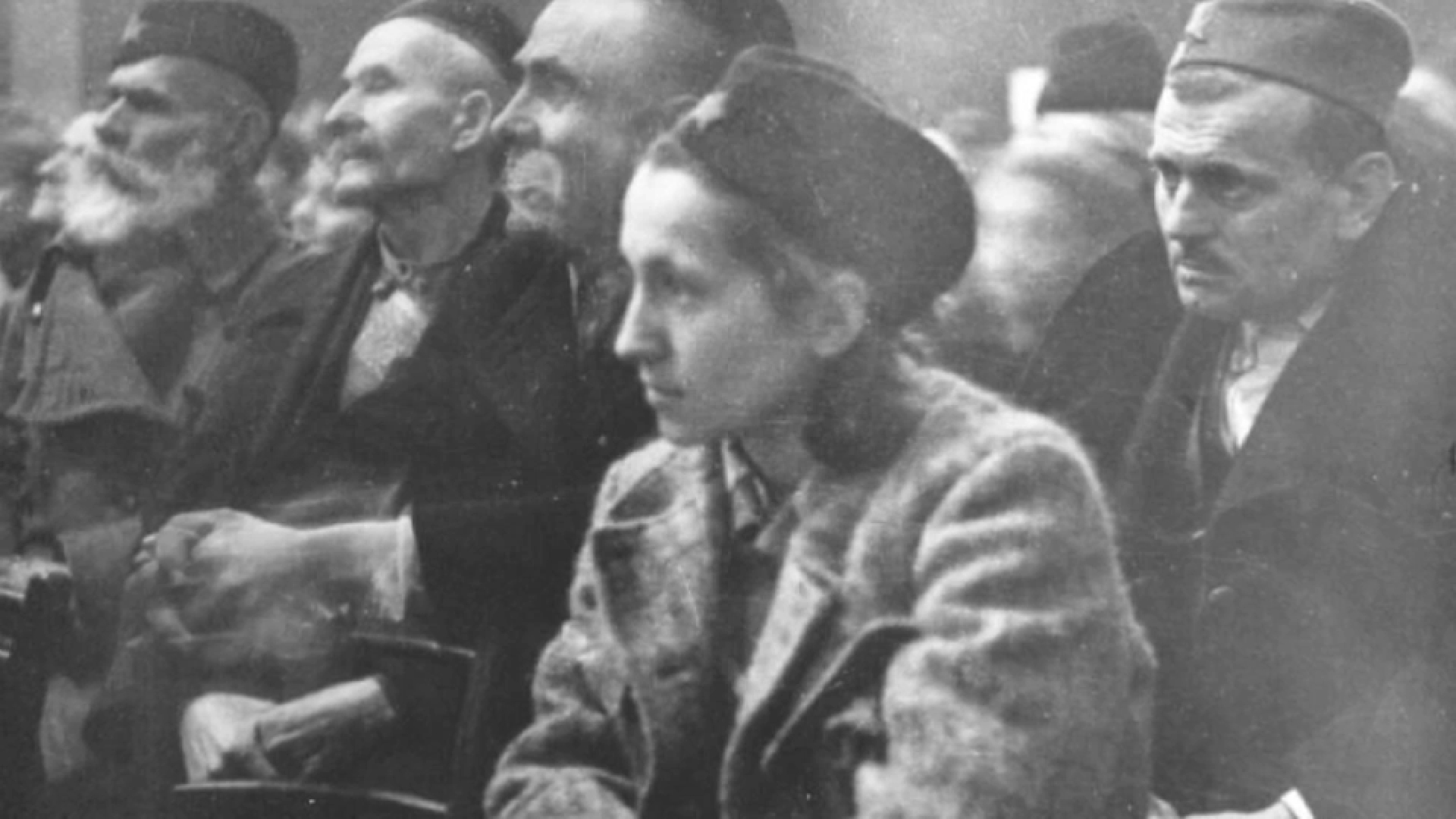
The marking of November 25, Bosnia and Herzegovina’s Statehood Day, is an opportunity to recall the decisions of the First Session of the State Anti-Fascist Council for the National Liberation of Bosnia and Herzegovina (ZAVNOBiH), held on November 25 and 26, 1943, in Mrkonjic Grad, as well as the people who made those decisions possible.
Among them were women whose contribution extended beyond armed resistance. They served as nurses, couriers and organizers of assistance to the population, and participated in the work of national liberation committees and political organizing, often under extremely difficult wartime conditions.
Historian Aida Licina-Ramic, a senior research associate at the Institute of History at the University of Sarajevo, says that women's broader engagement was an important part of the social and political movement within which Bosnia and Herzegovina's statehood was restored.
“When we talk about ZAVNOBiH, we most often recall its sessions, the decisions adopted and prominent political figures, while less attention is paid to the broader context of the National Liberation Struggle, within which the conditions for the restoration of Bosnia and Herzegovina's statehood were created. Women were an important part of that movement,” Licina-Ramic told FENA.
Researcher Andreja Dugandzic, a member of the CRVENA Association for Culture and Art and one of the authors of the Digital Archive of the Anti-Fascist Struggle of Women in Bosnia and Herzegovina and Yugoslavia, points out that women were a key part of the movement, but that later historical accounts focused largely on political decisions and male figures.
Four women among delegates at the First Session of ZAVNOBiH
Only four women were among the 247 delegates at the First Session of ZAVNOBiH in 1943: Rada Vranjecevic, Mevla Jakupovic, Zora Nikolic and Danica Perovic.
Rada Vranjesevic, a member of the Anti-Fascist Women's Front (AFŽ), addressed the delegates on behalf of the women of Bosanska Krajina. She was killed in 1944 following the German airborne raid on Drvar. Mevla Jakupovic, a factory worker from Tuzla, was active in organizing the AFZ and attended all three sessions of ZAVNOBiH. Zora Nikolic was active in the communist and anti-fascist movement and later served as a member of the Assembly of the People's Republic of Bosnia and Herzegovina. Danica Perovic was a physician who worked in partisan units and hospitals during the war.
Dugandzic stresses that the fact that women accounted for only four of the 247 delegates, or less than two percent, does not reflect the actual scale of their contribution, as thousands of women took part in the struggle, treated the wounded, carried messages, sheltered fighters and organized life in liberated territories.
Professor Zlatiborka Popov-Momcinovic of the Faculty of Philosophy at the University of East Sarajevo emphasizes the importance of recognizing the contribution of women of different ethnic and religious backgrounds. Their joint participation in the anti-fascist struggle reflected the core idea of ZAVNOBiH: Bosnia and Herzegovina as a multi-ethnic community of equal peoples and citizens.
One of the most important roles in mobilizing and empowering women was played by the Anti-Fascist Women's Front, whose first national conference was held in December 1942 in Bosanski Petrovac. The AFz brought together large numbers of women from both rural and urban areas, enabling them to participate in organizing resistance, literacy campaigns, education and public life.
Licina-Ramic recalls that the Foca Regulations of 1942 recognized women's right to vote and stand for election to national liberation committees. A further important step was taken at the Second Session of ZAVNOBiH, held in Sanski Most in 1944, when the Declaration on the Rights of Citizens of Bosnia and Herzegovina explicitly proclaimed equality between women and men in political and social life.
However, the formal recognition of these rights did not automatically translate into equal participation in decision-making. Women remained significantly underrepresented in leadership positions, while traditional perceptions of their role persisted after the war.
“Their inclusion in political life did not automatically mean equal participation in decision-making. Women were significantly less represented in leadership positions, while patriarchal relations and traditional perceptions of their role were also present within the National Liberation Movement itself,” Licina-Ramic explained.
After the war, women gained political and civil rights, greater access to education and employment, and their legal status within marriage and the family changed. However, the traditional division of family responsibilities continued to hinder their full participation in public life.
Dugandzic believes that the AFZ played a decisive role in securing women's political and social rights, but says its dissolution in 1953 marked a significant turning point.
“With the dissolution of the AFZ, women lost their collective voice and an organization that spoke on their behalf and defined their actual needs,” Dugandzic said.
Following the dissolution of the AFz, the Union of Women's Societies of Bosnia and Herzegovina was established, focusing on education, healthcare, employment and women's everyday concerns. According to data cited by Licina-Ramic, 290 women's societies with approximately 35,000 members were active in Bosnia and Herzegovina in 1960.
Research by Licina-Ramic also shows that the share of women in the total membership of the Communist Party in Bosnia and Herzegovina fell from 20.43 percent in 1946 to 15.40 percent in 1953. Although the absolute number of female members increased, their proportion of total membership declined.
Historian Melisa Foric of the Faculty of Philosophy at the University of Sarajevo warns that women's contribution to the anti-fascist movement is still inadequately represented in contemporary history textbooks.
“In most textbooks, women's participation in the National Liberation Movement during World War II and the establishment of the AFZ are mentioned only briefly, accompanied by photographs of female partisans but without their names or details of their biographies,” Foric said.
Her research also points to differences in how ZAVNOBiH is presented in the educational curricula used in Bosnia and Herzegovina. While textbooks in the Bosnian language generally interpret its sessions in the context of the restoration of Bosnia and Herzegovina's statehood, textbooks in Croatian primarily mention ZAVNOBiH in factual terms, while those in Serbian place greater emphasis on the decisions of AVNOJ and the establishment of the Yugoslav state.
Foric believes that anti-fascist values are not sufficiently represented in contemporary history education, but highlights the importance of recent research, publications, exhibitions and digital archives that offer a more comprehensive account of women's role.
Popov-Momcinovic warns that the underrepresentation of women in historical accounts is not simply a matter of insufficient research, but also reflects the traditional way in which the past has been presented, with the focus on political and military leaders, who were predominantly men.
As an example of the neglect of women's anti-fascist legacy, she points to the condition of the monument dedicated to Radojka Lakic, one of the best-known anti-fascists, saying that its deterioration reflects insufficient efforts to preserve the memory of women's contribution.
The FENA interlocutors agree that the anti-fascist movement paved the way for significant advances in women's rights, but stress that formal equality did not result in their equal representation in political and social decision-making.
Dugandzic particularly highlights the symbolism of November 25, which is both Bosnia and Herzegovina's Statehood Day and the International Day for the Elimination of Violence against Women.
“Statehood is not just about territory and institutions, but also about who is visible, protected and recognized within that state,” Dugandzic said, adding that the role of the AFZ must not be forgotten when marking Statehood Day.
“There is no November 25 without the AFZ,” she concluded.
Eighty-three years after the First Session of ZAVNOBiH, the question of women's place in the history of Bosnia and Herzegovina's statehood remains closely connected to their position today. The FENA interlocutors warn that a fuller understanding of this legacy requires recognition of the contribution of women who helped shape modern Bosnia and Herzegovina, as well as continued efforts to achieve equality in contemporary society.
Kakvo je tvoje mišljenje o ovome?
Učestvuj u diskusiji ili pročitaj komentare


Kakvo je tvoje mišljenje o ovome?
Učestvuj u diskusiji ili pročitaj komentare