

 Srbija
 Hrvatska
 Slovenija


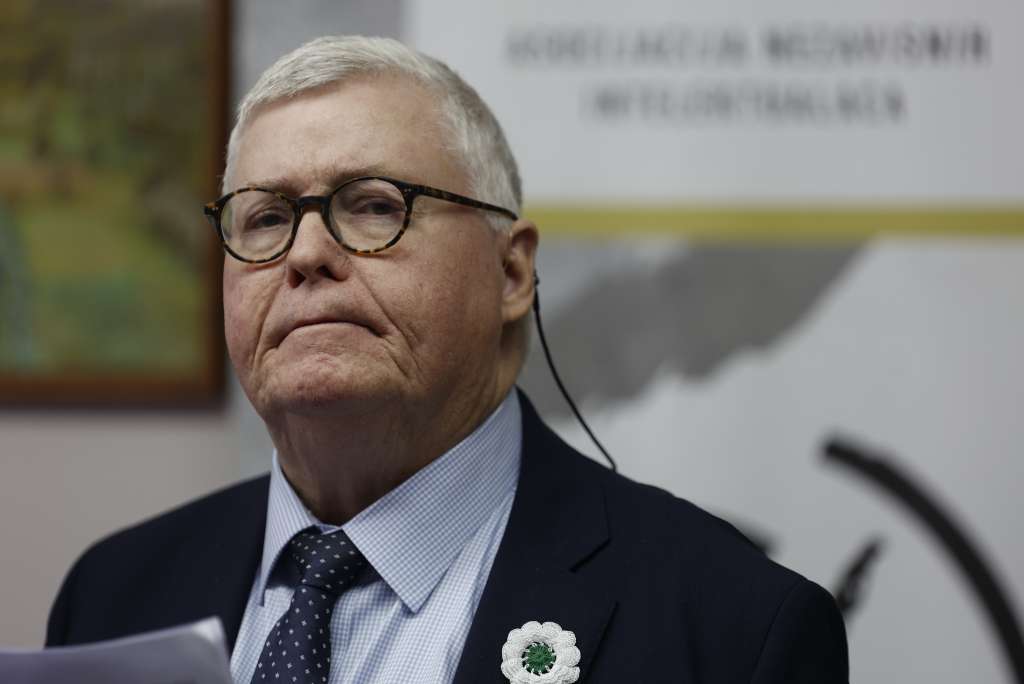
As the world marks the 30th anniversary of the genocide in Srebrenica, Dr. David Pettigrew, professor of philosophy and Holocaust and genocide studies at Southern Connecticut State University and a board member of Yale University’s Genocide Studies Program, has called for a comprehensive transitional justice program in Bosnia and Herzegovina.
In a statement to the FENA news agency, Pettigrew emphasised that remembrance must go hand in hand with justice. "As we honour the victims, our commemoration of the 30th anniversary should serve as a guiding principle for implementing a comprehensive transitional justice program in Bosnia and Herzegovina," he said.
Reflecting on the legacy of the genocide, Pettigrew stressed that fully implemented transitional justice initiatives, which support memorialization and counter denial and glorification of war criminals, could foster a cultural transformation toward a more inclusive, democratic society grounded in human rights.
“These efforts would finally offer hope for a just and peaceful future in Bosnia and Herzegovina, while honouring the victims and supporting the survivors of genocide,” he stated.
He also praised the recent UN General Assembly Resolution declaring July 11 as the International Day of Reflection and Commemoration of the 1995 Genocide in Srebrenica. The resolution, which he said owes much to the diplomatic leadership of Ambassador Zlatko Lagumdzija and his team in New York, delivers global recognition of the genocide and provides survivors with a powerful platform to proclaim the truth.
“The resolution opened commemorative space for new expressions of truth about the genocide, including exhibitions at the UN and a range of academic seminars and memorials around the world,” Pettigrew noted.
However, he voiced sharp criticism of the international community’s failures. Despite the wave of commemorations and support for survivors, Pettigrew said the Office of the High Representative (OHR) and the international community have fallen short in establishing a comprehensive transitional justice program that would support memorialization and prevent denial and glorification of war crimes.
Citing specific examples, he pointed to the blocked construction of a memorial near the Pilica Cultural Centre, the site of genocide crimes, and a mural in Kalinovik glorifying convicted war criminal Ratko Mladic, saying these clearly reflect systemic failures.
Transitional justice, he explained, includes both judicial and non-judicial mechanisms. While the International Criminal Tribunal for the former Yugoslavia (ICTY) produced crucial rulings, Pettigrew noted the “deep cynicism” that arose from the limited number of genocide convictions, lenient sentences, and early releases of those convicted. He cited the 2014 release and hero’s welcome of Momcilo Krajisnik in Pale as an example.
Genocide denial and glorification of convicted war criminals, particularly in Republika Srpska and Serbia, continues largely unpunished, Pettigrew warned, adding: “This denial re-traumatises survivors and poses a threat of future atrocities.”
He underscored the urgent need for a robust transitional justice policy that includes the right to memorialization. “It is shocking that survivors are still being denied the right to erect memorials at crime scenes, including in Kravica, Pilica, Petkovci, the Branjevo farm, and other sites such as Kalinovik (Barutni Magacin), Prijedor (Trnopolje), Foča (Sports Hall ‘Partizan’), and Visegrad (Vilina Vlas),” he said.
To mark the 30th anniversary, Pettigrew urged the High Representative to use Bonn Powers to establish protected national memorial sites at all these locations, as well as others identified by survivors.
In addition to memorial rights, he insisted the High Representative must reaffirm the rule of law in Bosnia by prosecuting genocide denial, hate speech, and glorification of war criminals. He singled out the mural of Ratko Mladic at the entrance to Kalinovik as “unacceptable,” saying its removal is a moral and legal necessity.
“The mural must be removed to support those who survived the genocide,” he declared.
In closing, Professor Pettigrew reiterated his appeal for justice and remembrance, calling for urgent protection of the right to memorialization and a firm stand against the glorification of war criminals.
Kakvo je tvoje mišljenje o ovome?
Učestvuj u diskusiji ili pročitaj komentare


Kakvo je tvoje mišljenje o ovome?
Učestvuj u diskusiji ili pročitaj komentare