

 Srbija
 Hrvatska
 Slovenija


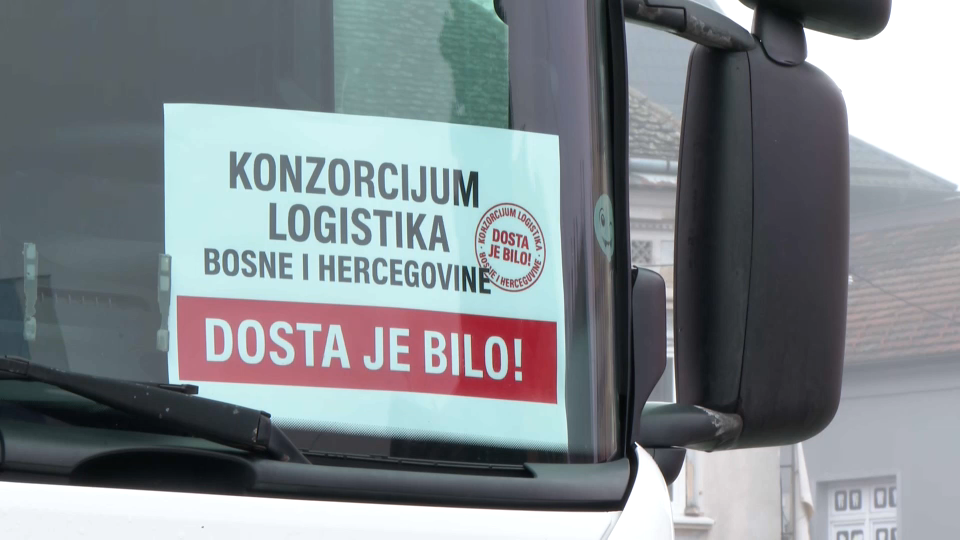
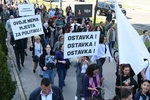
The Foreign Trade Chamber of Bosnia and Herzegovina (FTCBiH) has hailed the adoption of the first European Union visa strategy as a foundational step toward resolving the long-standing grievances of domestic hauliers. Under this new strategy, truck drivers are recognized as a distinct category, with a proposed special regime allowing them to remain in the Schengen zone for longer than 90 days without requiring work or residence permits.
Following the adoption of this strategy, carriers from Serbia, Montenegro, and North Macedonia have ceased their border blockades. Consequently, FTCBiH is appealing to Bosnian hauliers to immediately deblock border crossings with the EU, citing "enormous" damages to other sectors of the economy. While the Chamber supports the hauliers' demands for reduced business burdens, it explicitly opposes blockades that threaten the wider economy and the transport sector itself.
According to a survey conducted by FTCBiH, the financial impact of these disruptions is severe:
- Blockades lasting over three days: Minimum direct financial losses of 37.9 million Bosnian marks (approximately €19.38 million).
- Blockades lasting seven or more days: Minimum direct financial losses of 82 million marks (approximately €41.93 million).
These figures, based on responses from 94 companies, represent conservative estimates. They do not account for long-term reputational damage, lost clients, contractual penalties, or suspended investments. Descriptive feedback from the business community indicates that the disruption of international road transport is leading to job losses, the closure of production facilities, and a permanent decline in export potential.
FTCBiH emphasizes that it has spent years lobbying domestic institutions and the European Commission regarding the 90-day Schengen limit and border delays. The Chamber remains committed to institutional channels and cooperation with international partners to ensure the stable flow of goods and the preservation of Bosnia and Herzegovina's economic competitiveness.
Kakvo je tvoje mišljenje o ovome?
Učestvuj u diskusiji ili pročitaj komentare


Kakvo je tvoje mišljenje o ovome?
Učestvuj u diskusiji ili pročitaj komentare