

 Srbija
 Hrvatska
 Slovenija

Dodik repeats inflammatory rhetoric, pushes religious intolerance, false claims


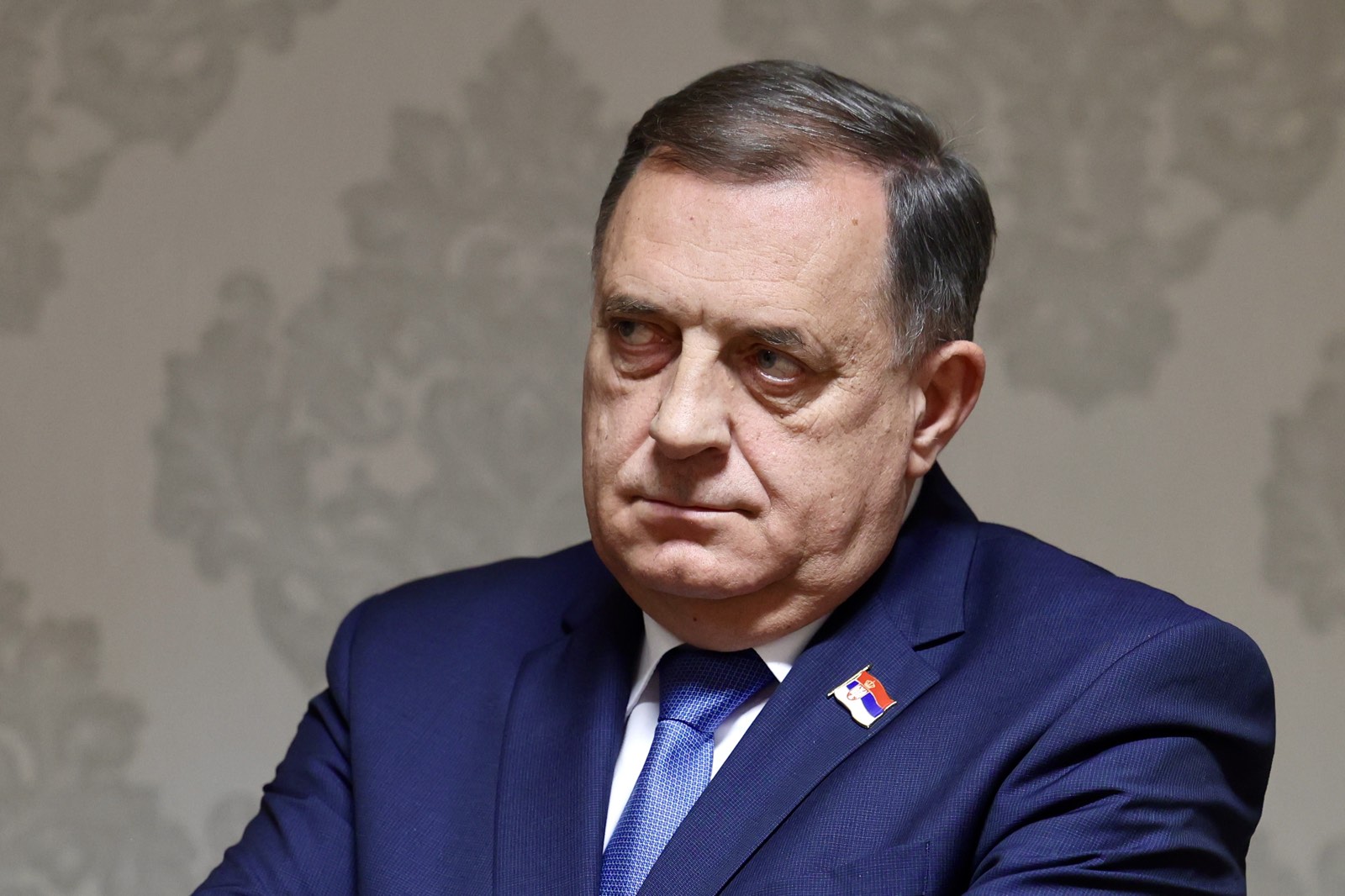
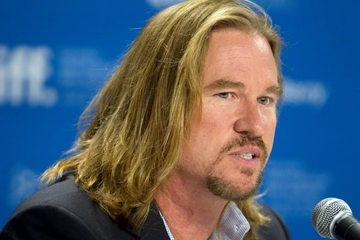
Republika Srpska (RS) President Milorad Dodik once again used a press conference on Monday to launch a barrage of offensive, divisive, and factually incorrect statements following a coalition meeting of ruling parties in the entity. Speaking alongside BiH Presidency member Zeljka Cvijanovic and RS National Assembly Speaker Nenad Stevandic, Dodik reiterated his rejection of state institutions and international authorities in Bosnia and Herzegovina, while making historically revisionist and religiously intolerant remarks aimed at Bosniaks.
At the outset, Dodik repeated his long-standing but false assertion that High Representative Christian Schmidt is not legally appointed.
“Schmidt is a tourist,” Dodik said, even though the Peace Implementation Council Steering Board, which includes the US, UK, Germany, France, and other key international actors, recognizes Schmidt’s appointment in accordance with the Dayton Peace Agreement.
Dodik further falsely claimed that the institutions of the Court and Prosecutor’s Office of BiH “do not operate” in Republika Srpska:
“The RS National Assembly and Republika Srpska have decided that the Court and Prosecutor’s Office of BiH should not operate on our territory. These institutions must be abolished,” he said.
This statement is legally baseless. State-level judicial institutions have jurisdiction throughout the country, including Republika Srpska, as per the BiH Constitution and decisions of the Constitutional Court.
The most inflammatory part of Dodik’s address involved a sectarian and historically distorted attack on Bosniaks:
“Muslims want to use Schmidt to settle scores with Serbs. They are making weapons for a worst-case scenario,” Dodik said, without presenting any evidence for this claim.
He continued with an openly offensive and Islamophobic remark:
“Islam didn’t exist here during the time of Tvrtko and the Bogomils. The solution is for Muslims to return to their former religion—Catholicism or Orthodoxy. Then we would see that the majority here are Serbs.”
This statement not only misrepresents history—ignoring centuries of Bosniak presence in the region—but also promotes forced religious assimilation, which is deeply offensive and reminiscent of policies linked to ethnic cleansing. It echoes extreme nationalist narratives that deny the identity and legitimacy of Bosniaks as a constituent people of Bosnia and Herzegovina.
Dodik even framed the proposal as a serious political “solution”:
“This is a concrete political solution. Let them return to the religion they had centuries ago and the issue will be resolved.”
He then singled out former Grand Mufti Mustafa Ceric, accusing him of political interference—even though many public figures, religious and secular alike, routinely participate in national debates:
“Only Ceric gets involved, no one else. Return to your previous faith from centuries ago,” Dodik said, again promoting religious revisionism.
Later in the conference, Dodik rejected the legitimacy of SIPA operations conducted in Republika Srpska, despite evidence of successful actions by the agency in the entity:
“Some are trying to show that SIPA is functioning here, but it isn’t—and it will function less and less. This is the collapse of Bosnia and Herzegovina,” he claimed, ignoring constitutional provisions guaranteeing the operation of state security agencies across the entire country.
He went on to criticize Democratic Action Party (SDA) leader Bakir Izetbegovic’s recent call for a resolution on the status of Brcko District:
“Bakir Izetbegovic is irrationally trying to return Brcko to the Federation of BiH, but the majority in Brcko are Serbs,” said Dodik—another oversimplification of the multi-ethnic district’s status, which is regulated under international supervision and protected by constitutional provisions ensuring equality of all peoples.
Dodik concluded with an announcement that Republika Srpska would end public financing of political parties:
“On May 15, we will abolish the law on financing political parties in the RS. We are preparing for elections under the control of the Republika Electoral Commission,” he said.
This move contradicts existing laws that regulate electoral processes in Bosnia and Herzegovina, where the Central Election Commission (CEC) holds legal authority to oversee elections countrywide, including within the RS.
Dodik’s remarks drew swift criticism from analysts and civil society actors, who accused him of promoting historical revisionism, religious intolerance, and unconstitutional behaviour. His continued attempts to delegitimise state institutions and provoke interethnic tensions have fuelled concerns over stability in the country and the credibility of upcoming elections.
Kakvo je tvoje mišljenje o ovome?
Učestvuj u diskusiji ili pročitaj komentare


Kakvo je tvoje mišljenje o ovome?
Učestvuj u diskusiji ili pročitaj komentare