Srbija
 Hrvatska
 Slovenija

Eva von Redecker to N1: Fascism emerges when other people's lives become obstacles to our freedom


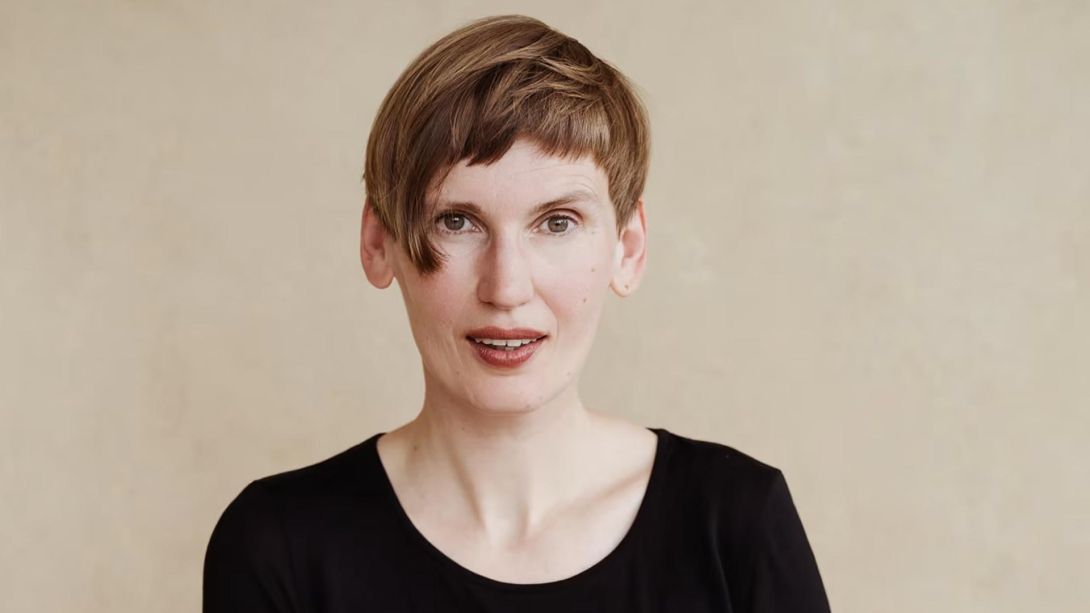
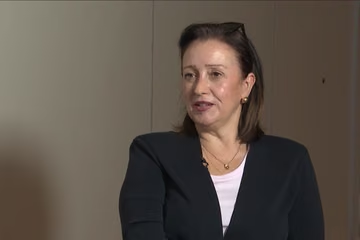
German philosopher Eva von Redecker, one of the prominent contemporary thinkers working on capitalism, emancipation, and political violence, speaks to N1 about the rise of new fascism, the political appeal of cruelty, the war in Gaza, and the contradictions of Germany's culture of remembrance. The author of Dieser Drang nach Härte (This Urge for Harshness) argues that fascism is not merely a historical phenomenon to be recognized through comparisons with the crimes of the past, but a political form that can emerge from within liberal democracies themselves. "Fascism institutionalizes this performance as politics," von Redecker says, explaining how the defense of perceived entitlements can turn into a desire to punish and destroy others.
In this wide-ranging conversation with N1's Nikola Vucic, von Redecker critically examines the relationship between liberal freedom and property, discusses Germany's responsibility toward Palestinians, and warns against a culture of remembrance that loses touch with present realities. Yet her philosophy goes beyond diagnosing the pathologies of contemporary society. Against the politics of domination and destruction, she advocates the "freedom to stay," an understanding of freedom grounded in the interdependence of human beings and nature. "That's what we are here for: to make each other ever more free," she says. Reflecting on political resistance, she also rejects the illusion that our enemies will simply disappear: "We need to organize the power required to meet the basic human needs of all, also of our enemies."
N1: Over the past decade, the word "fascism" has returned with remarkable force to the vocabulary of philosophers, historians and political theorists. That alone tells us something about the times we are living through. Your latest book, Dieser Drang nach Härte (This Urge for Harshness), belongs to this growing debate. What does the concept of fascism allow us to understand about the present that terms such as authoritarianism or right-wing populism cannot? And where does the historical analogy become misleading?
Eva von Redecker: On the one hand, the term allows us to understand something just in the same way as "authoritarianism" or "populism" do: that fascism is not a singular epoch, but a political form which can emerge from within liberal, democratic societies. I feel we are stuck, especially in Germany, in trying to identify fascism solely by way of historical comparison. You can always find a dis-analogy, and postpone rather than deepen your analysis. That's why I think my task as a philosopher is to work on the conceptual level, trying to find definitions. And here, on the other hand, fascism becomes distinct and different from other forms of right-wing politics. I call fascism a "liquidating defense of phantom possession". That means that a certain, unfounded entitlement is defended against an imaginary enemy at all costs, as it were in a state of emergency. Authoritarianism and right-wing populism mobilize around the same objects, but differently. Authoritarianism promises to re-enclose, protect, wall phantom possession from above. Right-wing populism defends it from below against real elites or powers, without the conspiratorial frenzy of fascism, which always ends up targeting the weak.
N1: Your account of "phantom possession" suggests that people may experience the loss of a privilege as though something rightfully theirs had been stolen. I find that a disturbing insight into the politics of resentment. But why does this perceived loss so readily become a demand for punishment? What makes cruelty politically attractive?
Eva von Redecker: I think this transition from loss to cruelty becomes unsurprising if we pay attention to the way that the lost object is interpreted. Often, the privilege was already shaped by the property form. Patriarchy, for instance, has historically been organized around a marriage contract that considered part of the woman's life male property, and white supremacy is built on the idea that only racialized people can be enslaved. The defense of phantom possession is a revenge against emancipation, an emancipation which the previously privileged perceive as amputation. But since the claims are re-launched in this propertized form, they are also a perfect fit to compensate for real material losses and precarity. Right-wing entitlements don't solve the economic problem, but they restore a sense of sovereignty and control.
N1: You locate part of this problem in the way modern societies understand property and freedom. Yet liberal democracy has also given us institutions and rights with which to resist arbitrary power. How do you distinguish the emancipatory promise of liberalism from the assumptions within it that, in your view, can nourish fascism?
Eva von Redecker: The emancipatory promise in liberalism is that of equality. It is formal, but it is there. However, the way in which we are equal is as self-owners. Our most precious freedom rights are derived from the property form: that sphere within which I can do whatever I want. In well-ordered liberalism, again, there is equality between those spheres. My claim ends where it violates that of the other. But in an ever more complex and interconnected world, it can seem as though very little space is left. My language shapes other identities, my breath infects, my mobility drowns (via climate change) and so on. Fascism emerges at this conjuncture by cutting the bond of equality. All that counts is my, or our, aspiration; we no longer need to balance it out with other claims. The lives of others are dispensable, or worse, they are obstacles to my freedom. And as freedom is modeled on the form of property, it is infected by its excess. Modern property promises full volition. You can do what you want, emphatically also abuse or destroy the object. Which means that, once the respect for the equal freedom of the other is suspended, the best way to prove your freedom is in performing utterly destructive violence. Fascism institutionalizes this performance as politics.
When freedom becomes the right to destroy
N1: Here in Bosnia and Herzegovina the consequences of nationalism and mass violence remain part of everyday political life. We have learned to commemorate atrocities, but have we learned to recognize the ideas that made them possible? Can remembrance itself become a refuge from moral responsibility in the present?
Eva von Redecker: Well, we see exactly that unfold in Germany. While the ascent to power of the party with an open deportation agenda continues unabated, and while the country sells weapons used in the genocides in Gaza and Sudan, the political class and most journalists are caught in a moral frenzy that the left might be the harbinger of violence and antisemitism. A reified memory culture is propped up; it offers orientation at the cost of reality. These reversals are psychologically very interesting. Adorno and Horkheimer studied them expertly. There is something like scornful identification with the opponent. The right delights in "canceling back", and it displaces its own violent impulses by projecting them onto the other side.
N1: You have written about Gaza and about your own hesitation, initially, to use the word "genocide". In an interview I recently conducted with Yanis Varoufakis, I asked why the Left, including its most progressive circles, had found it so difficult to speak with a common voice about Israel and Palestine. He answered: "Partly because of fear", the fear of being accused of antisemitism, an accusation he argued had been weaponized against those wishing to remain respectable within the system. Do you think that fear has diminished at all? And what has the debate revealed about Germany's culture of remembrance?
Eva von Redecker: Yes, the fear of being called an antisemite has diminished. We got used to the fact that that is the price paid for taking any halfway emancipatory, or simply humane stance. And if you pause over it for a moment, you can see what a tragedy that is. How are we going to counter antisemitism in the future, after this corruption of the term? It's harrowing. However, I think it is too simple an analysis to say that people just shut up because of fear. First, there are two different sorts of fear. The very real one of facing repression, police violence, silencing. This institutional violence targeted Muslims and Arabs and anti-Zionist Jews much more drastically than white Germans with Nazi grandparents like myself. Which in itself is such an indictment of our public sphere. For the latter, the "bio-Germans", the other fear prevailed, that of doing something wrong, of piercing the shields between our present stance and the historic guilt. There is a grandiose narcissism in this self-preoccupied concern. Many white Germans really know next to nothing about the realities in Israel/Palestine. The text you mentioned, which I wrote in autumn 2024, took some concerns seriously but then argued against them in favour of the use of "genocide". You see, I still think that it is important not to rush to superlatives in our political lexicon. I was much more shocked by the fact that so few Germans in the public realm took a stance against the way the IDF attacked Gaza at all, than by the rejection of the term genocide. I mean, you could have opposed what was happening under any other name, instead of spending all energy on scandalizing the use of one word. And yet, if the only other genocide you know about in history is the one perpetrated by your ancestors, the Shoah, then it does make sense to hesitate before using that label again. But I do think by now part of the discourse has shifted, there was some learning, definitely on the left. It is perfectly possible to apply the definition which Lemkin started coining vis-à-vis the Armenian genocide to oppose the attempted eradication of the Palestinian people without trivializing the industrialized mass murder of the European Jews.
The politics of memory and the responsibility to act
N1: There is another difficulty here. If we use words such as fascism and genocide too loosely, we risk emptying them of historical meaning. If we hesitate too long, we may fail to name what is happening before us. How do you decide when a morally charged historical concept has become necessary?
Eva von Redecker: Well, there are two tasks: Study reality carefully. And get your concepts right. Any moral charge can backfire, be depleted before you even utter your diagnosis. That's why the definitions matter. But a proper analysis is not just the application of a term. It's the attempt to grasp the conditions which make certain forms of violence possible, probable even. In critical theory, we try to understand how modern societies produce death-driven politics, not just go around and call reality names.
N1: You have argued that emancipation must concern the conditions of life itself. Yet the contemporary Left often seems more fluent in diagnosing what it opposes than in describing the society it hopes to build. Has criticism become easier than political imagination? What would give people a positive reason to commit themselves to political change?
Eva von Redecker: I think we seriously underestimate the power of human imagination if we think that opposing wrongs doesn't give rise to notions of a different future. That's the beauty of negation, something that, by the way, pattern-collaging AI cannot perform. When you look at people starving and say "no", of course you imagine them fed, and freed, and cared for. If you didn't sense that possibility, you would have no foothold to resist the given. If we lose the creative capacity of moving from nay-saying to new possibilities, no supply of positive images will make up for it. To the contrary, those alternatives then turn into authoritarian, dull prescription rather than inspiration for democratic world-building. This said, let me move to positive images anyway. It seems entirely clear to me that the whole movement cycle we are living through has a firm focus on the conditions and infrastructures of life. We feel that all the fabric is torn, ecologically, socially, psychologically. And worse than the suffering is the paralyzed, distant observation of suffering. There is such a yearning for repair, for basic, meaningful work, for minimally dignified human contact. And today's activists know that all of this relies on shared foundations which we need to recuperate from the nihilistic reign of markets, prediction algorithms, and billionaires pursuing their freedom by space travel.
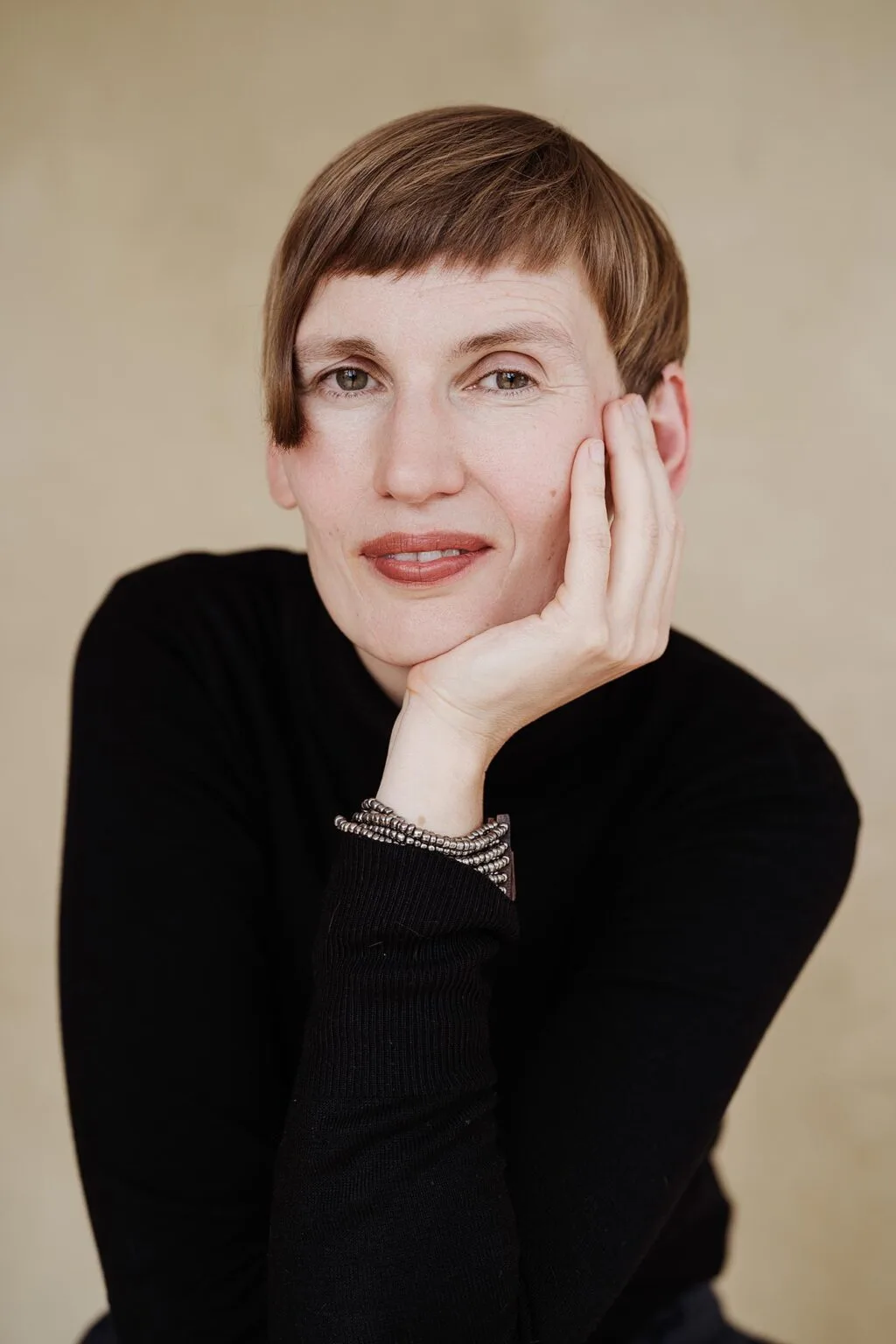
N1: The English edition of The Freedom to Stay (Sloboda ostajanja), translated from your 2023 German book and published this year, proposes a different understanding of freedom. What is freedom of movement worth if climate catastrophe destroys the places in which we might live? And what would the freedom to stay demand of our political institutions?
Eva von Redecker: The freedom to stay demands of our institutions to do everything in their power to keep this planet alive and habitable, our cities diverse and affordable, our countryside intact and connected. It demands that we build the conditions for all interconnected life to stay, and for humans to become and remain free. The liberal idea of freedom of movement is outlived. We face, for the first time in world history, shrinking habitable areas on the globe. In the face of racist deportation campaigns, imperialistic warfare and genocide, the right to movement alone is not enough. People need to be allowed to stay, in freedom and self-determination. And freedom here of course implies that you could leave, otherwise it would be an imperative to stay. I propose to think of freedom primarily in terms of time. Fulfilled time, which is not the empty, linear time of progress, but the cyclical time of ecological regeneration and the diversified time of spontaneous initiative. In this view, nature and other people don't figure as limits, but as enrichments to our freedom. That's what we are here for: to make each other ever more free. And that implies a constant labour against the apocalyptic sentiment that everything is broken beyond repair.
Beyond possession: imagining a different kind of freedom
N1: This brings me to the brilliant theologian and thinker Catherine Keller. Her idea of planetary entanglement challenges the notion that we are masters of a natural world standing apart from us. Our lives depend on relationships we cannot fully control. Does recognizing that dependence diminish our freedom, or could it be the beginning of a more convincing idea of it? And who gets to decide which relationships are worth preserving?
Eva von Redecker: Well, there will definitely still be politics in a world dedicated to the freedom to stay. But I think the discussions would be quite different if they aren't trapped in the zero-sum logic of liberal freedom, where my sphere of arbitrary willpower ends where yours starts. Instead, we would have to ask which time we use up, which time we commit to replenish, how our past actions still shape the future. It would be a much more open-eyed politics. Keller, whom I also adore, focuses on the impact of a certain Christian theology of dominion. This is surely one source of ecocidal attitudes, as is the masculinism in Western politics since Aristotle, which Wendy Brown analyzed so perfectly in her Manhood and Politics (Muškost i politika). In my own work, I focus on the genealogy of modern property, of how that very particular idea of ownership premised on the right to abuse has informed our notions of self, world, and freedom.
N1: Let me return, finally, to the question of power. Your account of the new fascism describes a longing to possess and control, while your account of freedom asks us to learn how to live in a world we cannot possess. Can these two ways of relating to the world still be brought into political conversation? Or have we reached a point where defending a shared world requires drawing firmer lines against those determined to destroy it?
Eva von Redecker: I think it is a bit pointless to perform verbal radicalism in an interview and proclaim that lines should be drawn. But if you ask me whether rebellious resistance like we currently see in India, Serbia, France against corrupt elites and economic abandonment is justified: hell yes! As for shared ground: of course we cannot stop conversing with the voters of fascist parties. I mean, what is the alternative? We must be able to imagine winning. Winning consists in getting some people to change sides and stop others from killing us. But we will always live with enemies. I mean, they won't simply go away and I definitely don't subscribe to a revolution that puts its enemies up the wall. That would be another defeat, not a victory for emancipation. But I think there is a weird, nearly pornographic fixation on the different sides talking, as if politics was about one-on-one showdowns. No. We need to organize the power required to meet the basic human needs of all, also of our enemies, and pull the plug on the business model and the omnipotence-posturing intent on burning our world. It's a tall order.
Kakvo je tvoje mišljenje o ovome?
Učestvuj u diskusiji ili pročitaj komentare


Kakvo je tvoje mišljenje o ovome?
Učestvuj u diskusiji ili pročitaj komentare