Srbija
 Hrvatska
 Slovenija

Lagumdzija challenges Serbia at UNSC over Srebrenica genocide, hopes for voices of a “new Serbia”


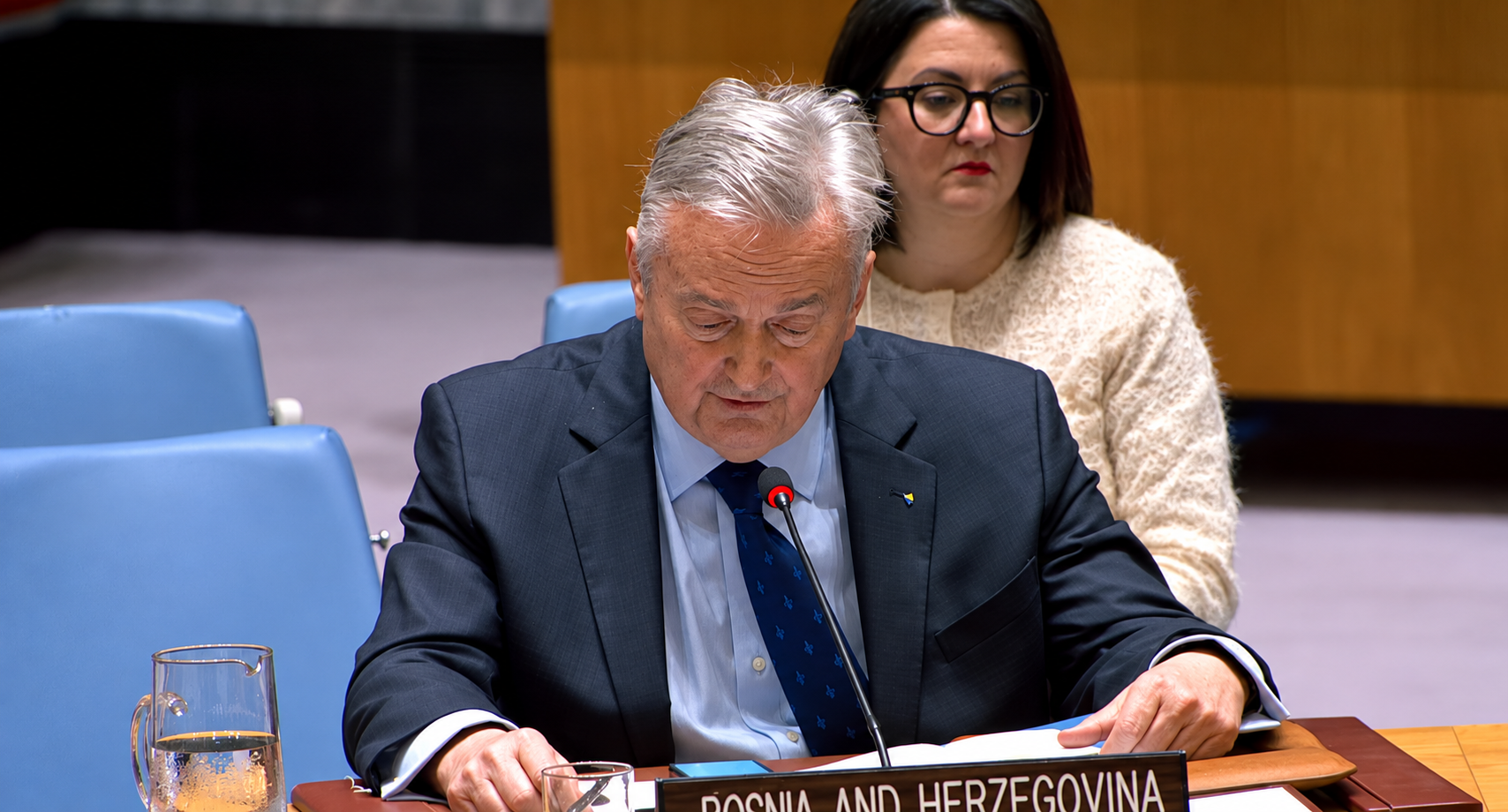
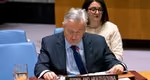
“Some in this chamber may have forgotten their humanity, but we refuse to do so,” Bosnia and Herzegovina’s UN Ambassador Zlatko Lagumdzija said during an exchange with Serbia’s representative at the UN Security Council over the Srebrenica genocide, the glorification of war criminal Ratko Mladic and the right to speak on Bosnia’s behalf.
The exchange followed Serbia’s challenge to whether the address by Bosnia and Herzegovina’s Presidency Chairman represented an agreed position of the collective Presidency, as well as its response to criticism of Mladic’s funeral.


Lagumdzija defended the Chairman’s legitimacy and right to address the Council on behalf of the state, saying his speech had outlined a platform for a shared future informed by lessons from the country’s tragic past.
He described Serbia’s objections as a continuation of an approach associated with its outgoing leadership, while expressing hope that a change of government would bring a different voice to future Council discussions.
“I’m not denying you the right to talk on behalf of the outgoing leadership of Serbia,” he said, acknowledging that the Serbian representative remained legitimate.
However, he looked forward to hearing “the voices of the new Serbia” on regional cooperation and Bosnia and Herzegovina’s future.
Genocide and the victims
Turning to Srebrenica, Lagumdzija stressed that genocide was a legal fact established by the International Criminal Tribunal for the former Yugoslavia.
He said criticism of the glorification of Mladic had been voiced on behalf of victims, including by other members of the Security Council.
“We were all speaking on behalf of the victims,” he said, condemning Serbia’s treatment of a person responsible for immense suffering.
Responding to Serbia’s earlier argument that Srebrenica should not be the sole reference point for interpreting the war, Lagumdzija described the genocide as a result of aggression against Bosnia and Herzegovina. He also invoked ICTY judgments concerning the international character of the conflict.
Serbia calls for a different approach
Serbia’s representative responded that both Bosnia’s initial statement and Lagumdzija’s remarks promoted a particular political approach to the country’s longstanding challenges while directing accusations at its neighbours.
The representative described this as particularly regrettable because both countries were entering a new political cycle that could provide an opportunity for more constructive engagement around shared interests.
“Continuing to pursue narrow, one-sided political agendas through confrontation is unlikely to produce different results,” the representative said, arguing that such an approach would deepen divisions and mistrust.
“Pursuing the old policy line kept the country post-war but not post-conflict.”
Serbia also argued that constitutional disagreements could not be resolved by disregarding the democratic legitimacy of elected representatives and called for the courage and vision to develop a new approach.
Cooperation based on truth and justice
In his final response, Lagumdzija agreed that both countries were entering a new political cycle, saying voters in Bosnia and Herzegovina and Serbia had clearly expressed their preferences in the preceding month.
He expressed hope that new leadership in both countries would open a period of cooperation grounded in clear principles.
“I really hope that we will witness the new cycle,” he said, calling for a “cycle of cooperation based on truth, justice, and mutual understanding”.
That also meant “talking on behalf of ourselves, not meddling into each other’s territory”, he added.
“I wish you good luck.”
Kakvo je tvoje mišljenje o ovome?
Učestvuj u diskusiji ili pročitaj komentare


Kakvo je tvoje mišljenje o ovome?
Učestvuj u diskusiji ili pročitaj komentare