

 Srbija
 Hrvatska
 Slovenija


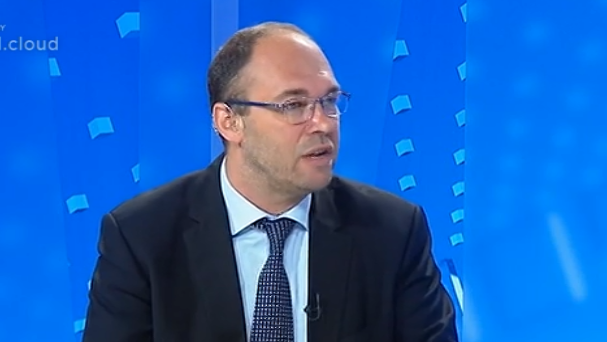
Member of the European Parliament and Chair of the Delegation for Relations with Bosnia and Herzegovina, Davor Ivo Stier, has emphasized that the current momentum driving the European Union's enlargement process is directly linked to Russia’s aggression against Ukraine.
"It's no secret that the current geopolitical moment has put EU enlargement back on the agenda. Now is the time to take advantage of it," Stier told journalists from Bosnia and Herzegovina during their study visit to EU institutions in Brussels. "The Western Balkan countries have an opportunity. Some countries have made very good use of it."
Albania's progress and the path forward
Stier specifically commended Albania for its rapid progress, noting that it recently opened its final cluster of negotiation chapters.
"In a very short period, it has shown that progress can be made quite quickly. By doing so, it sends a clear message to its citizens that 'it pays off.' Of course, a lot of work is needed, but it is entirely within reach if there is the political will and the process moves at a feasible pace. It's clearly possible," Stier stated.
He expressed strong hope that all Western Balkan nations would seize this critical opportunity, adding, "and specifically, as Chair of the Delegation for BiH, I would most like Bosnia and Herzegovina to do so," FENA’s journalist reports from Brussels.
Critical role of Chief Negotiator
Stier also elaborated on the crucial role of the chief EU negotiator for BiH. This individual acts as the central point of contact for negotiations between the EU, through the European Commission, and Bosnia and Herzegovina.
"The negotiator must naturally work in very close cooperation with the executive authorities, staying informed about the work of the BiH Council of Ministers and every ministry," Stier stressed. "But it is equally understood that these reforms will eventually need to be translated into laws. Therefore, the negotiator must also command a majority, support in the Parliamentary Assembly of BiH, in both houses, so that the reforms can later be enacted into concrete legislation."
He underlined the importance of the chief negotiator being an expert who "understands the subject, can represent the country well, and articulate positions clearly." These positions, Stier noted, must be approved by the executive Council of Ministers and simultaneously possess the essential backing of the BiH Parliament.
Dayton and constitutional reform
Addressing the Dayton Peace Agreement, Stier acknowledged its foundational role in ending the war and establishing a structure that guarantees internal balances among the constituent peoples and citizens of BiH.
"As the country prepares for and moves toward membership, certain changes will always be necessary. Changes to the Election Law, but not only that. These are included in the 14 priorities presented by the European Commission," Stier explained. He stressed that the implementation of these changes must comply with the Constitution, which was established by Dayton.
He clarified that this does not mean the system is fixed forever, but that reforms must be conducted in line with existing constitutional provisions and the internal balances envisioned by Dayton.
Broad consensus for EU membership
Stier concluded by pointing out the strong societal backing for the EU path. "It is not enough for one actor to advocate for the EU if there is no broader consensus. However, that consensus exists. Our research shows that among Bosniaks, Serbs, Croats, and other citizens of BiH in both entities, the vast majority sees the country’s future in the EU."
He urged that political institutions must recognize this consensus, articulate it clearly, and accelerate the country's path toward EU membership despite ongoing internal problems.
Kakvo je tvoje mišljenje o ovome?
Učestvuj u diskusiji ili pročitaj komentare


Kakvo je tvoje mišljenje o ovome?
Učestvuj u diskusiji ili pročitaj komentare