Srbija
 Hrvatska
 Slovenija

The Dayton Agreement was never built for the age of algorithms: The electoral battle for Bosnia's attention


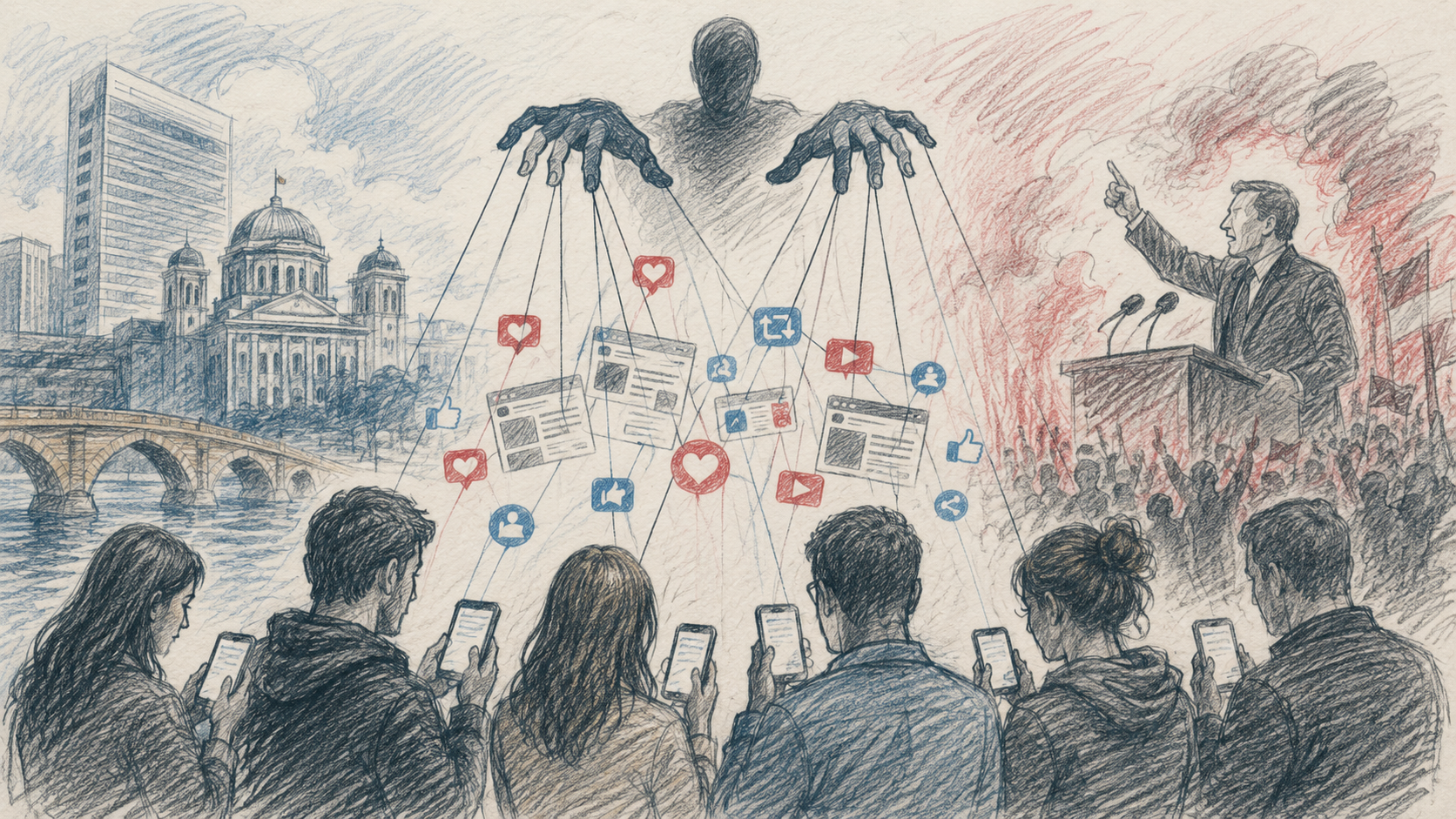
Thirty years ago, a political crisis in Bosnia and Herzegovina might unfold over days, even weeks, as newspapers and evening broadcasts slowly filled in the details. These days, it can happen in minutes.
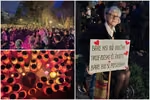
That was the case recently when a shrine to the Virgin Mary in Međugorje, a Catholic pilgrimage site, was vandalized - the statue defaced, graffiti left at the site, an outdoor altar set on fire. Politicians began drawing conclusions before the police had identified a suspect. Darijana Filipovic, a lawmaker from the HDZ BiH party and a candidate for the Bosnian presidency, described it as an attack on the country's Catholic community. Zeljana Zovko, a Croatian member of the European Parliament, warned of what she called the growing vulnerability of Christians in the region.

When the police later announced that the suspect in custody was a Polish citizen, Ms. Filipovic changed course, accusing parts of the news media of stoking interethnic distrust.
Jadranka Kosor, a former prime minister of Croatia, offered a different reading of events once the arrest was made. "It is extremely important that the vandal who attacked the holy sites in Međugorje has been caught," she said. "A Pole, from a Catholic country." The quick arrest, she added, would help extinguish a fire that certain political actors had hoped to fan for their own advantage.
By the time the facts were established, the narrative had already moved on - a pattern that is becoming familiar in Bosnian politics, and one that experts say has as much to do with technology as with the country's well-documented ethnic and religious divisions.
A peace deal built for a slower world
The Dayton Peace Agreement, which ended the Bosnian war in 1995, created a system of ethnic power-sharing and a fragile joint presidency that remains, with only minor adjustments, the country's governing framework today. It was designed for an era of newspapers and scheduled press briefings. The politics playing out under it now move through a digital information system shaped largely by recommendation algorithms - a shift that is not unique to Bosnia, but that researchers say is becoming a defining feature of democratic politics more broadly.
A study published this year in the Journal of Public Economics examined how social platforms weigh user engagement against the spread of misinformation, describing a "fundamental trade-off": systems that reward likes and shares tend to also amplify polarizing and inaccurate content, because such content generates more engagement than measured, factual reporting does. Looking at changes to Facebook's algorithm in 2018, the researchers linked increased personalization to what they called rising "ideological extremism and affective polarization" - the point at which political rivals come to see one another less as opponents than as enemies.
A phone call becomes a drama
BiH was not part of that study, but the dynamic it describes has become increasingly visible here. In late June, former president of BiH's Republika Srpska (RS) entity Milorad Dodik disclosed that he had spoken by phone with Bakir Izetbegovic, the leader of the Bosniak SDA party. What the two men actually discussed became almost beside the point. Within hours, the public conversation had moved to whether the call had been secretly recorded, who had leaked it, and how it had reached the media - a cascade of statements, leaked audio, and commentary that played out simultaneously on television, news sites and social media.
Dalio Sijah, of the Bosnian fact-checking organization Istinomjer, has watched a similar pattern take hold around claims that Christian Schmidt, the international community's High Representative in Bosnia, was never legally appointed to the post - despite the fact that no formal appointment procedure exists in the relevant legal framework for him to have violated. "When falsehoods are repeated, they become a political narrative," he said. Few claims take hold on the strength of a single statement, he added; they harden through repetition across television, online outlets and political messaging until they come to resemble settled fact.
Selma Zulic Siljak, a media researcher, told N1 in 2023 said the country's ethnic divisions make it especially susceptible to this kind of manipulation. "Anonymous online outlets and social media seek to reach as much of the public as possible," she said. "Their objective is to create as many divisions as possible among different groups. Bosnian society is particularly fertile ground for such narratives to develop in their worst possible form."
Old divisions, a new clock
None of this means BiH's crises are manufactured by algorithms. Their roots lie in the country's constitutional structure, its wartime history and its enduring ethnic divisions, which predate social media by decades. What has changed, analysts say, is the speed and intensity with which those old divisions now play out - how quickly a message spreads, how far it travels, and how long it dominates public attention before institutions can respond.
That gap between a fast-moving information environment and a slow-moving constitutional order is likely to widen as the country approaches its 2026 general election. The concern among researchers and analysts is not that new divisions will be invented, but that the messages best equipped to provoke strong reactions will have a structural advantage in reaching voters - regardless of their accuracy.
For political actors, that means an intensifying competition for visibility. For voters, it means a more difficult task: separating what has been verified from what has simply spread the fastest.
Kakvo je tvoje mišljenje o ovome?
Učestvuj u diskusiji ili pročitaj komentare


Kakvo je tvoje mišljenje o ovome?
Učestvuj u diskusiji ili pročitaj komentare