Srbija
 Hrvatska
 Slovenija

Russia at UNSC calls for unconditional closure of Bosnia’s OHR


Russia demanded the swift, unconditional closure of the Office of the High Representative (OHR) in Bosnia and Herzegovina, accusing Western countries of using it to maintain external control over the country’s institutions.
Addressing the UN Security Council, the Russian representative also challenged the legal basis for recognising the Principal Deputy High Representative as Acting High Representative, arguing that the Dayton Peace Agreement provides for no such position.
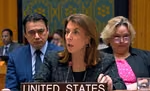
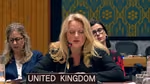
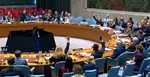
“We insist on a swift shutdown of this external protectorate and an abolishment of the post of the High Representative without any additional conditions,” the representative said.
Moscow reiterated its position that a High Representative must be approved by the Security Council, criticising Western countries over the appointment of former High Representative Christian Schmidt.
The representative accused the OHR of interfering in Bosnia and Herzegovina’s internal affairs and seeking to control its legislative, judicial, law enforcement and electoral institutions.
Russia also alleged that the office was being used to advance individual countries’ geopolitical and economic interests, arguing that it had no authority to prescribe Bosnia’s preferred trade or economic partners.
Turning to the October elections, the representative welcomed what Russia described as the election of a legitimate representative of the Croat people to the Presidency after an eight-year gap. Moscow said this would help stabilise the country and urged political parties to form authorities at all levels swiftly.
Russia defended BiH's Republika Srpska entity, rejecting Western criticism of its leadership and claiming that the entity had consistently sought to protect Dayton’s decentralised framework.
It also alleged that initiatives from Banja Luka for dialogue within Bosnia had been obstructed by Sarajevo at Western countries’ urging, and encouraged Council members to read the Republika Srpska government’s report on the situation.
The representative concluded that Dayton remained the indispensable basis for peace and reconciliation, arguing that its system of checks and balances was essential to the equal status and peaceful coexistence of the country’s three constituent peoples within one state.
“Any attempts to distort the Dayton principles is tantamount to playing with fire,” the representative warned, saying this would have damaging consequences for Bosnia and Herzegovina and the wider Western Balkans.
Kakvo je tvoje mišljenje o ovome?
Učestvuj u diskusiji ili pročitaj komentare


Kakvo je tvoje mišljenje o ovome?
Učestvuj u diskusiji ili pročitaj komentare