Srbija
 Hrvatska
 Slovenija

Shared priorities and persistent barriers: UN roundtable examines pathways to lasting peace in Bosnia


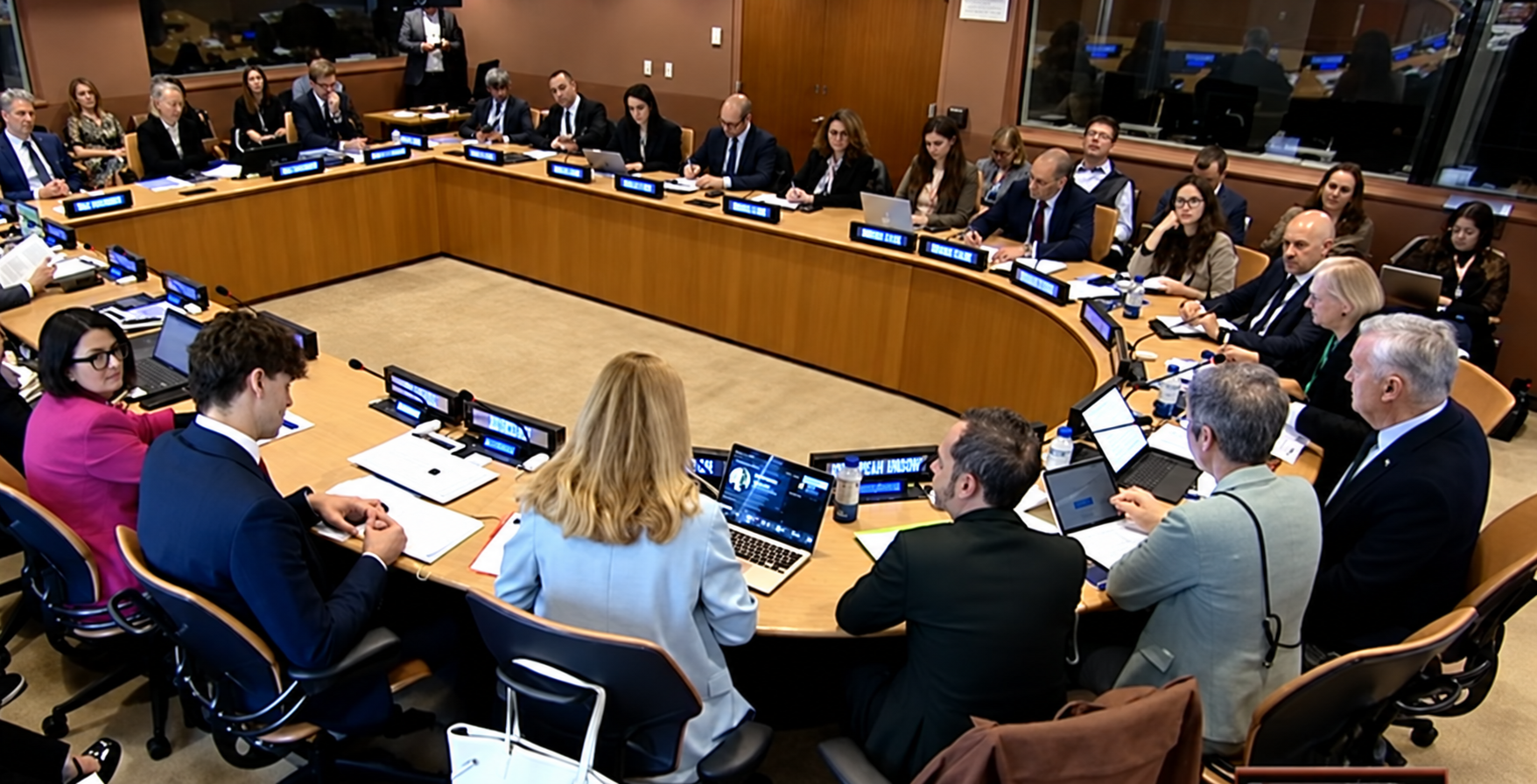
Peace, equal rights, an independent judiciary, and accountable public institutions represent the shared priorities of citizens in Bosnia and Herzegovina, even as significant divisions persist over the state's constitutional structure. Research presented at the United Nations Headquarters in New York demonstrates that cross-community cooperation thrives across various practical sectors, yet frequently encounters insurmountable obstacles whenever sustained progress hinges on high-level political consensus.
The findings were featured during a roundtable discussion examining citizen involvement in peacebuilding and political progress, co-organized by the Permanent Missions of Bosnia and Herzegovina and Luxembourg alongside the EU Delegation to the UN and the US-BiH Exchange Council.
Presenting results from the CONSENT BiH project, which surveyed 2,009 citizens alongside extensive focus groups, Josip Glaurdic from the University of Luxembourg explained that citizens view constitutional matters through practical outcomes rather than abstract principles.
According to the study, maintaining peace and stability tops public expectations from the constitution, followed closely by equal rights, anti-corruption measures, political accountability, and economic prosperity. An independent judiciary emerged as the paramount institutional demand across all demographic groups. Glaurdic emphasized that political elites do not fully reflect the diverse opinions within their respective communities, noting that common priorities offer a vital starting point for dialogue despite remaining disagreements on overall governance.
Further research presented by Yale University scholars highlighted how interethnic collaboration functions effectively within the Armed Forces of Bosnia and Herzegovina, private business, academia, civil society, and the diaspora. Catherine Panter-Brick noted that successful cooperation relies on shared practical goals and clear institutional support, citing unified command structures in the military and commercial partnerships between companies in Sarajevo and Banja Luka.
However, David Simon of Yale warned that technical and academic collaboration remains vulnerable to shifting political support, funding shortfalls, and generational transitions within key institutions.
Addressing the forum, UN Special Adviser on the Responsibility to Protect Mô Bleeker pointed out that while citizens routinely cooperate in daily life, local initiatives frequently falter when top-tier political agreements are required.
Bleeker advocated for a renewed social contract rooted in shared needs and transitional justice, while UN Assistant Secretary-General Elizabeth Spehar stressed that sustainable peace requires the active participation of women, young people, and an unhindered civil society.
Kakvo je tvoje mišljenje o ovome?
Učestvuj u diskusiji ili pročitaj komentare


Kakvo je tvoje mišljenje o ovome?
Učestvuj u diskusiji ili pročitaj komentare