Srbija
 Hrvatska
 Slovenija

Srebrenica survivor Camil Durakovic on Ratko Mladic's Death: Bitterness over his age and fear of glorification


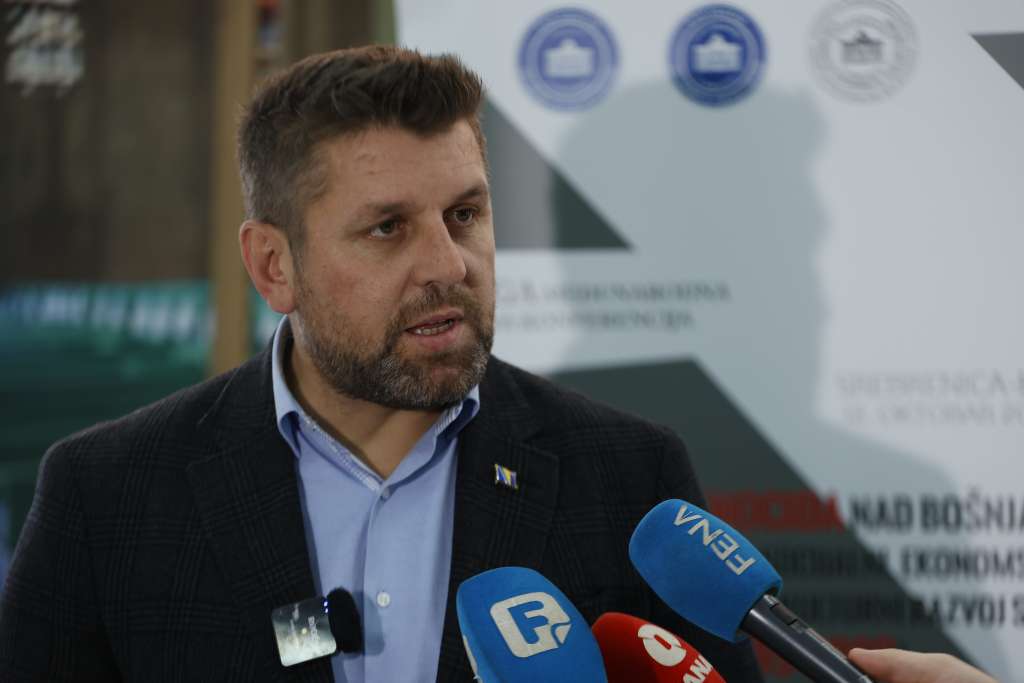
The death of Ratko Mladic has elicited deep bitterness rather than joy from Camil Durakovic, the Vice President of the Republika Srpska (RS) entity and a survivor of the Srebrenica genocide. Speaking to N1, Durakovic reflected on the contrast between the life span of the convicted war criminal and the thousands of victims who never reached old age, while also warning that the passing could be exploited by political actors to deepen ethnic divisions.
Recalling July 1995, Durakovic shared his personal experience as a sixteen-year-old when Mladic’s army entered Srebrenica. "I received that news and returned to the time when I was 16 years old, when the army of war criminal General Mladic entered Srebrenica. When we here in Srebrenica, both myself and tens of thousands of others, fought for only one thing, and that is to stay alive," he stated. He noted that while he survived, thousands of his peers did not. "My first thought was that I am somehow sorry that he, in fact, reached a deep old age. Eighty-five years is a deep old age, while, unfortunately, thousands of my peers and younger than me did not. So I feel more bitterness than some joy because of the death of a man for whom the whole world knows is a war criminal, sentenced for life for genocide and the most heinous crimes."
Durakovic expressed serious concern that Mladic’s death and upcoming funeral might be used to incite ethnonationalist tensions. He criticized past advocacy for Mladic's early release due to health reasons.

"I think that would be a great defeat for both the judiciary and civilization in general. Because it is about a convicted war criminal for the act of genocide. Not only did a man die, a man died who was sentenced to life for the most heinous crimes a man can commit against a man," he emphasized. He noted that the final verdict and established facts remain unchanged by death. "He died serving a life sentence. The verdict is final and it will always exist."
According to Durakovic, decades of relativizing war crimes have created a societal environment prone to manipulation.
"From the moment when politics and those who are representatives of the people in the highest institutions of this country and entity distance themselves from such individuals, then the people, ethnicities or citizens will certainly follow that," he observed, asserting that political messaging has fostered an environment where society suffers from manufactured divisions.
He warned against turning the funeral into an electoral instrument. "Joy over his death is not something that we, especially Bosniaks who survived the genocide, have to rejoice over. Death is a biological process that awaits all of us. But the problem lies in the glorification and celebration that could follow and further sharpen the political situation, and even lead to security problems."
Concluding his remarks, Durakovic stressed that facts and history cannot be fragmented to suit political narratives.
"We will always point out and oppose lies, oppose revisionism and glorification of war crimes. Everyone cannot have their own truth, there cannot be three truths, there cannot be three histories. There can be one truth, one history, and it must be based exclusively on facts," he said.
He added that remembering the past is essential to prevent future atrocities. "We should not celebrate, but because of looking into the past, presenting the truth, we warn that, God forbid, in the future we do not produce new Mladics. That is what we as a civilized society must take care of."
Kakvo je tvoje mišljenje o ovome?
Učestvuj u diskusiji ili pročitaj komentare


Kakvo je tvoje mišljenje o ovome?
Učestvuj u diskusiji ili pročitaj komentare