

 Srbija
 Hrvatska
 Slovenija

US Ambassador at UNSC: We are no longer pursuing international intervention, now is the time for local solutions


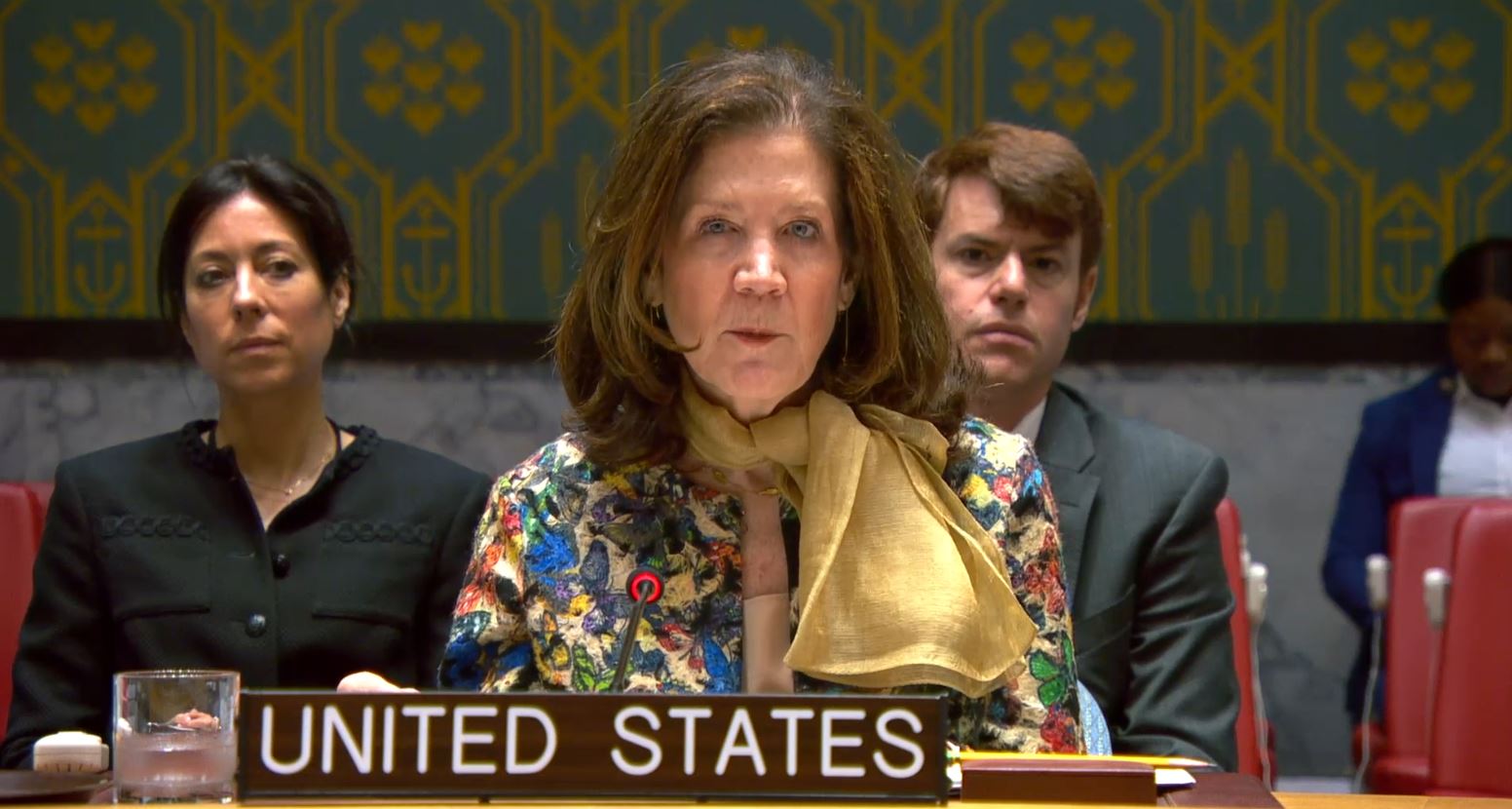
The United States has defended its recent decision to lift sanctions on officials from BiH's Republika Srpska (RS) entity, saying the move was part of a broader diplomatic strategy to reduce tensions and create conditions for political stability in Bosnia and Herzegovina.
Speaking before the UN Security Council in New York, the US ambassador said Washington remains fully committed to the Dayton Peace Agreement and supports the continued presence of EUFOR Althea, whose mandate was unanimously renewed for another year on Thursday.
“The United States is committed to preserving stability and security in the Western Balkans. We welcome the Council’s reauthorization of Operation Althea,” the ambassador said, stressing that the mission “plays an important role in maintaining stability and security” in the region.
She reiterated that the United States remains dedicated to a “democratic, peaceful and prosperous Bosnia and Herzegovina.”
The ambassador noted that Bosnia and Herzegovina had faced “an extended and destabilizing political crisis” in recent years, and said the United States had taken the lead in efforts to calm the situation.
“Over the past several months, we have worked deliberately and discreetly to secure de-escalation and provide space for greater stability in Bosnia and Herzegovina.”
In that context, she referred to the October 18 session of the National Assembly of Republika Srpska (NSRS), which adopted a set of legislative measures that Washington interpreted as a step toward reducing political confrontation.
“We welcomed the steps taken by the Republika Srpska’s National Assembly to place Bosnia and Herzegovina on a more stable footing. In response to these positive actions, we removed US sanctions on Republika Srpska officials as a responsive measure to defuse the crisis and promote stability.”
She emphasized that US sanctions were “never intended to be permanent,” but were tied to specific political actions that Washington viewed as harmful to the constitutional order.
In what appeared to be a clear message to both domestic and international actors, the United States said it was no longer interested in imposing top-down political solutions in Bosnia and Herzegovina.
“The United States is no longer pursuing nation-building or heavy-handed international intervention. Now is the time for local solutions led by local actors representing Bosnia and Herzegovina’s three constituent peoples.”
She called on political leaders in the country to use what she described as a “window of opportunity” to turn away from permanent crisis and toward compromise-based governance and shared prosperity.
The ambassador concluded by saying Washington would continue to work with its partners — including the EU — to support stability, democratic processes and US interests in the Western Balkans.
“The United States will continue to work with our partners to protect and advance American interests by supporting stability and progress in Bosnia and Herzegovina and throughout the region.”
Kakvo je tvoje mišljenje o ovome?
Učestvuj u diskusiji ili pročitaj komentare


Kakvo je tvoje mišljenje o ovome?
Učestvuj u diskusiji ili pročitaj komentare