Srbija
 Hrvatska
 Slovenija

US capital to spearhead South Interconnection as private firm enters Bosnian law


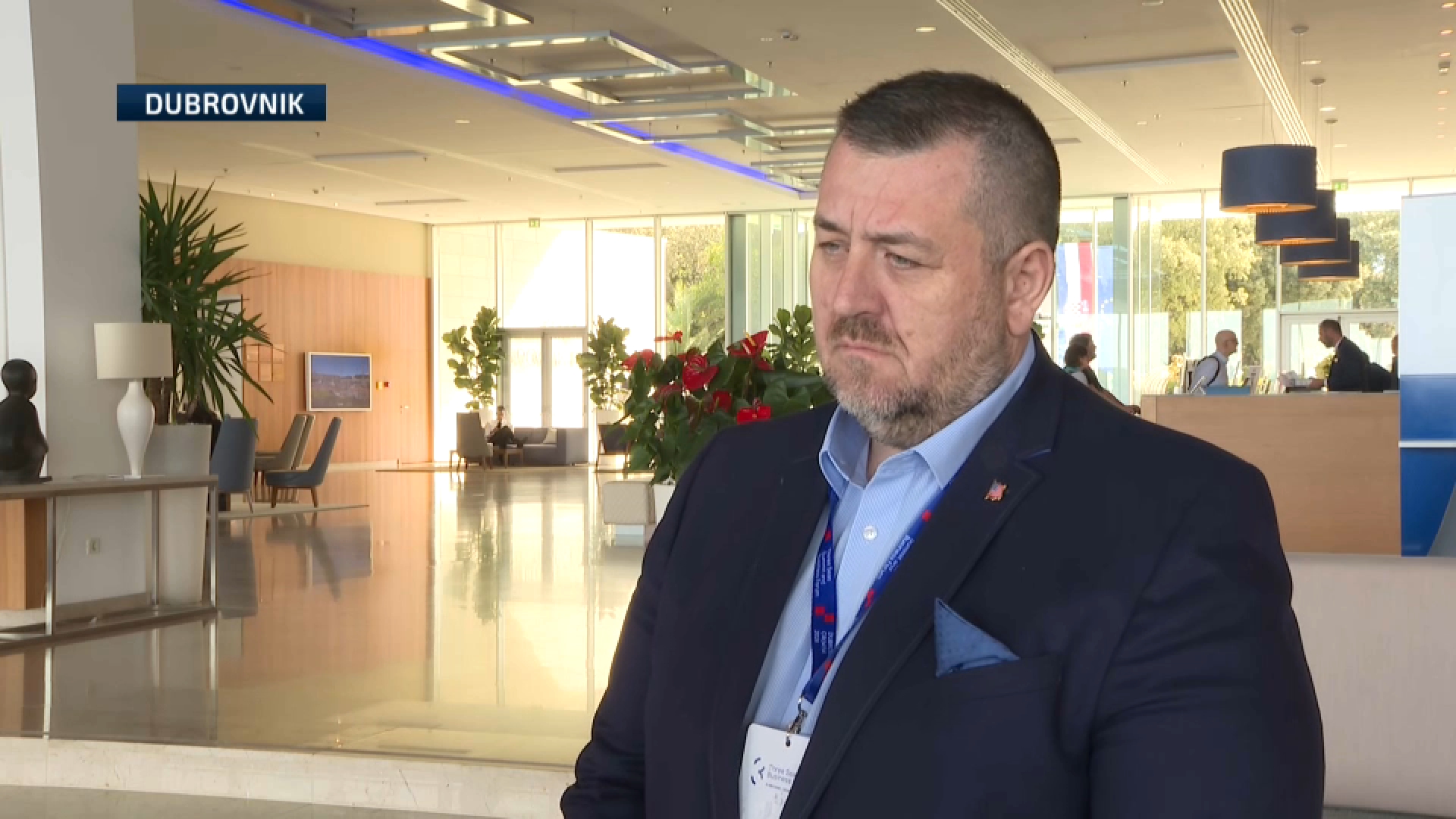
Following the signing of a landmark agreement between Bosnia and Herzegovina and Croatia in Dubrovnik, Amer Bekan, Director of AAFS d.o.o. Sarajevo, has detailed the pivotal role of American investment in the South Interconnection gas project. The project, witnessed by US Energy Secretary Chris Wright, marks a significant shift in the region's energy landscape, with the Federation (FBiH) entity Government fast-tracking legislation to formally integrate the privately-owned AAFS Infrastructure and Energy into the legal framework.
Bekan expressed gratitude to the FBiH Government and the Council of Ministers for their swift legislative action, describing the venture as potentially the largest American investment in this part of Europe. Supported directly by Washington through the State Department and the US Department of Energy, the project aims to establish energy security and diversification for Bosnia.
Addressing the inclusion of a private firm in the legislation, a move unprecedented in the local market, Bekan characterised it as a "political compromise." He noted that AAFS was the sole investor prepared to undertake such a complex project, particularly given that the pipeline itself would not be profitable for at least 30 years based on current consumption. To ensure financial viability, the investment includes the construction of four gas power plants to create internal demand.
Technical infrastructure and regional connectivity
The investment plan involves the construction of three major 400 MW gas power plants in Mostar, Kakanj, and Tuzla, alongside a smaller facility dedicated to cooling data centres in Herzegovina. These facilities are expected to consume approximately 900 million cubic metres of gas.
Regarding logistics, Bekan confirmed that the FBiH Government would not bear the costs of gas terminal rentals or provide financial guarantees. Key points of the project include infrastructure - the pipeline will connect to Croatia's Plinacro system; expansion - AAFS has offered to fund the Croatian portion of the pipeline should EU financing face elays; and future-proofing - planned branches toward Capljina leave open the possibility of connecting to a potential LNG terminal in Ploce.
Impact on state-owned enterprises
Contrary to concerns regarding the marginalisation of state companies, Bekan asserted that BH-Gas and Energoinvest would remain integral to the sector. While AAFS will manage the "main artery" of the pipeline, BH-Gas is expected to handle the gasification of other regions, such as Krajina and Goražde. Energoinvest will retain its core business of gas importation.
While acknowledging that Russian gas remains the cheapest current option, Bekan emphasised that the project aligns with European Union strategic interests. He projected that once the EU halts Russian gas flows, the South Interconnection will serve as a vital transit route for neighbouring countries, potentially handling between three and five billion cubic metres of gas. Contracts with the FBiH Government are expected to be signed within the next 25 days, with financing backed by American and European financial institutions.
Kakvo je tvoje mišljenje o ovome?
Učestvuj u diskusiji ili pročitaj komentare


Kakvo je tvoje mišljenje o ovome?
Učestvuj u diskusiji ili pročitaj komentare