Srbija
 Hrvatska
 Slovenija

Yanis Varoufakis for N1: Voting is permitted precisely because it changes so little


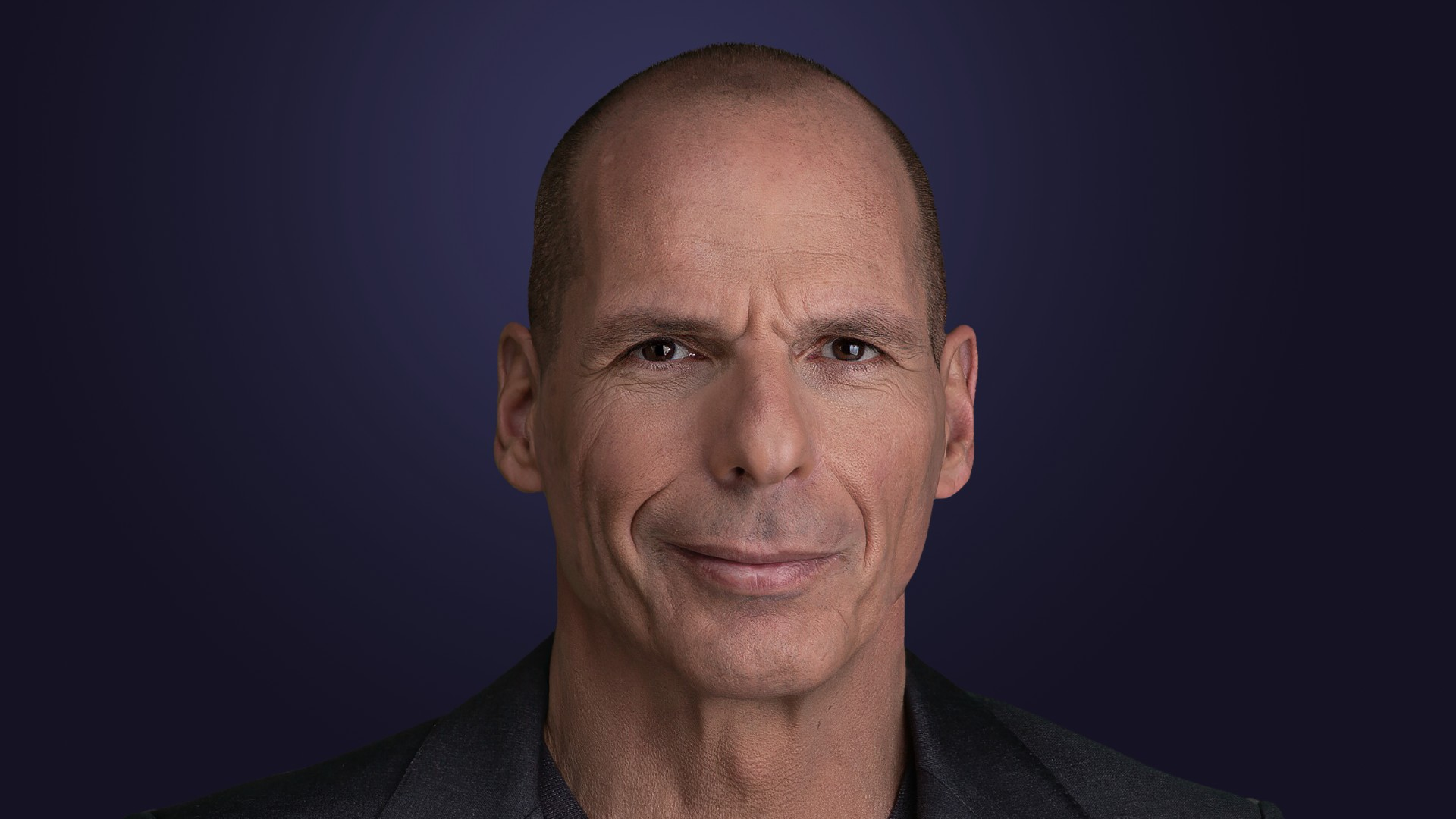
In an exclusive interview with N1, Yanis Varoufakis discusses the crisis of democracy and a world in which citizens elect governments while key decisions increasingly remain beyond the reach of the ballot box. “Voting is permitted precisely because it changes so little,” he says, linking political powerlessness to Trump, the far right and the power of Big Tech. Speaking about Gaza, he uses the brutal economic formulation that “genocide pays” and warns of technologies being tested on Palestinians. He also discusses the European left, “cloud capital” and where, after the darkest year of his life, he still finds reason for hope.
The former Greek finance minister has long since transcended the political episode that made him globally famous in 2015, when he entered into a dramatic confrontation with Europe’s financial establishment. An economist, politician and author, he is now one of the most recognisable voices of the international left and among the few European intellectuals attempting to offer a broad theory of the world that emerged from the financial crisis, the rise of Big Tech and the weakening of liberal democracy. From Trump to Gaza, his interventions rarely pass without controversy.
In his book Technofeudalism: What Killed Capitalism, Varoufakis argues that capitalism as we knew it is no longer the dominant system. It is being displaced by an order based on “cloud capital”, in which the owners of platforms and algorithms increasingly control not only markets but our behaviour as well. That is where our conversation for N1 begins: who really rules today if citizens still vote while actual power increasingly moves beyond the reach of their ballots?
Interview by Nikola Vucic, N1
N1: You recently said something in the Guardian, in your conversation with Aditya Chakrabortty, that can sound like a provocation: “There’s no such thing as democracy.” You were speaking from the experience of the Greek debt crisis and about the question of who actually holds power, people or markets. But it seems to me that this statement now sounds less and less like an abstract intellectual proposition and more and more like something close to people’s everyday experience: the feeling that they can vote, change governments, and yet have very little power to bring about fundamental change. Is that what you meant?
Yanis Varoufakis: Yes, that's exactly what I meant. But let me be precise, because the line is meant to describe something, not to provoke. Democracy means the demos rules. What we have instead are what I called, in my conversation with Aditya, demos-free zones. We have elections, parliaments and the full ritual of popular sovereignty, while the real decisions are taken elsewhere, by people nobody elected and nobody can remove.
I learned this in the most brutal way. In July 2015, 62% of Greeks voted NO in our referendum. They did so after the European Central Bank had shut our banks to blackmail them into accepting terms of surrender. That night, the prime minister I was serving trashed their verdict. The lesson wasn't that Greeks had made the wrong choice. It was that their choice was never allowed to count.
What has changed since then is that the Greek experience has become universal. A young person in Manchester, Lyon or Ohio can vote out one government and vote in another. Yet their rent, their wages and their exposure to an algorithm that decides what they see and what they pay stay outside the reach of any ballot. Power has a way of co-opting the officials we elect. It captures them through donors, through the bond markets and now through Big Tech's cloud capital. So people feel what I lived in 2015: that voting is permitted precisely because it changes so little. That feeling isn't apathy. It is an accurate reading of reality. And when the left fails to name it, the far right steps in to name it for them.
CLOUD CAPITAL
Varoufakis uses the term “cloud capital” to describe the power accumulated by major technology companies through their platforms, algorithms and vast quantities of user data. Google, Amazon, Meta and other platforms do not merely track what we do and buy; through their algorithms, they can influence what we see, desire and choose. Varoufakis argues that this power is so extensive that it is transforming capitalism itself, hence his concept of “technofeudalism”.
N1: Donald Trump returned to the White House in 2025. His politics combines economic nationalism, tariffs, attacks on institutions and a strong personalisation of political power. Do you see Trump primarily as a consequence of the crisis of liberal democracy, or as a politician who is now shaping a new model of government, one that the European right might try to emulate?
Yanis Varoufakis: Both, and the two cannot be separated. Trump is the child of 2008 and the offspring of Obama’s broken promises. The bankers' losses were dumped on the shoulders of the weakest. We got austerity for the many and socialism for the few. That money funded the explosion of Big Tech's cloud capital, and the result has been permanent stagnation. Rising discontent and the return of the ultra-right were inevitable, just as they were after 1929. So yes, Trump is a symptom of liberal democracy's failure. As a dyed-in-the-wool leftie I'll add that he is also our failure. If Trump is in the White House, it is because the left failed to protect the majority when it had the chance.
But to stop at “symptom” would be complacent. Trump is also shaping something new. I've described it as “fascism by the book”. It plagiarises the left's critique of crony capitalism and of the “uniparty”. It unites the victims of neoliberalism with nostalgic Thatcherites and Reaganites. It promises a Great Leader who will purge the “impure”. And then it gets into bed with the very financial and tech oligarchs it railed against.
Underneath all this sits a new ruling ideology I call techlordism, the creed of Musk, Thiel and Palantir. It is to cloud capital what neoliberalism was to finance. It colonises the state, privatises public data, and treats democracy as an obstacle.
N1: Will the European right copy it?
Yanis Varoufakis: It already has. Look at how Europe's centrists, more afraid of the left than of the far right, keep inviting them into government. Spain is about to go down that road, following a likely victory of the neo-Francoists.
Meanwhile Trump's own coalition is cracking along the only fault line that ever truly mattered, which is class. During the Iran war the MAGA voter pays at the pump while the Permian Basin donor buys a third holiday home. The base bleeds; the top feasts.
N1: And yet, the picture of the European left may not be quite so simple. The result of Die Linke in Berlin, led by Elif Eralp, showed that the left can achieve a very strong result by speaking about housing, the cost of living and economic security, while at the same time remaining strongly engaged with questions of identity, migration and social equality. Do you think the European left has finally begun to understand that class and identity are not necessarily opposed, that the question of how we live and the question of who we are can be part of the same political struggle?
Yanis Varoufakis: I've never accepted that class and identity are opposed. Years ago I wrote that if I were a trans person and a bunch of lefties lectured me that factory exploitation matters more than my daily struggle, I would tell them to get lost. No one has the right to rank other people's pain. The old line that “first we build socialism, then all other oppressions wither” isn't just stupid. It is oppressive.
What the left has to understand is how power works. Power unites the powerful. At Davos, black and white, male and female executives speak with one voice. The powerless, meanwhile, splinter into groups, each nursing its own particular wound. That is why identity politics, as practised, so often becomes the opposite of solidarity, a godsend to the Davos crowd. The answer isn't to drop identity for class. It is to build solidarity across what I call the archipelago of under-privilege. Housing, rent and economic security are the ground on which very different people can find each other.
So I welcome the Berlin result. It shows that speaking concretely about how people live, while refusing to throw migrants or minorities under the bus, can win. But I'll add a warning from experience. The establishment's response to a left victory is always co-optation. In Berlin we are already seeing it reach for Die Linke's Zionist wing, folding it into a campaign that tolerates genocide. The real test of whether the left has learned is whether it holds firm once power starts courting it. In 2015, we didn't.
GREECE 2015: THE REFERENDUM AND SYRIZA'S CAPITULATION
In July 2015, more than 61% of Greeks rejected the terms proposed by international creditors in a referendum. Only days later, the government of Prime Minister Alexis Tsipras agreed to a new financial assistance package that included strict fiscal and reform measures. Yanis Varoufakis, then finance minister and one of the leading opponents of continued austerity, resigned after the referendum.
N1: If we look at this from the American perspective, the situation seems even more dramatic. Economic and technological power is increasingly concentrated in the hands of major corporations and the wealthiest individuals, while under Trump political power is becoming increasingly personalised around the presidency. Can we really speak of democracy if citizens can elect a government but have almost no control over the economic and technological structures that shape their lives?
Yanis Varoufakis: No. And this is the heart of my argument in Technofeudalism. Capitalism as we knew it has been eclipsed by something worse. A new form of capital, cloud capital, doesn't produce commodities at all. It is a network of machines and algorithms that we train to train us. It gives its owners the power to modify our behaviour directly and to extract rents from every market they host. The tech lords no longer merely compete in markets. They own the markets, and increasingly our minds.
Against such power, the toolkit of liberal democracy is useless. Big Tech cannot be regulated. Antitrust law, wealth taxes and regulatory agencies were designed for capitalists, not cloudalists. And under Trump, the merger of political and techno-economic power is out in the open. A tech lord was sent into government offices to fire civil servants and siphon off citizens' data. Palantir and its peers are wired into the Pentagon and the tax office. Peter Thiel openly cheers the end of democracy even as an ideal.
A democracy that stops at the ballot box and never reaches the workplace, the money system or the digital commons is a shell. That's why I keep saying that the only route back to democracy runs through property rights: one employee, one share, one vote in our corporations; a monetary commons; socialised land.
These aren't nationalisations, they are democratisations. Until we democratise who owns the machines, voting will remain what it has become, a ritual of consent to our own dispossession.
N1: There is another place where the question of power can no longer be separated from the question of moral order: Israel and Gaza. You have been one of the most outspoken European critics of Israeli policy toward the Palestinians. What has the war in Gaza, in your view, revealed about the real limits of Europe's commitment to international law and universal human rights?
Yanis Varoufakis: Gaza has stripped away the pretence. International law either applies to everyone or it applies to no one. By letting it die in Palestine, Europe's leaders have killed it everywhere, including in Europe. The ICC has issued arrest warrants and the ICJ has heard South Africa's case. Even so, Europe kept sending arms, kept projecting Israel's flag onto its parliaments, and kept policing its own citizens for saying the word genocide. I know that last part first-hand: German police entered a hall to stop my speech, and I was then banned from Germany. Europe's universalism turns out to have been a privilege reserved for some, not a principle.
There is also an economic dimension that liberals prefer not to see. Genocide pays. Israel's stock exchange rose by more than 160% while Gaza was being flattened. And now Big Tech is involved: face recognition, target-selection algorithms and AI kill-chains are being tested on Palestinians in real time. The targeting systems refined in Gaza today will tomorrow be powering the algorithms that govern the rest of us.
N1: Why has the left, including some of its most progressive parts, found it so difficult to arrive at a common language on Israel and Palestine?
Yanis Varoufakis: Partly fear. Fear of the antisemitism smear, which has been weaponised to discipline anyone seeking respectability within the system. Partly because parts of the left long ago traded principle for acceptability. But there is a deeper confusion.
Too many progressives see Palestine as a foreign-policy issue on which reasonable people can differ. It is not. If this were the morning after Kristallnacht, our only duty would be to defend Jews from pogroms. Today our duty is to defend Palestinians from genocide. That duty also emancipates Israelis, who cannot build a well-lived life on the ruins of another people. And it emancipates us Europeans from our own slide into authoritarianism. A free Palestine is a prerequisite for a free Europe.
N1: Susan Neiman has just published Call It Evil: Understanding the Trump Era, a book in which she argues that we have become so cautious about the word “evil” that we have lost the ability to morally name what is happening in front of us. I have followed your work long enough to know how consistently you have connected economics with questions of power, freedom and human dignity, so I find it interesting that a philosopher like Neiman approaches a similar problem from another direction. Do you think that the crisis of the left today is, at least partly, also a crisis of moral language, that it is no longer enough to explain to people how the system works, but that we also need to tell them again why one form of society is more just than another?
Yanis Varoufakis: I'm glad Susan Neiman is pushing in this direction, and yes, I think she is touching something real. For decades the left has believed that if we just explain how the system works, people will rise up. That is the economist's delusion, and I'm guilty of it too. Explanation alone produces either despair or cynicism. People who understand perfectly well how they are being fleeced often vote for the fleecers, because nobody has offered them a reason to believe that something better is both possible and right.
But I would put it differently from the language of evil. I think the left's deepest moral failure happened around the Great War. Both communists and social democrats ditched liberty in favour of something vague and ill-defined, equality, which Marx himself rightly rejected. We gifted freedom to the liberals, who only ever cared about their own freedom, not the majority's. And we drifted into authoritarianism and ill repute. Today the right speaks about freedom, sovereignty and dignity, while the left talks about “fairness” and sounds like a welfare office.
So yes, we need a moral language again. Its core must be freedom: universal freedom from the extractive power of others. In a world where cloud capital reaches into our thoughts, our labour and even our faces, we do not own ourselves. That is a moral scandal and not merely an economic one.
When we call what happens in Gaza a genocide, or describe techlordism's dream of a human–AI hierarchy for what it is, we aren't being shrill. We're refusing to let the language of neutral analysis become an accomplice. Economics without ethics was always a fraud. I've said that since I started teaching.
N1: You have experienced the difference between having a democratic mandate and having real political power in the most direct way possible. After Greece, Trump, the changes taking place on the European left and right, and everything that has happened in Gaza, where do you find a reason for hope today? I am not asking you as a politician what should be done, but as an intellectual: what still convinces you that people can imagine a different social order and that they have not lost faith in the possibility of building it?
Yanis Varoufakis: I'll be honest. 2024 was the darkest year of my life. There were three electoral defeats in a single year. There were the killing fields of Ukraine, and the genocide drifting across the Mediterranean from Palestine. There were the thugs who broke my face in front of my wife. For the first time I felt my age.
What lifted me was not theory. I turned to the five women who shaped me, my mother first and foremost. And I wrote up their story into what, surreptitiously, became my latest book. None of these women had any reasonable hope of winning. They resisted anyway, and in the end they persevered. Writing about them returned me to the land of hope.
That's where hope lies, at least within me. Not in a forecast, but in the stubborn human refusal to accept domination as natural. I see it in youngsters and older people alike who continue to do good for the hell of it. I see it in the Palestinians who are teaching us that resistance is existence. I see it in the Global South governments that formed the Hague Group when Europe wouldn't. I see it in people who stubbornly continue to imagine a hyper-modern world without banks, billionaires or techlords. And I see it in the MAGA welder who will eventually notice that the $100 barrel was a political decision, not a law of nature.
People have not lost the capacity to imagine a different order. What they've lost is confidence that imagining it is permitted. Our task as intellectuals is to give that permission back. We do it not with promises of victory, but with the simple, stubborn hope of rising again.
Kakvo je tvoje mišljenje o ovome?
Učestvuj u diskusiji ili pročitaj komentare


Kakvo je tvoje mišljenje o ovome?
Učestvuj u diskusiji ili pročitaj komentare
NAJČITANIJE








Najnovije








ZDRAVLJE




LIFESTYLE




SHOWBIZ
N1 KVIZ