Srbija
 Hrvatska
 Slovenija

IN CONVERSATION WITH N1
SOAS professor Gilbert Achcar: Gaza has shattered the illusions of the international liberal order


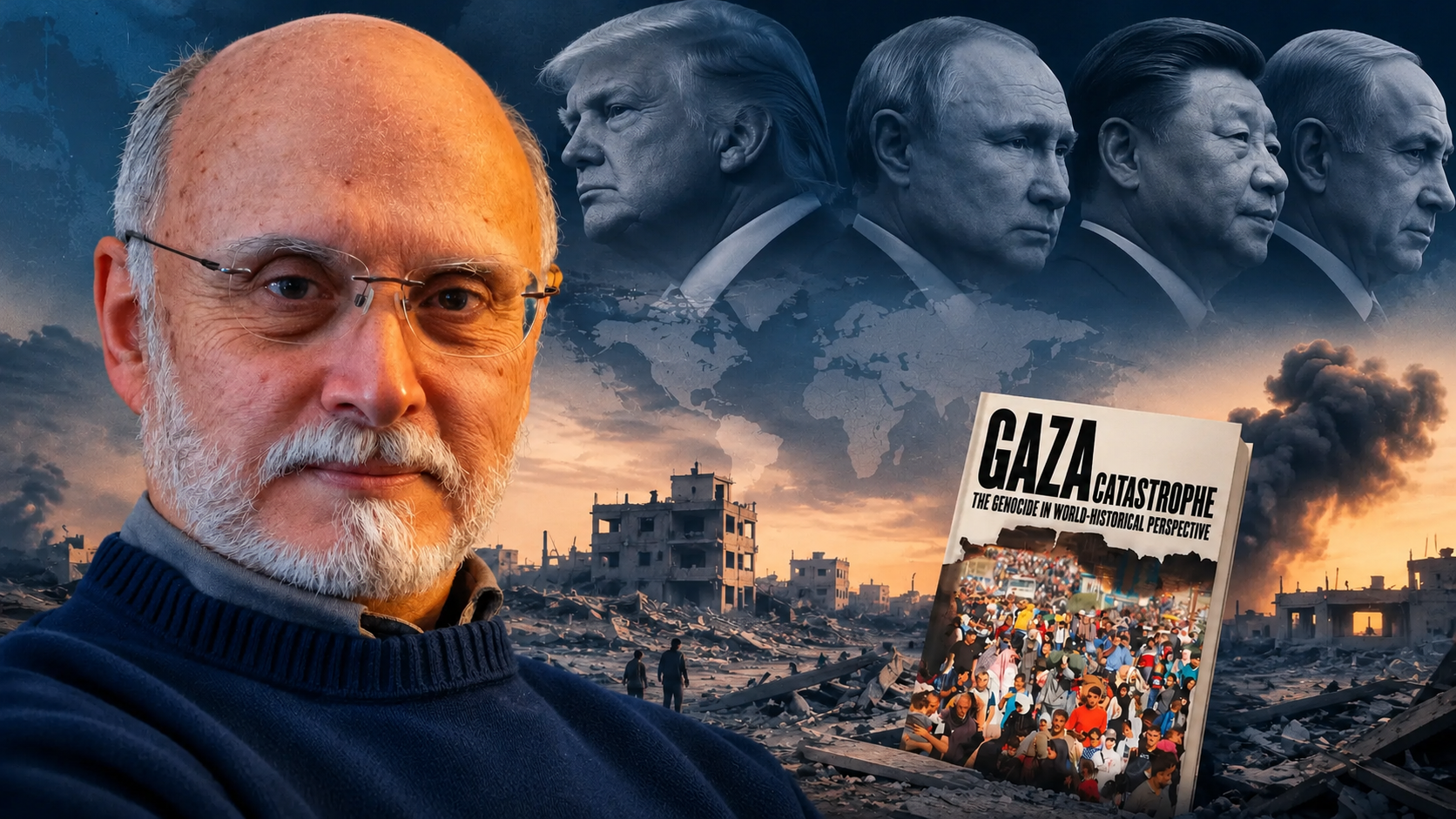
The war in Gaza has shattered the remaining illusions about the international liberal order, exposing the contradictions between the values Western governments claim to defend and their political actions, Lebanese-born political thinker Gilbert Achcar says in an interview with N1's Nikola Vucic.
Achcar, a professor at SOAS University of London and the author of numerous books on international politics, the Middle East and Marxism, discusses the changing balance of global power, Washington's relationship with Israel, the limits of international justice and the future of capitalism. He also reflects on the political potential of Generation Z, the legacy of Yugoslav workers' self-management and the distinction between optimism and hope.
N1: Some of my colleagues drew a parallel between the recent meeting of Trump, Putin and Xi Jinping and the 1944 discussions in which Churchill and Stalin proposed dividing influence in parts of Europe, including a 50–50 split for Yugoslavia. How much has the logic of great-power politics changed?
Gilbert Achcar: Whatever illusions Vladimir Putin and Donald Trump may have, I would not put Xi Jinping in the same category. I think he is the most rational of the three, and he knows the limits of China's power. Russia and the United States are what you might call predatory states: they keep engaging in wars. But neither Putin nor Trump is remotely in the position of the leaders who met at Yalta. Roosevelt, Churchill and Stalin were defeating Nazism. Putin has been fighting since 2022 and has not even managed to conquer the whole of Donbas, let alone Ukraine. Trump tried to force Iran into submission and failed. These are not powers in the position of the victors of the Second World War. The comparison therefore has serious limits.
The meeting itself was, to a large extent, a failure. There was no agreement on nuclear forces, nothing on Ukraine and nothing on Iran, the two major ongoing conflicts. There were general statements about artificial intelligence and other subjects, but nothing substantial came out of it. Some of Trump's remarks were almost grotesque. So I see no basis for comparing this gathering with the meetings of the powers that shaped the postwar order.
N1: You seem to see Xi Jinping differently from Trump and Putin. Is China now the more predictable player in world politics?
Gilbert Achcar: Yes. There is a striking paradox: China, which is supposedly governed by a Communist Party, has become the world champion of free trade and liberal globalization, while the United States under Donald Trump champions tariffs and protectionism. It is the world turned upside down. Of the three countries, China is the only one not engaged in wars beyond its borders. Of course, China carries out military maneuvers in the South China Sea, which it regards as its natural environment. But it is not sending troops to invade or bomb other countries as Russia and the United States do.
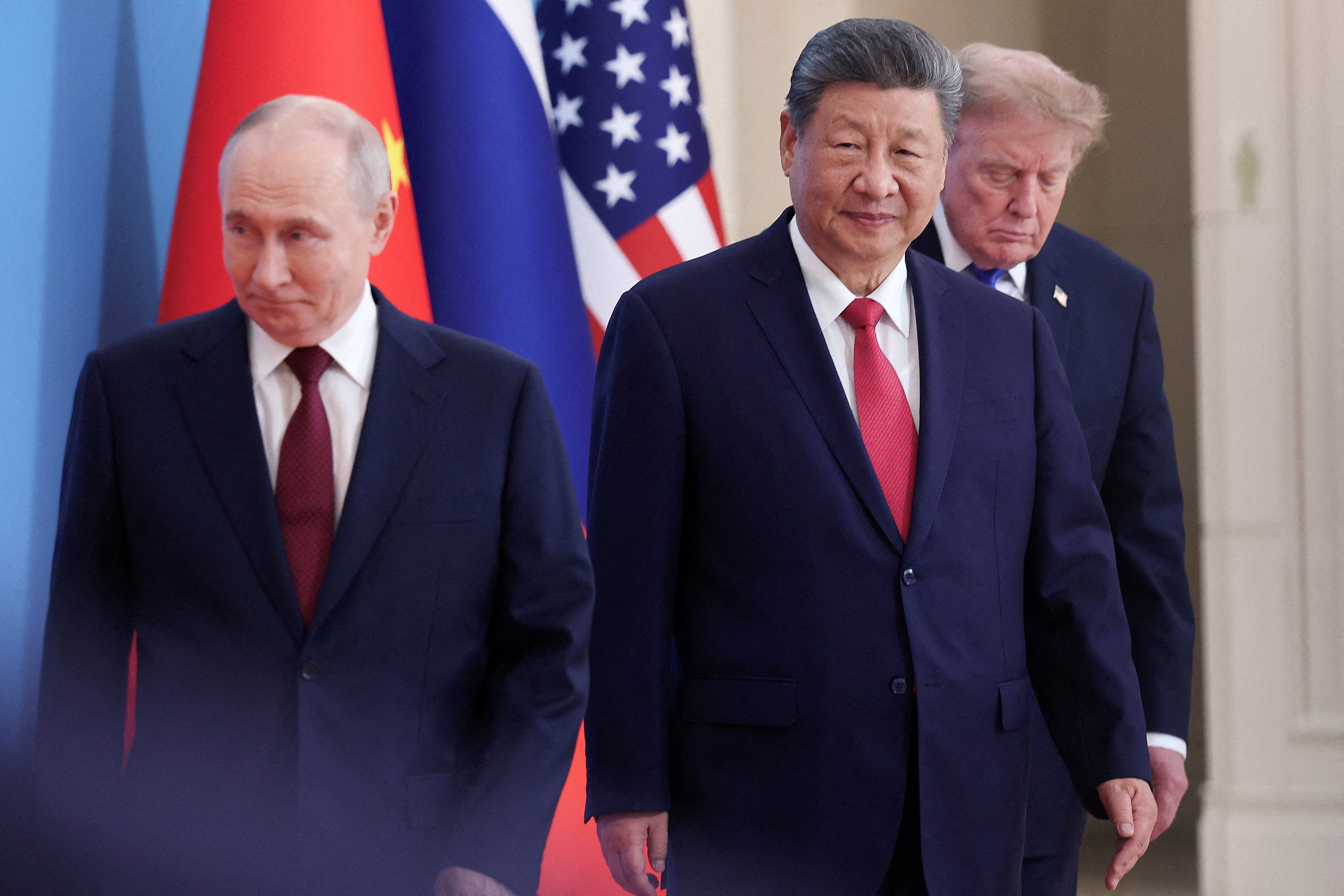
The Chinese leadership has also systematically emphasized international law and the United Nations, whereas the other two powers show contempt for these institutions. We have seen the shameful spectacle of the US president using this meeting to attack the International Criminal Court. He regards the court as hostile because of the arrest warrant against Benjamin Netanyahu, while Putin himself is also subject to an ICC warrant. This is a very different spirit from that of the leaders who helped establish the United Nations in 1945. Franklin D. Roosevelt, whom I regard as the most progressive president in US history, promoted the international institutions and legal framework that emerged after the war. Those were progressive achievements. What we are seeing now, especially with Trump and Putin, looks more like a mafia meeting than a summit of great leaders.
N1: But if Putin and Netanyahu can ignore ICC arrest warrants, how much power does the Court really have?
Gilbert Achcar: The International Criminal Court represents an important achievement precisely because it can prosecute individuals. That is what makes it so threatening to those who treat state sovereignty as sacred. The court can say to Vladimir Putin or Benjamin Netanyahu: you must answer for alleged war crimes or crimes against humanity. Powerful leaders cannot tolerate that possibility. The United States, Israel and Russia have resisted the court's jurisdiction because they understand that such institutions can also be used against them. That is why the ICC is attacked so fiercely.
The International Court of Justice is another important institution, although it has a different role: it deals with disputes between states. These legal mechanisms matter, even if powerful states try to evade them. The proceedings concerning the Rohingya in Myanmar and South Africa's genocide case against Israel show how international legal arguments can reach governments that would prefer to be beyond scrutiny. The very hostility of powerful states toward these courts tells us that the institutions have significance.
Israel, American power and the politics of permanent insecurity
N1: How much responsibility for what has happened in Gaza lies with Washington? At what point does American support for Israel become complicity?
Gilbert Achcar: You are absolutely right to raise this. Justice would require scrutiny not only of Benjamin Netanyahu and his defense minister, but also of Joseph Biden and Donald Trump. In my book on Gaza, I describe the war on Gaza launched in October 2023 as the first joint US–Israeli war. The war against Iran was the second. Washington did not need to send troops or airplanes to Gaza; Israel did not need American soldiers or planes for such a small territory. What it needed were American weapons. Israel used heavy US-supplied bombs, including bombs weighing half a ton or a ton, which it does not produce itself. Thousands of these bombs were supplied, and they were central to the destruction of the Gaza Strip. The death toll has reached close to 75,000, according to the latest figures, while tens of thousands were killed during the first year alone.
The United States did not merely arm Israel. It gave Israel political cover. The Biden administration opposed calls for a ceasefire at the United Nations and vetoed resolutions demanding one. Several European governments also supported Israel for months, invoking its supposed right to self-defense, before some began changing their positions as the scale of the catastrophe became impossible to ignore. So, the United States is fully complicit. Justice would require accountability for both the Israeli and American roles.
N1: What does Washington gain from this relationship? Why is Israel so important to American power that even Gaza has not fundamentally changed the alliance?
Gilbert Achcar: Israel is a kind of Sparta in the Middle East: an exceptionally strong military state that can intervene very quickly in the region. Unlike the US government, it does not have to contend with American institutions such as Congress when it acts. It can therefore serve as a regional ally capable of intervening on Washington's behalf when necessary.
For the United States, Israel's importance is not primarily about Palestine. It is about the wider region, especially the Gulf, where the Arab oil monarchies are close US allies and enormously profitable partners. They buy US goods and weapons, invest in the US economy and contribute to funding the US federal budget. Israel plays a strategic role in protecting that regional order. You could see this in the attack on Iran earlier this year: Trump relied on Israeli intelligence and assassination skills in targeting the Iranian leadership. That illustrates why the alliance matters to Washington.

But the US stance on Gaza also has a personal and ideological dimension. The Biden administration was exceptionally pro-Israel. Biden repeatedly described himself as a proud Zionist, and his policy reflected that commitment. A different American administration might at least have imposed limits on Israel's response. Barack Obama, for example, had a difficult relationship with Netanyahu. One can imagine an administration telling Israel that its retaliation to the Hamas-led attack should not get too much disproportionate. Neither Biden nor Trump imposed such limits; both fully endorsed Israel's war.
N1: Israel is one of the most militarized and technologically advanced countries in the world. You would expect such a powerful country to be one of the safest places to live. Yet its leaders constantly speak of existential threats. Has permanent insecurity become part of the political system itself?
Gilbert Achcar: You have put your finger on what is a fundamental failure of Zionism. Zionism claimed it would create a safe haven for Jews, originally especially the Jews of Europe, and ultimately for Jews in general. Judged by that promise, it has miserably failed. It is a fact that a Jewish person today is safer in Berlin than in Tel Aviv.
The Israeli state was created through a settler-colonial enterprise involving major ethnic cleansing in 1948, and it developed in a hostile relationship with the native Palestinian population and neighboring Arab peoples and states. It has consequently become a permanent war state, with a military establishment of disproportionate size and influence. Jewish critics of Israel have described it as 'an army with a state,' rather than a state with an army. That phrase captures something essential.
The military occupies a central position, and a remarkable majority of Israel's political leadership comes from its officer corps. This is not to say that Israel is formally a military dictatorship, but the weight of the military in political life is extraordinary. It is a Spartan state, in the sense of ancient Sparta, and violence remains permanently on the agenda.
As long as Israel maintains the oppression and subjugation of Palestinians and carries out aggression against neighbors such as Lebanon and Syria, it will not achieve genuine peace or lasting security. That would require a qualitative transformation of the nature of the Israeli state, transcending Zionism. Without such a transformation, it cannot be the safe haven it promised to become.
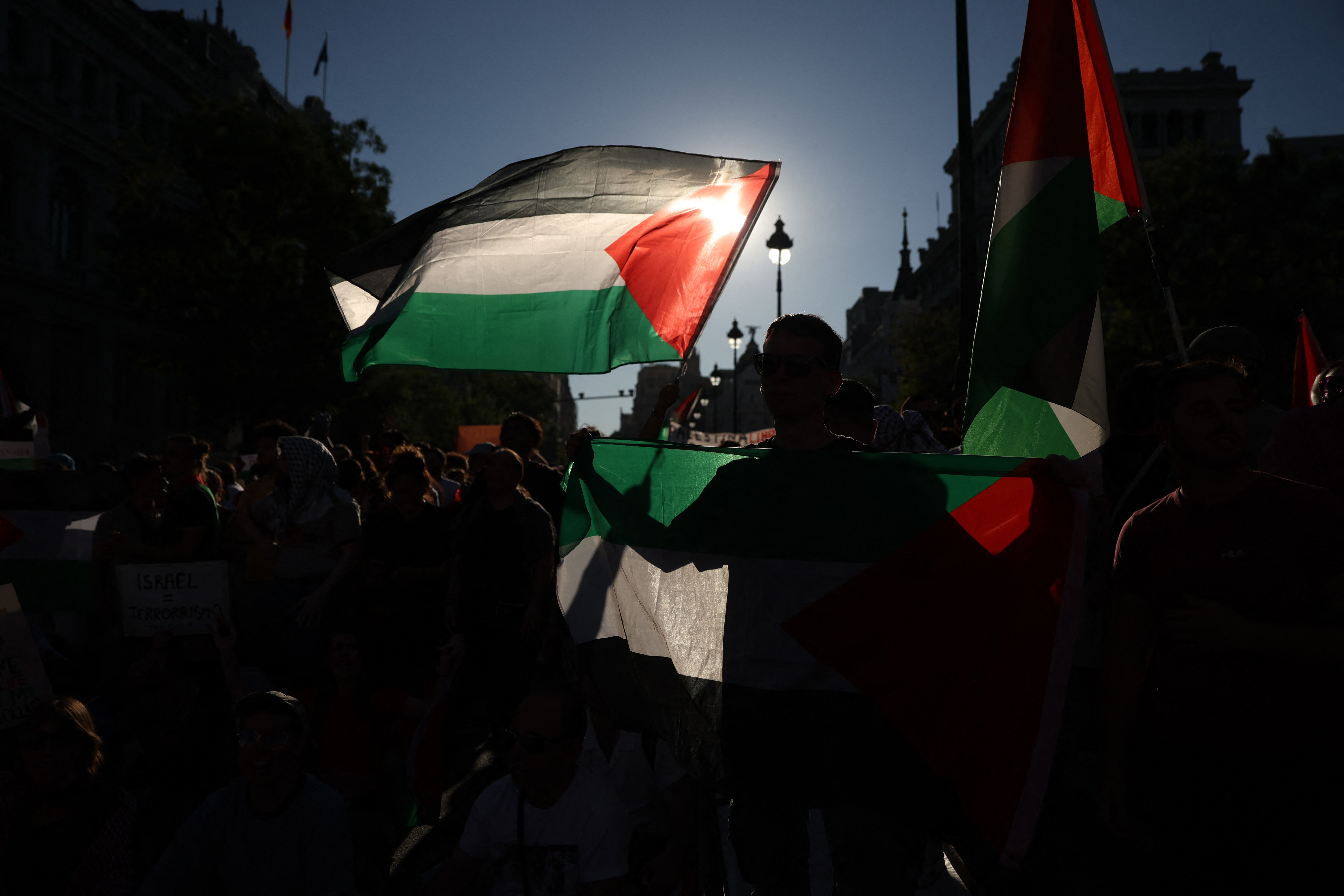
N1: What would a transformation beyond Zionism look like in practice? Could Jewish Israelis and Palestinians enjoy equal rights without giving up their collective identities?
Gilbert Achcar: We can imagine such an arrangement, although it is extremely difficult under present conditions. Hatred has deepened over the years, especially since the Hamas-led attack of October 7. Israeli society has moved steadily to the right since the beginning of this century, reaching an extreme point under the coalition of Netanyahu, Ben-Gvir and Smotrich. In political terms, I would describe this coalition as bringing together neo-fascist and neo-Nazi currents.
But Israeli public opinion was not always as it is today. During Israel's invasion of my country, Lebanon, in 1982, there were huge demonstrations against the Likud government. The Peace Now movement mobilized hundreds of thousands of people, peaking in September 1982 in a demonstration of around 400,000 people, a gigantic size for Israel, close to ten percent of the population at that time.
The first Palestinian intifada, which reached its peak in 1988 and was largely nonviolent, provoked a moral crisis within Israeli society and even among the military. Among Jewish Israeli intellectuals, a current known as post-Zionism developed. Its supporters argued that Israel should cease to define itself as a Jewish state and become a state of all its citizens. These were important developments.
The situation shifted around the turn of the century, following the failure of the Oslo process. I argued soon after the 1993 agreement that it was doomed to fail. Rather than freezing settlements in the occupied West Bank, Israeli governments accelerated their expansion, destroying the prospects for peace. At the same time, there developed a destructive interaction between the Israeli right and Hamas. Hamas's suicide attacks and other forms of violence pushed Jewish Israelis further to the right and united them against Palestinians.
Given the imbalance of power, a rational Palestinian liberation strategy must instead seek to divide Israeli Jewish society politically and win growing numbers of Jewish Israelis to the cause of Palestinian rights. This cannot be the only measure of a strategy, but it is an essential one. Without such a change inside Israeli society, it is extremely difficult to see how Palestinians can secure their rights.
N1: Has Hamas, through its use of violence, weakened the Palestinian struggle for freedom?
Gilbert Achcar: Of course. The outcome is there for everyone to see. What has happened in Gaza is the worst catastrophe in Palestinian history, worse even than the Nakba. Palestinians are in a worse situation today than ever before. Gaza has been devastated, most of its population has been displaced, and around a million people are living in tents in appalling conditions as winter approaches. In the West Bank, meanwhile, we are witnessing what I call creeping ethnic cleansing: a slower, lower-intensity but accelerating process. There has been high-intensity ethnic cleansing in Gaza and lower-intensity ethnic cleansing in the West Bank.
This is a catastrophe, and Hamas's strategy of violence has been profoundly counterproductive. Netanyahu has used Hamas politically, as Ariel Sharon did before him. They preferred dealing with Hamas, which Western governments reject, calling it a ‘terrorist’ organization, to dealing with the Palestinian Authority in Ramallah, which those governments recognize. This has served the Israeli right's purposes.
But I want to be absolutely clear about responsibility: the genocide is the logical culmination of the far-right policies embodied by Netanyahu, Ben-Gvir and Smotrich. Their politics contained a genocidal potential; they needed an opportunity for that potential to unfold. The attack of October 7 provided that opportunity. From this perspective, I have described October 7 as ‘the most catastrophic miscalculation in the history of anti-colonial struggle’.
Gaza, capitalism and the collapse of liberal illusions
N1: What happened in Gaza raises serious questions about the world we live in. We have international law, human rights institutions, and governments that speak constantly about universal values. Yet none of this prevented the suffering we have witnessed. Do you think Gaza has also exposed a deeper moral crisis in the international order?
Gilbert Achcar: It is obviously a huge crisis. I described it as ‘the final nail in the coffin of the international liberal order.’ Gaza dissipated the last illusions that might still have existed about the so-called international rules-based liberal order.
Those illusions survived because some Western governments still claimed to defend this framework and to abide by international law. Even when the George W. Bush administration most blatantly violated international law by invading Iraq in 2003, Bush was followed by Barack Obama, a president who was proud of having opposed that invasion. So, the illusion that the United States could still abide by international law remained.
European governments likewise always claimed to defend human rights and international law. We know that these pretensions were false, and that powerful states kept violating those rules. But whatever illusions remained, Gaza destroyed them completely, because all of them supported the genocide. I described it as the first genocide perpetrated by an industrially advanced state since 1945, this time with the support of Western countries.
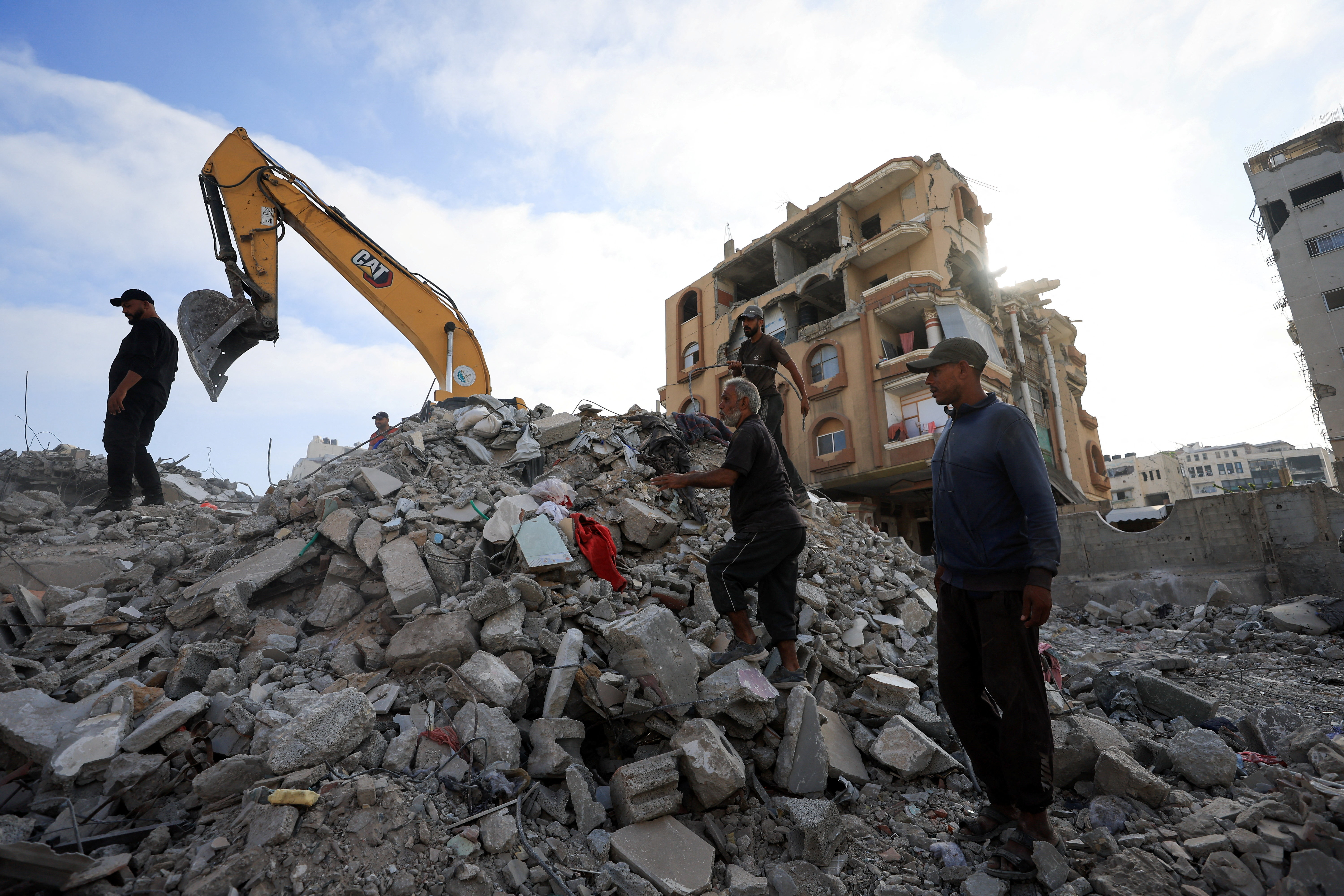
From an ethical point of view, Gaza is a huge watershed. Today we live in a world that is almost officially ruled by the law of the jungle, especially with Donald Trump at the helm of the United States. The United States behaves like a gangster state, as we saw in Venezuela and then Iran. Russia behaves like a gangster state too; Putin has behaved that way for a very long time. Then there are France and Britain, countries with colonial histories that continue to send troops abroad, especially France, which remains very active in Africa.
At the same time, what Gaza revealed has led to a rise in global protest. That is the positive side. We have seen huge movements of people appalled by what was happening in Gaza, and a very large solidarity movement developing even in the United States, including among young American Jews. This moral awakening to the reality of the genocide and to the reality of our world is, I think, the most promising feature of what is happening today.
One expression of that was the defeat of Trumpism in the midterm elections and the important victories achieved by the left wing of the Democratic Party, including the Democratic Socialists of America. These are tremendous, unprecedented victories. Who would have imagined that socialism would again become a positive term for 65 percent of the Democratic voters in the United States and 45 percent of independent voters, according to the most recent Gallup poll?
N1: Gaza has provoked a strong moral reaction around the world. But capitalism has survived many moral scandals before. Can public outrage really bring about change if the economic interests behind the system remain untouched?
Gilbert Achcar: Capitalism is based on amorality. It is non-moral, intrinsically based on exploitation and oppression, and therefore contradicting the values that the rulers of capitalist states claim to represent. This is a basic contradiction within capitalism and capitalist societies.
But the starting point for changing that radically is precisely to take those values seriously: equality, justice and liberty. When you take them seriously, you realize that capitalism is an impediment to their realization. Therefore, if you want to achieve a better society, you have to fight capitalist exploitation and oppression.
N1: Capitalism is built on exploitation, as you say. But why is it still so difficult for us to imagine a different system? Has it shaped even the way we think about what is possible?
Gilbert Achcar: Capitalism is by far the most powerful of all the exploitative systems of production that history has seen. It also comes with a permanent technological revolution. From the beginning, capitalism developed alongside technology, with the Industrial Revolution, and there have been several technological revolutions since. We are in the midst of another one, with artificial intelligence and big tech.
These technologies also allow capitalism to influence and control people's minds through the media system and communication networks. Capitalism exercises very strong dominance over people's thinking. But human beings have the potential to resist that. The first step is to become aware of this reality and overcome the ideology capitalism produces in shielding itself from popular critique: an ideology that scapegoats migrants and redirects people's social anger against foreigners, people of different skin colors, genders or religions.
We need to overcome these forms of discrimination and become aware of the common interests of humanity as a whole. This includes the ecological question, since we are living through an extremely dangerous global ecological crisis. That awareness is developing, and it is the precondition for any meaningful and ultimately successful struggle against capitalism.

Capitalism will not fall on its own. There is a need to build a movement capable of challenging it. The problem is that the dominant anti-capitalist movements of the twentieth century were not based overall on a higher set of values than capitalism, except for deeply perverted values. They too produced anti-democratic, dictatorial systems and different forms of exploitation. I am referring particularly to the Soviet Union and the system of states around it.
As a result, that form of anti-capitalism was not credible enough. Workers in Western countries had little reason to be attracted to the Soviet model when their own living conditions were better. That was a huge failure.
What we need is a modern version of the broad workers' movement that began developing in the nineteenth century, based on the struggle for social justice and against capitalism. Of course, it must be very different today. I see the beginnings of such a movement in the struggles of young people, Generation Z, around the world: from India to France, and to Serbia in your own region, as well as the United States. They are mobilizing around ethical values such as justice and equality, and that is extremely important for the future.
Everything will depend on whether this generation succeeds in building organized, lasting movements beyond local or temporary uprisings. What is needed is a permanent movement capable of organizing resistance to capitalism and the struggle for social and ecological change, which humanity badly needs for its survival.
N1: Serbia, which you mentioned earlier, offers some encouragement, with mass protests culminating in the electoral defeat of the ruling party. But elsewhere, even millions of people taking to the streets have struggled to bring about lasting change. Are these movements becoming better organized? And do you see any hope that they might eventually come together across national borders?
Gilbert Achcar: It is certainly not easy. But there is hope. I think that as these movements develop, people will come to realize that they need to organize more effectively. In some countries they already are organized. Take India, where there is a huge movement that has organized quite effectively. Take Sudan: during the revolutionary process that began in 2019, before the war broke out in 2023, there was a huge youth movement called the Resistance Committees, organized across the country.
Consider Black Lives Matter in the United States, which mobilized millions upon millions of people. Today in the United States, the radical left is fighting from within the Democratic Party, using its framework and achieving tremendous victories. The mayors of New York, Los Angeles, Washington D.C. and Seattle, who belong to the Democratic Socialists of America (DSA) illustrate the advances of this political current in major American cities. These are developments that would have seemed almost impossible until a recent date.
So, people are organizing. The degree of organization varies from country to country, but in some places, it is already quite advanced. Hopefully, the next step, after national movements develop further, will be an international gathering of these movements. That is what I wish for, and what I hope to see in the future.
N1: Let me return to your point about big tech. Yanis Varoufakis argues that digital platforms are creating a new system he calls technofeudalism. If he is right, are we still fighting capitalism, or something fundamentally different?
Gilbert Achcar: No, this is very basic capitalism. You can call it technofeudalism or whatever you like, but technological monopolies using their monopoly position to extract rent from others are a basic feature of capitalism. This does not belong to another planet. It has been part of capitalism from the beginning. If you read Karl Marx's Capital, you will find an entire discussion of rent and related issues. This is part of the system, not something outside it.

And the key point today is that big tech is actually creating remarkable anti-capitalist awareness at the popular level. Look at what is happening around artificial intelligence and data centers: they are provoking popular protests. People are becoming aware that capitalism and big tech are destroying the planet, and they are fighting back. The recent US midterm elections were also, to a large extent, a revolt against big tech. That is very important.
N1: This reminds me of Terry Eagleton's book Why Marx Was Right. Looking at capitalism today, particularly the power of big tech, how much of Marx's analysis still holds true?
Gilbert Achcar: It is not only Marx. Other critical economists, including some of his contemporaries, understood aspects of these issues, and Marx built on their work. But his critique of capitalism is by far the most comprehensive and articulate critique of the system. Since the system has not changed qualitatively, and its basic mechanisms have changed relatively little over history, Marx remains very relevant.
Every time people announce that Marx is dead, shortly afterwards others announce that he is back. His critique is powerful for precisely these reasons. Of course, we must take account of everything that has changed in the world. It is not a matter of treating Marx as a religion or remaining stuck in his writings.
There have been enormous knowledge developments in the century and a half since Marx, and they should be integrated in the general Marxian body of critique of capitalism. For example, one can find references to ecological questions in Marx, and books have been written about them. But he could not have had the perspective we have today, when we are confronted with a huge ecological crisis.
Marx's contribution is a starting point, only a starting point. It has been enriched, and it must continue to be enriched by the accumulation of critical knowledge since his time. In this century, we have seen an impressive acceleration in the production of critical knowledge. This is important for building a critical vision and an anti-capitalist awareness suited to the twenty-first century.
Beyond capitalism: Democracy, Yugoslavia and the meaning of hope
N1: But there's another problem. The socialist states of the twentieth century were also obsessed with industrial growth, often at enormous environmental cost. What went wrong there?
Gilbert Achcar: What existed in the Soviet Union was basically Stalinism, not socialism. It was a bureaucratic, repressive system that shared with capitalism features such as productivism and extractivism. In some respects, it went even further than capitalism. The ecological damage in the Soviet Union was terrible, worse than in many Western capitalist states. So that certainly was not the alternative.
Stalinism is no alternative to capitalism; it is no improvement on capitalism. The socialism Marx aspired to was a radically democratic socialism, and that is the starting point. Socialism without democracy leads to bureaucratic oppression. Nationalization without democracy, or state control without democracy, leads to political oppression. Socialization of the means of production can be socialist only if it is deeply democratic and based on a radically democratic organization of society.
N1: Yugoslavia tried something different with workers' self-management. It wasn't a democracy in the full sense, but workers did have a say in running their workplaces. Is there anything we can still learn from that experience?
Gilbert Achcar: Indeed. The experiments with self-management in Yugoslavia, as well as those in some other countries, and local experiences of workers' control in factories, are interesting. But the Yugoslav system was not free of the characteristics of the surrounding state systems. You had, basically, a Communist Party dictatorship. Even if there was self-management at the grassroots level, if the structure at the top is not democratic, if what prevails is still single-party rule, then the problem has not been solved.
The issue is not only self-management in production, important though that experience is. You need self-management of society as a whole. That is why Marx was fascinated by the Paris Commune. In that experience, the whole society of Paris — of course, it was only one city — attempted to establish a radically democratic way of organizing their city. It was perhaps the most democratic of all the experiences undertaken in the name of socialism or the working class. In my view, it remains the most inspiring model for the future.

The Paris Commune introduced some crucial ideas, including permanent popular control over elected representatives. In conventional representative democracy, people elect members of parliament, who can then do whatever they want. The Commune advanced the idea that society should retain continuous control over its representatives and be able to replace them at any time if voters were dissatisfied with their actions.
This basic right of recall was one of the cornerstones of the radical democracy attempted by the Commune. It was a brief and tragic experience, but also a very inspiring and innovative one. From that point of view, it remains highly relevant in our century.
N1: You've given us many reasons to be pessimistic about the world. So what keeps you hopeful? Is there a real basis for that hope, or does it ultimately come down to faith?
Gilbert Achcar: It is not an act of faith. In my writings I draw a clear distinction between optimism and hope. Optimism is the belief that the best will happen: that’s a form of faith. I do not think there are grounds for optimism today. On the contrary, if we face the reality of the world we live in, there are more reasons for pessimism than for optimism. Just start with ecology.
But for me, the key issue is not optimism; it is hope. Hope is the conviction that a potential exists. That does not mean that the potential will necessarily be realized. There are conditions that must be met for it to become reality. Hope means recognizing the existence of that potential, and that recognition can mobilize people to work towards realizing it.
Without hope, people will not act. If you are hopeless, you stay in your corner and do not fight, unless you are driven by complete desperation. You need hope in order to fight, and there are reasons for hope. I have mentioned several such reasons during our discussion: the movements of young people, what is happening from India to the United States and across Europe. These developments are inspiring. They give us grounds for hope. It is not a matter of faith, but of recognizing a real potential, not an imaginary one.
N1: Can hope itself become a form of resistance?
Gilbert Achcar: Hope is a precondition for resistance. There is a famous phrase attributed to Gramsci, although it did not originate with him: 'pessimism of the intellect, optimism of the will.' But there is a missing link in that phrase, and the missing link is hope. If you have pessimism of the intellect, you need hope in order to produce optimism of the will. Otherwise, how could optimism of the will be based on pessimism of the intellect? Hope is the missing link. It is the precondition for optimism of the will.
Kakvo je tvoje mišljenje o ovome?
Učestvuj u diskusiji ili pročitaj komentare


Kakvo je tvoje mišljenje o ovome?
Učestvuj u diskusiji ili pročitaj komentare